Key takeaways
- Use full sun for the strongest bloom, with partial shade acceptable where flowering can be lighter.
- Keep the root zone drained and avoid prolonged inundation.
- Preserve airflow and thin crowded growth to reduce mildew pressure.
How to care for Wild Bergamot
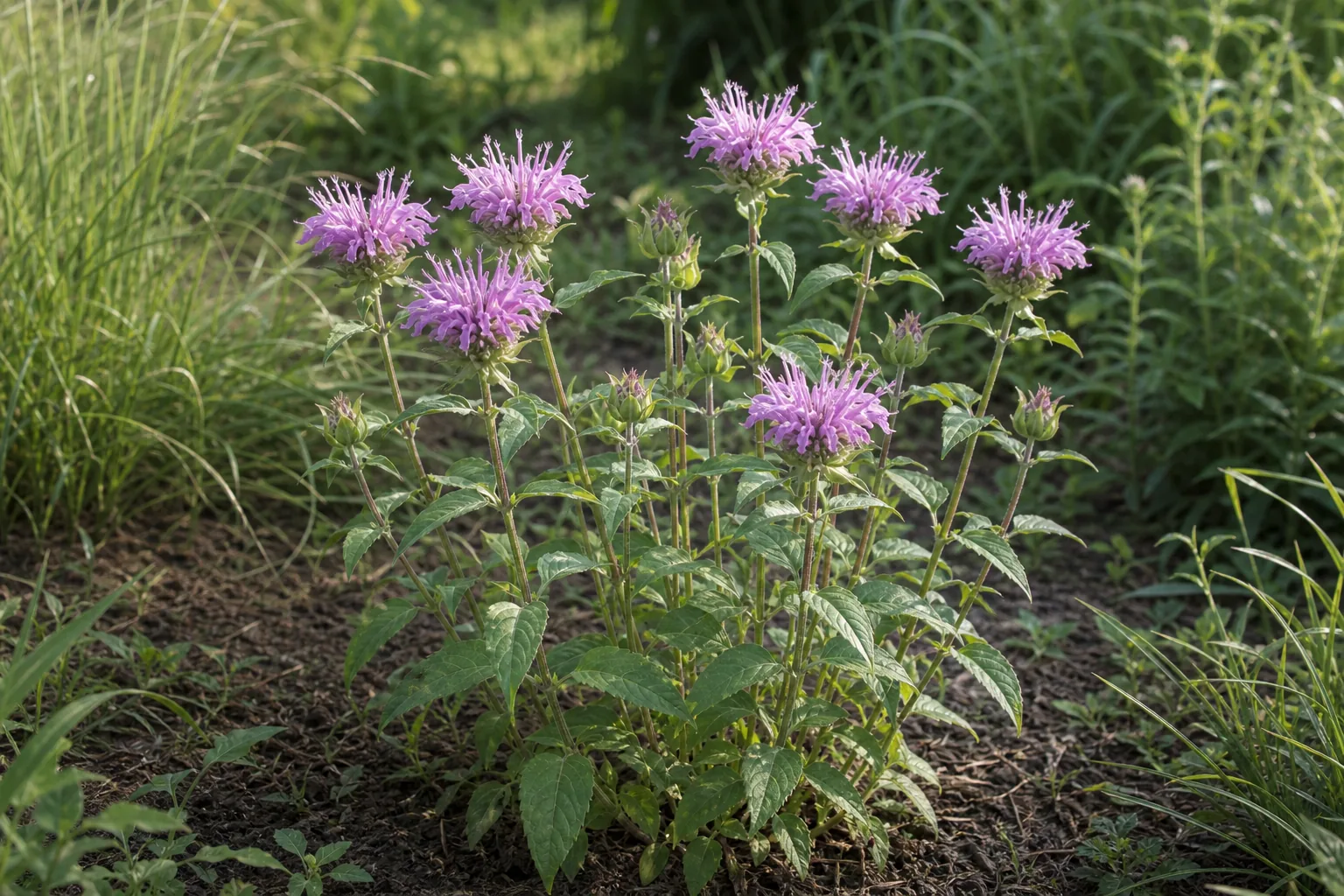
Monarda fistulosa is a clump-forming perennial native from Canada to northeastern Mexico. Its square stems, aromatic opposite leaves, and rounded heads of tubular flowers suit sunny borders, meadows, rain-garden slopes, and regionally appropriate native plantings.
Set the crown level with the surrounding soil and leave room for the colony to widen. The plant handles dry periods after establishment, but drainage and airflow matter more than forcing lush growth with rich fertilizer.
Light
Full sun supports the densest stems and most abundant flowers. Partial shade is tolerated, but flowering may decrease and foliage can remain wet longer, especially where neighboring plants block air movement.
If a nursery plant was grown under cover, harden it into direct sun over several days. In a hot site, check root-zone moisture during afternoon wilt before changing the exposure permanently.
Water
Water newly planted Wild Bergamot whenever the active root zone begins to dry, then let excess drain. Once established, it tolerates some drought, but repeated water stress can weaken foliage and make mildew more noticeable.
Do not keep the crown inundated or water on a fixed calendar. Check below the surface after rain, and direct irrigation to the soil so foliage dries promptly.
Soil and repotting
Wild Bergamot adapts to sandy through clay soils and a broad pH range when drainage remains reliable. A modest organic mulch can moderate moisture, but keep it clear of the crown and avoid burying low stems.
This is primarily an in-ground colony plant. If temporarily grown in a container, use a large pot with drainage, divide or plant it out when rhizomes crowd the root ball, and protect exposed roots according to local winter conditions.
Temperature, humidity, and fertilizer
The species is widely grown across USDA zones 3-9 and tolerates summer heat. Humid weather is manageable when stems are not crowded; poor circulation raises powdery mildew pressure even on this comparatively resistant species.
Average garden soil usually supplies enough fertility. Avoid routine high-nitrogen feeding, which can make soft, dense growth; use a soil test or a restrained amendment only when growth and soil conditions indicate a need.
Pruning and propagation
Deadhead selected flower heads to extend a tidy bloom display and reduce self-seeding, or retain late heads and hollow stems for wildlife value. Thin older, crowded stems rather than shearing the entire colony during active growth.
Seed is the documented propagation method for the species. Sow viable seed in prepared soil or a clean seed-starting mix, keep emerging seedlings evenly moist rather than saturated, and remember that established plants also widen naturally by rhizomes.
Common problems
Start with the pattern, current soil moisture, and recent changes. One symptom can have several causes, so change the most likely factor first and observe before making another major adjustment.
| Symptom | Check first | First action |
|---|---|---|
| White powder on leaves | Check whether the coating is spreading through dense stems during humid weather. | Thin only crowded or badly affected growth and keep irrigation off the foliage. |
| Rust-colored spots | Inspect both leaf surfaces and confirm the pattern is spreading rather than normal aging. | Remove badly affected debris and improve airflow before choosing any treatment. |
| Stems lean into neighboring plants | Check daily sun, crowding, and recent high-nitrogen feeding. | Support affected stems and thin the colony after bloom instead of feeding it again. |
| Flowering is sparse | Check direct-sun hours and whether nearby plants now shade the clump. | Reduce competing shade or move a division during a suitable cool planting period. |
| Colony spreads beyond its space | Look for new shoots connected to outward-growing rhizomes and for self-sown seedlings. | Remove edge shoots or seedlings while small and deadhead before seed ripens. |
Pet and household safety
The authoritative sources reviewed for Monarda fistulosa did not provide a species-specific veterinary toxic or non-toxic classification for cats and dogs. Absence from a poison-control list is not proof of safety. Prevent pets from chewing the plant, and contact a veterinarian after a concerning ingestion or any vomiting, diarrhea, lethargy, or other unusual signs.
Frequently asked questions
How often should I water Wild Bergamot?
Check the active root zone and water when it begins to dry. New plants need steadier moisture than established colonies, while saturated soil should be avoided.
Does Wild Bergamot need full sun?
Full sun supports the strongest flowering, although the species tolerates partial shade where airflow remains good.
Why does Wild Bergamot get powdery mildew?
Crowding, prolonged leaf wetness, humidity, and drought stress can all contribute. Improve spacing and root-zone care before considering treatment.
Will Wild Bergamot spread?
Yes. An established clump can widen by rhizomes and may also self-seed, so remove edge shoots or spent heads when containment matters.
How do I propagate Wild Bergamot?
Grow the species from viable seed in a clean medium or prepared bed, keep seedlings evenly moist, and transplant after they are sturdy and hardened to outdoor conditions.
Is Wild Bergamot safe for pets?
A species-specific veterinary classification was not confirmed in the reviewed sources, so prevent chewing and consult a veterinarian about concerning exposure.
Sources and editorial review
This editorial draft is based on the sources below and awaits named horticulture-expert approval before publication.
- Monarda fistulosa L.Royal Botanic Gardens, Kew — Plants of the World Online · Checked
- Monarda fistulosaNC State Extension · Checked
- Monarda fistulosaMissouri Botanical Garden · Checked
- Rain Garden Plants — Wild BergamotPenn State Extension · Checked
What works well
- Long summer bloom
- Supports diverse pollinators
- Tolerates several soil textures
What to consider
- Powdery mildew can develop
- Rhizomes and seed can spread
- Crowded stems lose vigor