Key takeaways
- Use full sun and soil that drains after rain.
- Expect a short-lived plant that may persist by reseeding.
- Keep seed heads for birds or deadhead to limit unwanted seedlings.
How to care for Black-eyed Susan
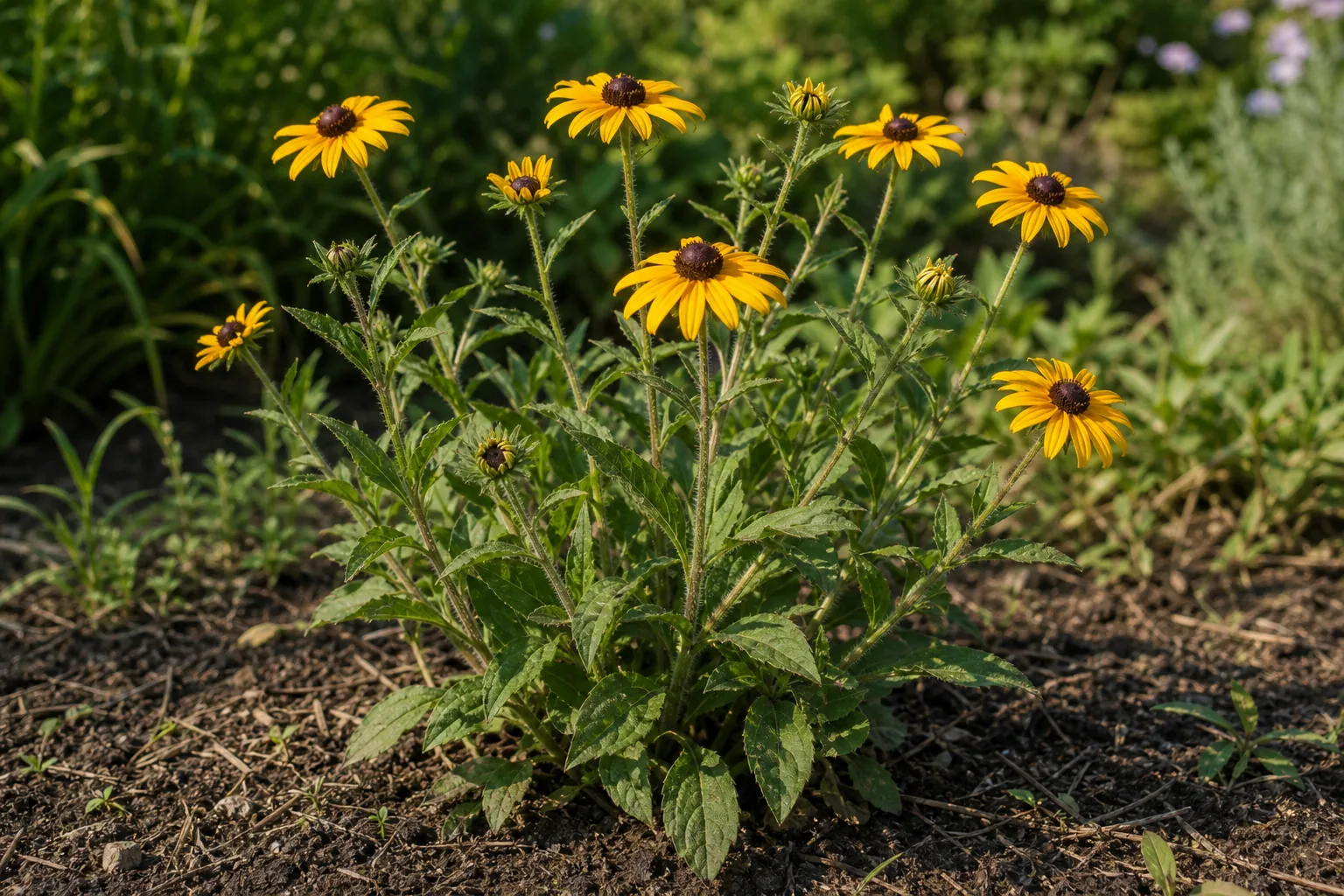
Rudbeckia hirta may behave as an annual, biennial, or short-lived perennial. Kew accepts it as a biennial or perennial, while garden references note that it often flowers in its first year and persists through self-sown seedlings rather than one permanent crown.
Plant after severe frost risk in a site where the crown will not sit in winter-wet soil. Judge establishment by compact leafy growth and firm stems, not by forcing heavy bloom with fertilizer.
Light
Full sun produces the strongest stems and most reliable flowering. Some plants tolerate partial shade, but lower light can reduce bloom and leave foliage damp longer.
Move nursery-grown plants into stronger exposure gradually if they were held under cover. In very hot climates, afternoon stress should prompt a soil-moisture check before assuming the plant needs permanent shade.
Water
Water newly planted Black-eyed Susan when the active root zone begins to dry, then allow excess to drain. Established plants tolerate some drought, but repeated severe drying can shorten bloom and weaken young growth.
Rainfall, soil texture, heat, and container size change the interval. Check below the surface rather than watering on a fixed weekday, and direct water to the soil when possible to reduce prolonged leaf wetness.
Soil and repotting
Average, medium-moisture soil is suitable when drainage is reliable; organically rich loam can support the strongest flower display. Avoid low spots that remain saturated, because the species tolerates drought better than poorly drained wet ground.
Compact cultivars can grow in a large outdoor container with a drainage hole. Use a free-draining mix, monitor moisture more closely than in the ground, and treat container plants as seasonal where winter roots would be exposed to damaging cold.
Temperature, humidity, and fertilizer
Black-eyed Susan handles summer heat and average outdoor humidity, but humid, crowded foliage is more vulnerable to powdery mildew. Space plants for air movement and remove only badly affected debris rather than applying treatment before identifying the pattern.
Moderate fertility is enough. Excess nitrogen can favor leafy growth and lodging, so use a soil test or restrained feeding instead of routine high-nitrogen fertilizer.
Pruning and propagation
Deadhead during bloom when additional flowers and fewer seedlings are priorities. Leave some late seed heads when winter structure, reseeding, or food for seed-eating birds is desired.
Seed is the practical propagation method. Barely cover seed because light supports germination, harden indoor-started seedlings before planting out, and expect late-started seedlings to form a rosette before flowering in a later season.
Common problems
Start with the pattern, current soil moisture, and recent changes. One symptom can have several causes, so change the most likely factor first and observe before making another major adjustment.
| Symptom | Check first | First action |
|---|---|---|
| White coating on leaves | Check whether the coating spreads through crowded foliage during humid weather. | Increase airflow and remove only badly affected leaves while keeping irrigation off the foliage. |
| Young leaves have ragged holes | Inspect after dark and look for slugs or snails before blaming chewing insects. | Hand-remove confirmed slugs or use a physical barrier around young plants. |
| Tall stems lean or fall | Check daily sun, crowding, and recent high-nitrogen feeding. | Support affected stems and stop unnecessary nitrogen rather than cutting healthy growth immediately. |
| Plant disappears after winter | Check drainage history and whether the plant was behaving as an annual or biennial. | Allow healthy seedlings to establish or resow instead of assuming the old crown must return. |
| Too many seedlings | Confirm seedlings are concentrated around retained seed heads. | Deadhead earlier next season and thin extras while they are small. |
Pet and household safety
The authoritative sources reviewed for Rudbeckia hirta did not provide a species-specific veterinary toxic or non-toxic classification for cats and dogs. Absence from a list is not proof of safety, and the rough hairs can also irritate sensitive skin. Prevent pets from chewing the plant, wear gloves if the foliage bothers your skin, and contact a veterinarian after a concerning ingestion or symptoms.
Frequently asked questions
How often should I water Black-eyed Susan?
Check the active root zone and water when it begins to dry. New plants and containers need closer monitoring than established plants in the ground.
Does Black-eyed Susan need full sun?
Full sun gives the best flowering and strongest stems, although the species can tolerate some partial shade.
Is Black-eyed Susan an annual or a perennial?
Rudbeckia hirta may behave as an annual, biennial, or short-lived perennial, and often remains in gardens by reseeding.
Should I deadhead Black-eyed Susan?
Deadhead to encourage further bloom and limit seedlings, or leave selected late heads for seed and winter interest.
How do I propagate Black-eyed Susan?
Grow it from seed. Barely cover seed, provide light for germination, and harden seedlings before planting outdoors.
Is Black-eyed Susan safe for pets?
A species-specific veterinary classification was not confirmed in the reviewed sources, so prevent chewing and ask a veterinarian about concerning exposure.
Sources and editorial review
This editorial draft is based on the sources below and awaits named horticulture-expert approval before publication.
- Rudbeckia hirta L.Royal Botanic Gardens, Kew — Plants of the World Online · Checked
- Black-eyed Susan — Rudbeckia hirtaNC State Extension · Checked
- Rudbeckia hirtaMissouri Botanical Garden · Checked
- 'Prairie Sun' Black-eyed Susan, Rudbeckia hirtaUniversity of Wisconsin–Madison Extension · Checked
What works well
- Flowers readily from seed
- Supports summer pollinators
- Tolerates heat and some drought once established
What to consider
- Often short-lived
- Can self-seed beyond its space
- Rough foliage and mildew can be concerns