Key takeaways
- Plant only where a huge mature crown can remain permanently.
- Protect the root zone from fill, trenching, and compaction.
- Sow fresh acorns because storage and root damage reduce success.
How to care for White Oak
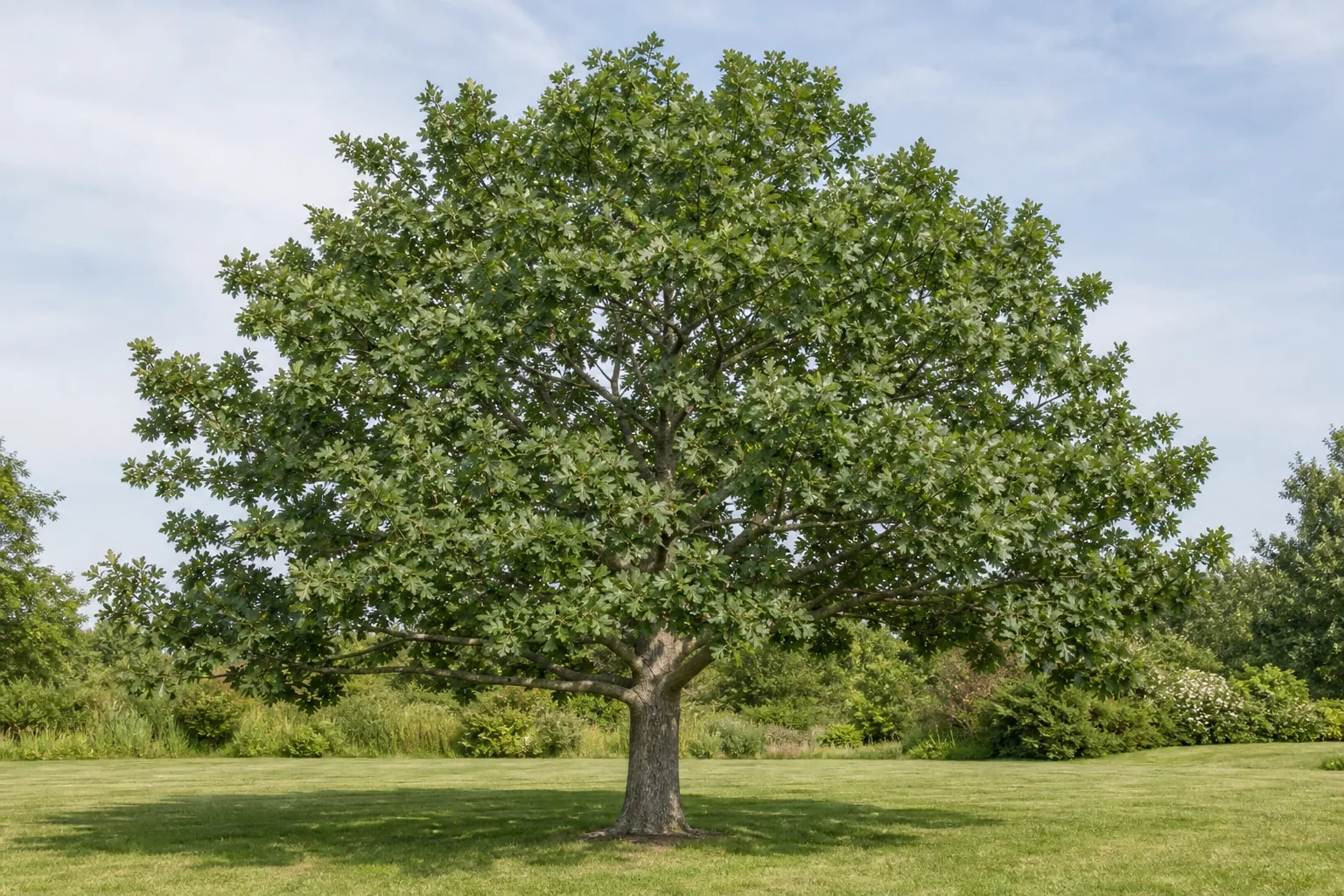
Choose Quercus alba only for a large permanent landscape where its broad crown and root system can mature without utility conflicts. Plant a small nursery tree or direct-sown acorn, keep the trunk flare visible, and protect the future root zone from paving and construction.
Light
Full sun is appropriate for an open-grown specimen and produces the characteristic broad crown. Seedlings tolerate some early woodland shade, but a long-term landscape tree needs overhead room and increasing light.
Water
Water deeply through establishment, then during exceptional drought. White oak tolerates dry periods once established but does not suit persistently flooded or poorly drained flats; avoid frequent shallow lawn irrigation against the trunk.
Soil and planting
Deep, acidic, well-drained loam supports best growth. White oak develops a strong taproot and is difficult to transplant, so minimize root handling and never add fill, compact soil, or cut structural roots beneath an established crown.
Temperature, humidity, and fertilizer
This broad-ranging temperate oak is hardy but should be sourced for regional adaptation. Preserve leaf litter or mulch and use soil-test guidance; alkaline soil, drainage changes, and root disturbance cannot be repaired with routine fertilizer.
Pruning and propagation
Train a single durable leader when young and avoid unnecessary mature cuts. Where oak wilt occurs, follow local seasonal pruning guidance and seal fresh wounds only when local authorities recommend it; propagate from fresh fall acorns without breaking the emerging root.
Common problems
Start with the pattern, current soil moisture, and recent changes. One symptom can have several causes, so change the most likely factor first and observe before making another major adjustment.
| Symptom | Check first | First action |
|---|---|---|
| Upper leaves wilt and brown rapidly | Check local oak-wilt alerts and whether symptoms spread through whole branches. | Contact a certified arborist or local extension office before pruning or moving firewood. |
| Leaves yellow between veins | Check soil pH, drainage, and recent grade changes. | Use a soil test and correct site stress rather than applying general fertilizer. |
| Crown thins after construction | Check compaction, trenching, fill soil, and drainage changes under the crown. | Keep traffic out and have a certified arborist assess root-zone damage. |
| Leaves develop blisters or brown patches | Check symptom pattern and recent cool wet weather. | Collect samples for diagnosis before treating a mature tree. |
| Small branches or bark show holes | Check for borer galleries and whether drought or root injury preceded damage. | Correct stress and obtain species-level pest identification. |
Pet and household safety
Oak leaves and acorns contain tannins and are a recognized livestock hazard, especially to horses consuming substantial amounts. The reviewed sources do not establish White Oak as toxic or non-toxic to cats and dogs. Prevent pets and livestock from eating plant material and contact a veterinarian after ingestion or symptoms.
Frequently asked questions
How much space does White Oak need?
Allow for a crown commonly 50 to 80 feet wide and keep utilities, paving, and buildings outside its long-term structure.
How fast does White Oak grow?
It is generally slow-growing but can live for centuries when its root zone remains intact.
What soil suits White Oak?
Use deep, acidic, moist but well-drained loam and avoid compacted or persistently flooded ground.
When should I prune White Oak?
Train young structure sparingly and follow local oak-wilt timing guidance for all later cuts.
How do I propagate White Oak?
Sow fresh acorns promptly and handle them carefully because the taproot emerges early.
Is White Oak safe for pets?
Leaves and acorns are hazardous to horses; cats and dogs lack a confirmed classification in the reviewed sources.
Sources and editorial review
This editorial draft is based on the sources below and awaits named horticulture-expert approval before publication.
- Quercus alba L.Royal Botanic Gardens, Kew — Plants of the World Online · Checked
- Forked-leaf White Oak — Quercus albaNC State Extension · Checked
- White oak — Quercus albaThe Morton Arboretum · Checked
- Quercus alba, white oakUSDA Forest Service · Checked
What works well
- Long-lived legacy tree
- Exceptional wildlife value
- Broad durable shade
What to consider
- Too large for small lots
- Difficult to transplant
- Acorns and leaves require livestock caution