Key takeaways
- Choose a cultivar by mature dimensions, not nursery size.
- Protect fine foliage from drying wind and abrupt hot sun.
- Keep soil moist but never chronically saturated.
How to care for Japanese Maple
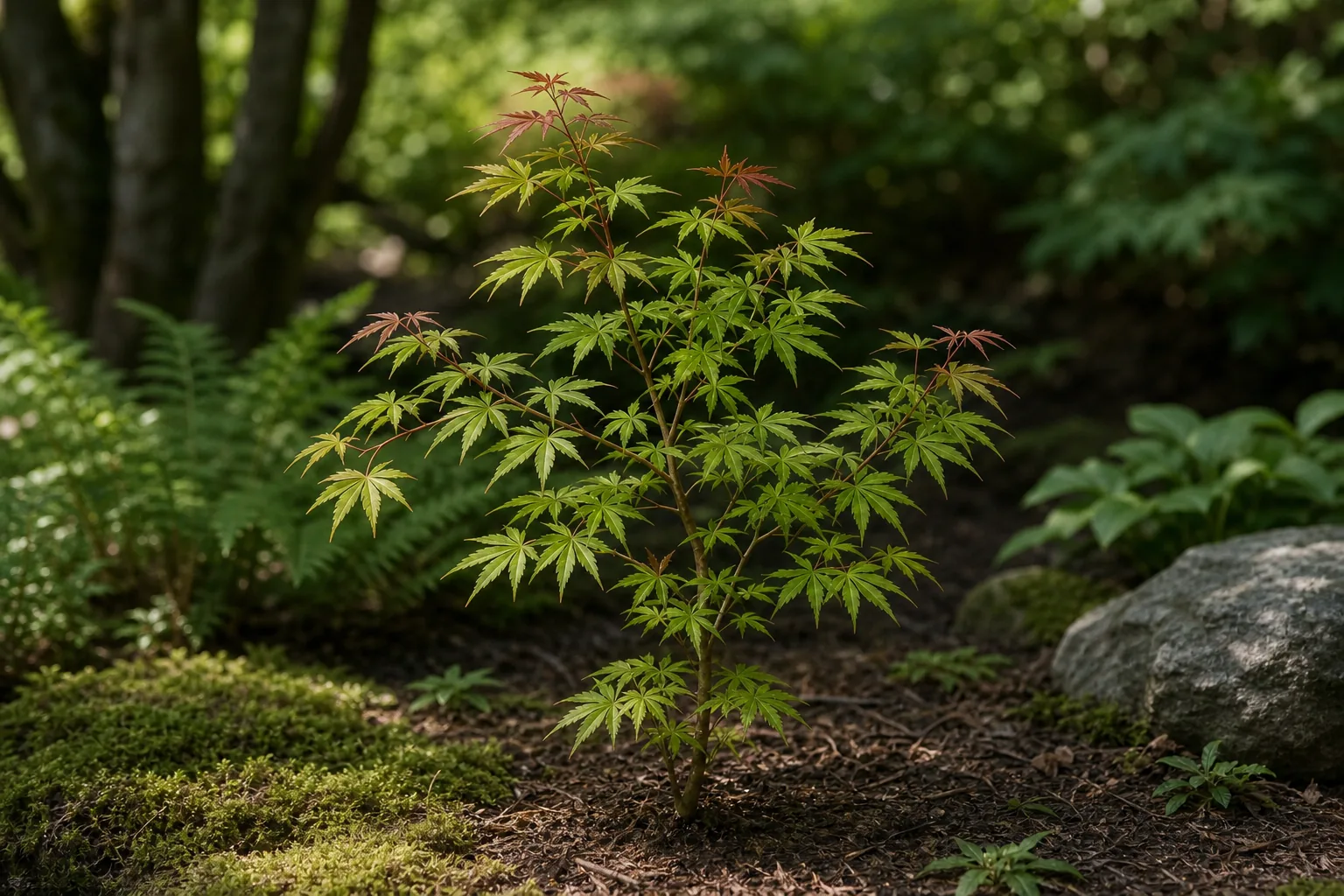
Acer palmatum is a long-lived woody plant whose final form depends heavily on cultivar. Confirm mature height, spread, hardiness, and leaf color before planting, then preserve the trunk flare and give the root system space rather than attempting to hold an oversized tree small by constant pruning.
Light
Dappled light or morning sun with afternoon protection is a dependable starting point, especially in hot or windy regions. Red-leaved cultivars may need more light for color, but abruptly moving a sheltered tree into intense exposure can scorch young foliage.
Water
Keep the establishing root zone evenly moist without leaving it saturated. During dry weather, check below mulch and water slowly across the root area; crisp margins can reflect drought, wind, heat, or root problems, so inspect conditions before adding more water.
Soil and repotting
Plant into moist but well-drained soil with organic matter and keep mulch clear of the trunk. Container specimens need a stable frost-resistant pot and eventual root-room review; repot before roots become a dense, drought-prone mass.
Temperature, humidity, and fertilizer
Shelter new leaves from late frost and cold, drying winds. Avoid heavy nitrogen that forces soft growth; use soil condition and annual extension growth to decide whether feeding is needed.
Pruning and propagation
Remove dead, crossing, or damaged wood with clean cuts and preserve the natural layered framework. Named cultivars are commonly grafted because seedlings vary; softwood cuttings are possible for some material but are not a reliable way to reproduce every cultivar.
Common problems
Start with the pattern, current soil moisture, and recent changes. One symptom can have several causes, so change the most likely factor first and observe before making another major adjustment.
| Symptom | Check first | First action |
|---|---|---|
| Crisp brown leaf margins | Check root moisture, hot sun, wind, and recent transplanting together. | Provide slow root-zone water if dry and temporary afternoon protection. |
| Blackened new leaves after spring cold | Check the overnight low and whether only tender new growth is affected. | Wait for damage to declare itself before trimming dead tips. |
| Sparse canopy | Check cultivar habit, planting depth, light, and root-zone competition. | Expose a buried trunk flare or reduce nearby competition without heavy pruning. |
| Branch dieback | Inspect bark, graft union, soil drainage, and the pattern of dead wood. | Remove confirmed dead wood and seek local diagnostic help if decline spreads. |
| Leaves green instead of red | Check cultivar identity, season, and daily light exposure. | Increase light gradually only if the site is currently too shaded. |
Pet and household safety
The reviewed horticultural sources did not classify Acer palmatum as non-toxic to cats and dogs. Do not treat that absence as proof of safety. Prevent chewing, avoid allowing pets access to fallen plant material, and contact a veterinarian after a concerning exposure or symptoms.
Frequently asked questions
How often should I water Japanese Maple?
Check moisture below the mulch and water when the active root zone is becoming dry; weather, soil, and establishment stage determine timing.
Can Japanese Maple take full sun?
Some cultivars tolerate it, but hot afternoon sun and drying wind can scorch foliage; local climate and cultivar matter.
Can Japanese Maple grow in a pot?
Compact cultivars can, provided the pot drains, remains stable, and protects roots from severe temperature swings.
When should I prune Japanese Maple?
Prune lightly for dead or crossing wood and avoid routine shearing that destroys the natural framework.
How is Japanese Maple propagated?
Named cultivars are commonly grafted; species seedlings vary and may not resemble the parent.
Is Japanese Maple safe for pets?
The reviewed sources did not establish a species-specific veterinary classification, so keep it away from animals that chew plants.
Sources and editorial review
This editorial draft is based on the sources below and awaits named horticulture-expert approval before publication.
- Acer palmatumNC State Extension · Checked
- Acer palmatum Thunb.Royal Botanic Gardens, Kew — Plants of the World Online · Checked
- How to grow Japanese maplesRoyal Horticultural Society · Checked
- Acer palmatum (D)Royal Horticultural Society · Checked
What works well
- Exceptional autumn color
- Many compact cultivars
- Strong specimen form
What to consider
- Leaves scorch in harsh sites
- Cultivar size varies widely
- Poor fit for waterlogged soil