Key takeaways
- Use acidic ground to avoid iron chlorosis.
- Keep roots cool and moist, especially in hot summers.
- Prune outside spring sap flow.
How to care for River Birch
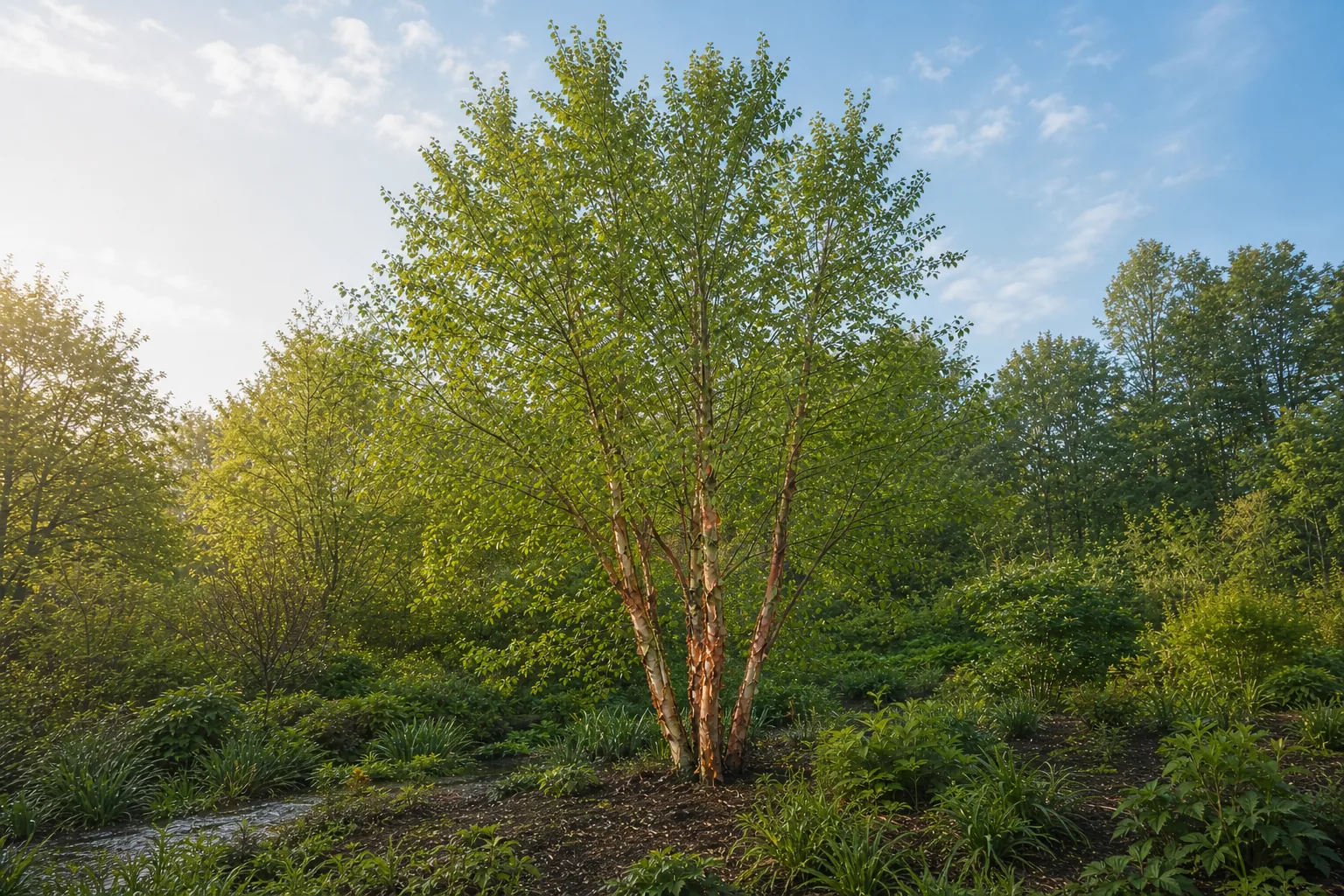
Plant Betula nigra where its mature crown and moisture-seeking root system have room, using either a well-spaced multi-stem form or a trained single trunk. Keep the flare visible and use a broad mulch ring to moderate soil heat and moisture.
Light
Full sun produces a dense crown, while partial shade is tolerated. In hot sites, adequate root moisture matters more than shading the canopy; avoid reflected heat combined with dry compacted soil.
Water
River birch prefers consistent moisture and tolerates wet soil and periodic inundation. Water deeply during dry periods, especially while young, but inspect drainage rather than assuming every low site is suitable.
Soil and planting
Use acidic, fertile soil that stays moist; clay is acceptable when the site still supplies oxygen between floods. High-pH soil commonly causes iron chlorosis, so test the site before planting rather than trying to correct a chronically alkaline location later.
Temperature, humidity, and fertilizer
River birch handles heat and humidity better than many birches when its roots remain cool and moist. Feed only from soil-test evidence, and avoid stimulating lush growth on a drought-stressed tree.
Pruning and propagation
Avoid pruning in spring when sap is running; train trunks while branches are small and remove only damaged, crossing, or structurally poor wood. Propagate the species from fresh seed and selected cultivars from cuttings or grafts.
Common problems
Start with the pattern, current soil moisture, and recent changes. One symptom can have several causes, so change the most likely factor first and observe before making another major adjustment.
| Symptom | Check first | First action |
|---|---|---|
| Young leaves yellow between green veins | Check soil pH before blaming watering or insects. | Test soil and, for persistent alkalinity, choose a better-adapted tree. |
| Leaves drop during summer heat | Check moisture several inches below mulch and inspect the root ball. | Soak the full root zone and maintain a broad mulch ring. |
| Sticky leaves with small insects | Inspect leaf undersides for aphids and look for natural predators. | Use a strong water spray first and avoid unnecessary broad-spectrum insecticide. |
| Winding pale areas inside leaves | Hold a leaf to light and check for leaf-miner tunnels. | Collect badly affected fallen leaves and confirm the pest before control. |
| Sap runs from a pruning cut | Check whether pruning occurred during spring sap flow. | Leave sound cuts alone and schedule future structural pruning outside that period. |
Pet and household safety
The reviewed sources did not provide a species-specific veterinary classification showing River Birch to be toxic or non-toxic to cats and dogs. Do not treat bark, catkins, or leaves as pet food; discourage chewing and consult a veterinarian after substantial ingestion or symptoms.
Frequently asked questions
How much sun does River Birch need?
Full sun to partial shade works, provided the root zone remains cool and moist.
Can River Birch grow in wet soil?
Yes. It tolerates moist to wet clay and periodic inundation better than many landscape trees.
Why are River Birch leaves yellow?
Interveinal yellowing often indicates iron chlorosis from alkaline soil; confirm with a soil test.
When should I prune River Birch?
Avoid spring sap flow and make limited structural cuts when branches are young.
How do I propagate River Birch?
Use fresh seed for the species; cuttings or grafting preserve named cultivars.
Is River Birch safe for pets?
A species-specific veterinary classification was not found, so this profile does not claim pet safety.
Sources and editorial review
This editorial draft is based on the sources below and awaits named horticulture-expert approval before publication.
- Betula nigra L.Royal Botanic Gardens, Kew — Plants of the World Online · Checked
- Black Birch — Betula nigraNC State Extension · Checked
- River birch — Betula nigraThe Morton Arboretum · Checked
- Betula nigraMissouri Botanical Garden · Checked
What works well
- Decorative peeling bark
- Tolerates wet clay
- More heat and borer tolerant than many birches
What to consider
- Chloroses in alkaline soil
- Drops twigs and catkins
- Large root zone needs water