Key takeaways
- Reserve space for a broad crown and competitive surface roots.
- Keep young roots evenly moist without burying the trunk flare.
- Use acidic soil to reduce chlorosis risk.
How to care for Red Maple
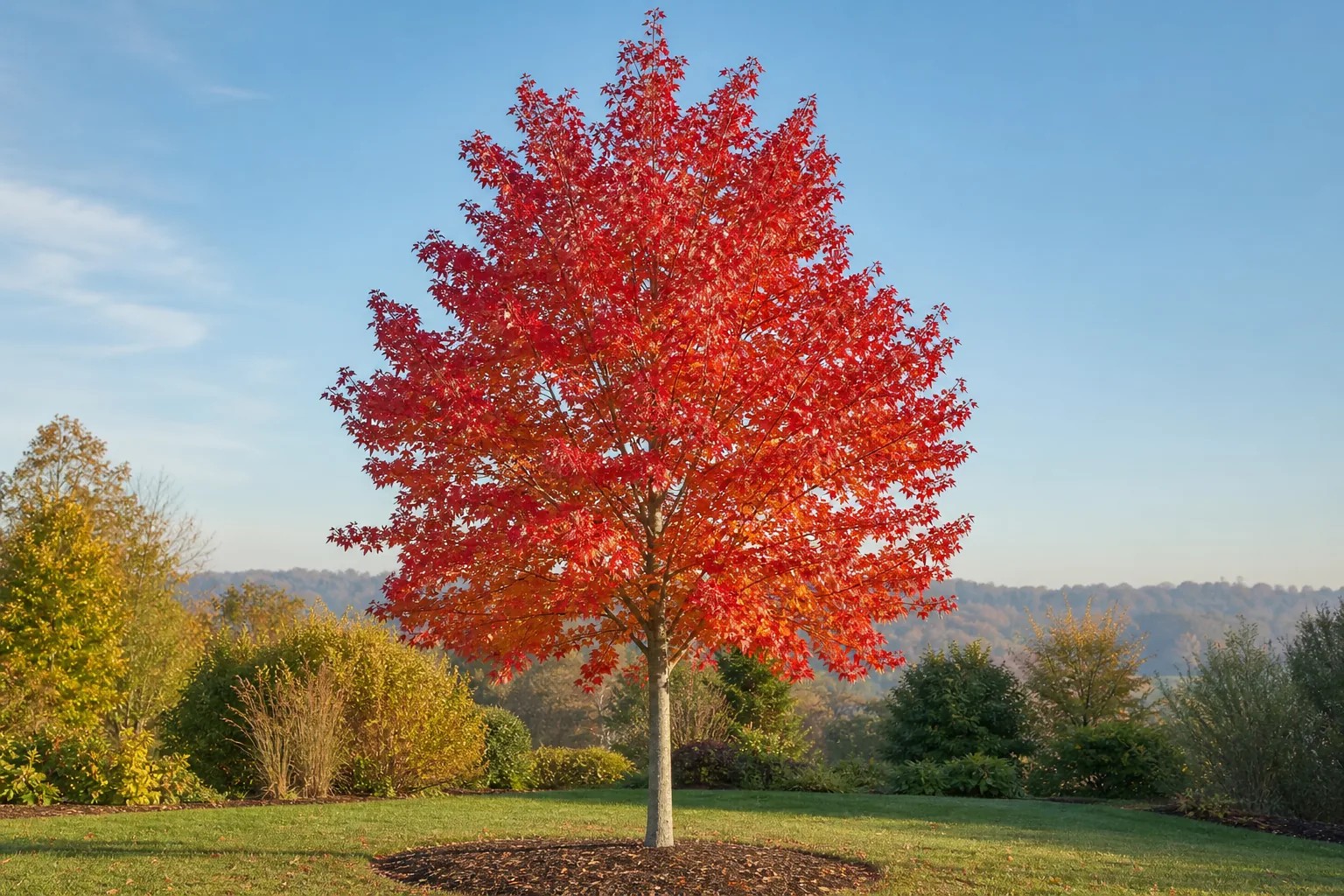
Plant Acer rubrum where its mature crown and dense surface-root system will not conflict with paving, foundations, or small planting beds. Keep the root flare visible, mulch broadly without touching the trunk, and water through the first seasons while the root system expands.
Light
Full sun generally gives the densest crown and strongest autumn color, while partial shade is tolerated. A young nursery tree should be planted at its final exposure rather than repeatedly moved after roots establish.
Water
Water deeply during establishment and during prolonged dry weather, checking the soil beneath mulch first. Red maple tolerates naturally moist sites, but a recently planted tree still fails when its compact nursery root ball dries while the surrounding soil remains damp.
Soil and planting
Use acidic to neutral soil with enough drainage for the selected site. Alkaline conditions can produce iron or manganese chlorosis; correct the site diagnosis instead of repeatedly adding fertilizer, and never cover the trunk flare with fill or mulch.
Temperature, humidity, and fertilizer
Red maple is a broad-ranging temperate tree whose local performance depends on provenance and cultivar. Base fertilizer on a soil test, because excessive nitrogen produces fast, weak growth without correcting alkaline-soil chlorosis.
Pruning and propagation
Train one strong central leader while the tree is young and remove damaged or crossing branches with clean cuts outside the branch collar. Propagate the species from fresh seed; named cultivars are commonly grafted or rooted because seedlings do not reproduce their traits reliably.
Common problems
Start with the pattern, current soil moisture, and recent changes. One symptom can have several causes, so change the most likely factor first and observe before making another major adjustment.
| Symptom | Check first | First action |
|---|---|---|
| Leaves yellow while veins remain green | Check soil pH and whether symptoms begin on new growth. | Request a soil test before adding iron or acidifying materials. |
| Leaf edges brown during summer | Check root-zone moisture, reflected heat, and recent transplanting. | Water the full root zone slowly and renew a shallow mulch ring. |
| Sparse grass beneath the crown | Check dense shade and the mat of shallow maple roots. | Replace struggling turf with mulch or a compatible shade planting without cutting roots. |
| Small twigs die back | Check drought stress, wounds, cankers, and branch unions. | Prune confirmed dead wood and correct water stress before treating a named pest. |
| Trunk flare disappears into soil | Check planting depth and accumulated mulch against the bark. | Expose the flare carefully and pull mulch several inches away from the trunk. |
Pet and household safety
ASPCA lists Acer rubrum as non-toxic to cats and dogs but toxic to horses. Wilted leaves are a particular equine hazard, so never allow horses access to fallen or pruned red maple foliage and contact a veterinarian promptly after suspected ingestion.
Frequently asked questions
How much sun does Red Maple need?
Full sun to partial shade is suitable; stronger sun usually supports denser growth and better fall color.
How often should I water a young Red Maple?
Check the original root ball and surrounding soil, then soak deeply whenever they begin to dry during establishment.
Why are Red Maple leaves yellow?
Interveinal yellowing often points to high-pH soil and nutrient unavailability, but a soil test should confirm the cause.
Can Red Maple grow in wet ground?
It tolerates moist and periodically wet sites, but planting depth and root-zone oxygen still matter.
How do I propagate Red Maple?
Use fresh seed for the species; grafting or cuttings are used to preserve named cultivar traits.
Is Red Maple safe for pets?
ASPCA lists it as non-toxic to cats and dogs, but it is toxic to horses.
Sources and editorial review
This editorial draft is based on the sources below and awaits named horticulture-expert approval before publication.
- Acer rubrum L.Royal Botanic Gardens, Kew — Plants of the World Online · Checked
- Carolina Maple — Acer rubrumNC State Extension · Checked
- Red maple — Acer rubrumThe Morton Arboretum · Checked
- Red MapleASPCA · Checked
What works well
- Strong autumn color
- Adaptable native tree
- Useful early-season wildlife value
What to consider
- Surface roots compete with lawn
- Can chlorose in alkaline soil
- Branches can need formative pruning