Key takeaways
- Choose determinate or indeterminate habit before selecting support.
- Keep soil moisture consistent while fruit develops.
- Keep pets away from foliage, stems, and unripe fruit.
How to care for Tomato
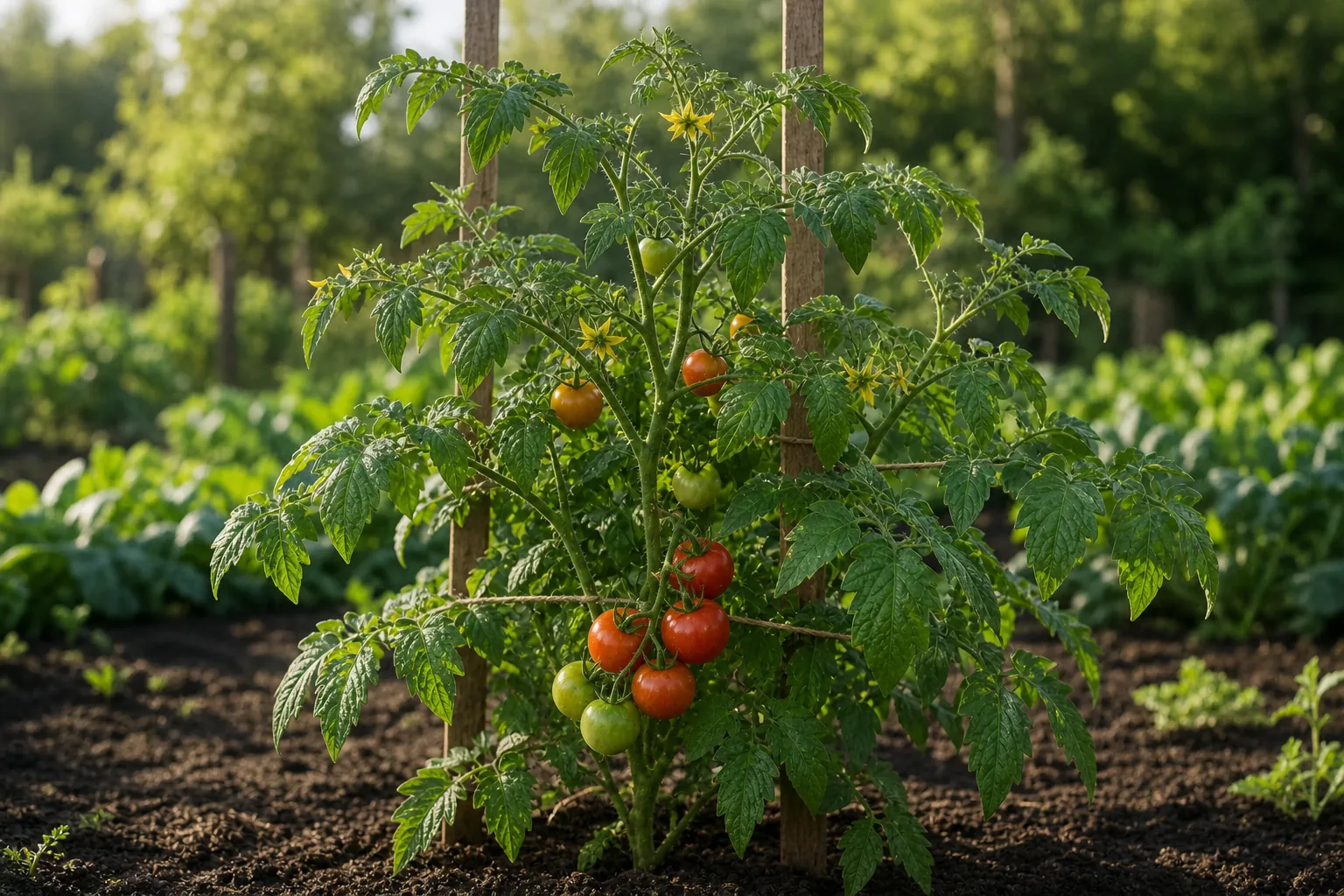
Solanum lycopersicum cultivars are either determinate bushes that finish a concentrated crop or indeterminate vines that continue growing and fruiting until cold stops them. Select that habit first, install the appropriate cage or stake at planting, and rotate crop locations where soil-borne tomato diseases have occurred.
Light
Tomatoes require full sun and strong light from seedling stage onward. Shade produces stretched growth and reduces flowering; harden indoor seedlings gradually so their tender leaves adjust to direct sun and wind.
Water
Keep soil moisture as even as practical while fruit expands, soaking the root zone instead of giving frequent shallow sprinkles. Large swings between dry and wet conditions contribute to cracking and blossom-end rot risk, while wet leaves raise disease pressure.
Soil and repotting
Use fertile, well-drained soil and base amendments on a soil test. In containers, choose a determinate or patio cultivar and a pot large enough to buffer heat and moisture; small pots dry too quickly for a fruiting crop.
Temperature, humidity, and fertilizer
Transplant after frost danger has passed and the soil has warmed. Excess nitrogen can create large leaves with fewer fruits, so follow soil-test guidance and avoid repeatedly feeding a plant already making vigorous foliage.
Pruning and propagation
Do not prune determinate tomatoes like indeterminate vines because their terminal shoots end in flowers and fruit. Start clean seed under bright light or root a healthy side shoot; never propagate from a plant showing systemic wilt or virus-like distortion.
Common problems
Start with the pattern, current soil moisture, and recent changes. One symptom can have several causes, so change the most likely factor first and observe before making another major adjustment.
| Symptom | Check first | First action |
|---|---|---|
| Dark sunken fruit end | Check moisture swings and whether the lesion begins at the blossom end. | Restore even watering and leave roots undisturbed while new fruit develops. |
| Fruit cracks | Check recent rain or irrigation after a dry period. | Maintain steadier root moisture and harvest ripe fruit promptly. |
| Lower leaves develop spots | Check whether spots spread upward after splash or prolonged leaf wetness. | Remove badly affected lower leaves and water only the soil. |
| Flowers drop without fruit | Check recent heat, cold, water stress, and excessive nitrogen. | Stabilize moisture and wait for a more suitable temperature window. |
| Plant wilts despite moist soil | Check whether wilt affects one branch or the whole plant and inspect the stem base. | Isolate the plant and seek local diagnosis before composting or replanting tomatoes there. |
Pet and household safety
ASPCA classifies tomato plants as toxic to cats and dogs and notes that ripe fruit is non-toxic. Keep pets away from stems, leaves, and unripe fruit. After ingestion or signs such as drooling, gastrointestinal upset, weakness, or unusual behavior, contact a veterinarian or animal poison-control service promptly.
Frequently asked questions
How often should I water Tomato?
Check soil moisture and soak the root zone as it begins to dry; keep the pattern consistent while fruit develops.
How much sun does Tomato need?
Use a full-sun site with long direct exposure; shade reduces sturdy growth and fruiting.
Does every Tomato need pruning?
No. Determinate bushes generally should not be pruned like indeterminate vines.
Can Tomato grow in a container?
Yes. Choose a compact determinate cultivar, a large draining pot, and a support suited to its mature habit.
How do I propagate Tomato?
Start from seed or root a healthy stem cutting; use disease-free material.
Is Tomato safe for pets?
The ripe fruit is considered non-toxic by ASPCA, but foliage, stems, and unripe fruit are unsafe.
Sources and editorial review
This editorial draft is based on the sources below and awaits named horticulture-expert approval before publication.
- Solanum lycopersicumNC State Extension · Checked
- Growing tomatoes in home gardensUniversity of Minnesota Extension · Checked
- Solanum lycopersicum L.Royal Botanic Gardens, Kew — Plants of the World Online · Checked
- Tomato PlantASPCA · Checked
What works well
- Productive edible crop
- Many sizes and flavors
- Container cultivars available
What to consider
- Needs frost-free warmth
- Disease-prone wet foliage
- Green parts are unsafe for pets