Key takeaways
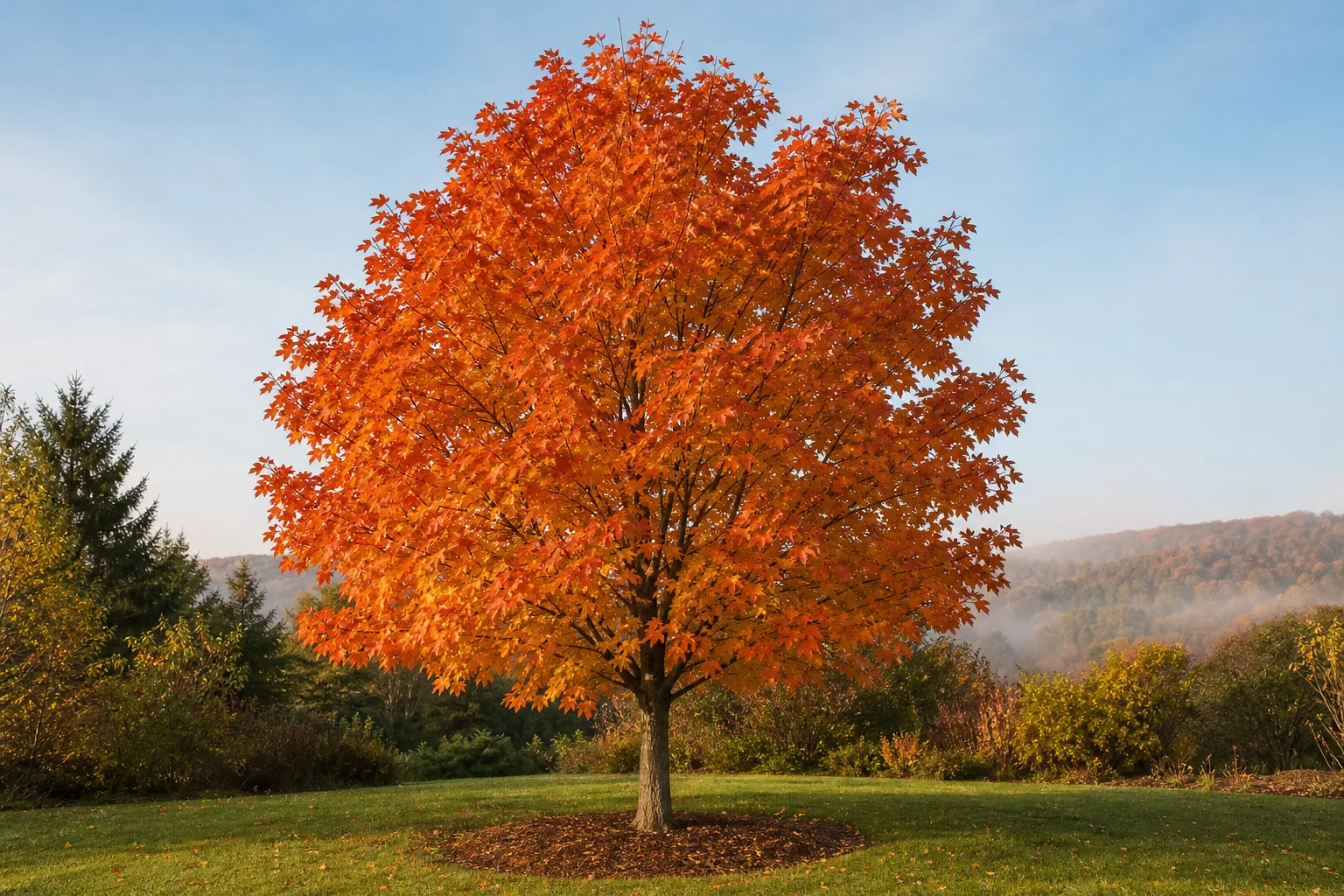
- Site for a mature 60-80 ft tree with a dense crown; sugar maple needs generous space and cool, moist conditions.
- Use fertile, slightly acidic, well-drained soil and avoid compacted ground, road salt, and heavy urban pollution.
- Water during drought to prevent leaf scorch and prune only dead or damaged wood; fall color is the main display.
How to care for sugar maple
Sugar maple (Acer saccharum) is a long-lived, slow-to-moderate growing shade tree that rewards careful siting more than routine care. Plant it in full sun to part shade in cool, moist, fertile, slightly acidic, well-drained soil, setting the root ball at nursery depth and mulching 2-3 inches out to the dripline without mounding against the trunk. Give the mature crown 60-80 ft of clearance; the root system is shallow and wide, and surface roots can heave sidewalks. Water young trees weekly through their first two seasons and irrigate established trees during extended drought to limit leaf scorch. This is the species most associated with maple syrup production, and its dense crown makes it a superb lawn or park specimen where salt, compaction, and air pollution are minimal.
Light
Sugar maple grows best in full sun to part shade, and is one of the more shade-tolerant maples when young. At least 6 hours of direct light daily keeps the crown dense and the fall color strong; deeper shade produces a thinner, more open canopy. In hot-summer regions light afternoon shade helps, but the tree still needs direct sun for good structure.
Water
Sugar maple prefers cool, evenly moist soil and is not drought tolerant, especially in the first years after planting. Water deeply and regularly through establishment, then irrigate during dry spells - leaf scorch (browning leaf margins) is the usual first sign of moisture stress. Avoid saturated ground; the tree also grows poorly in compacted or waterlogged soil where roots cannot breathe.
Soil and planting
Plant sugar maple in fertile, slightly acidic (pH 5.5-7.0), moist, well-drained loam, and avoid heavy clay that stays wet. It grows poorly in compacted, poorly drained, or alkaline soil and is intolerant of road salt and urban pollution, so select a protected lawn or park position rather than a busy street. Like all large garden trees it is planted in the ground, not repotted; set the root flare at grade and keep mulch away from the trunk.
Temperature, humidity, and fertilizer
Hardy in USDA zones 3-8, sugar maple is a cool-temperate tree that struggles with prolonged heat, drought, and humid lowland conditions; it performs best where summer temperatures stay moderate. Fertilizer is rarely needed on established trees - a light compost top-dressing in spring is enough, and excess nitrogen produces soft growth. Good airflow and dry foliage help limit tar spot, anthracnose, and other foliar diseases in humid summers.
Pruning and propagation
Prune sugar maple only to remove dead, damaged, or rubbing branches, and do major work in late winter while the tree is dormant; avoid spring pruning when sap is flowing heavily. Because maples can be slow to heal, keep cuts small and never top the tree. Propagation is usually by stratified seed, which gives variable offspring, or by grafting named cultivars that preserve selected fall color or form.
Common problems
Start with the pattern, current soil moisture, and recent changes. One symptom can have several causes, so change the most likely factor first and observe before making another major adjustment.
| Symptom | Check first | First action |
|---|---|---|
| Brown, scorched leaf margins in summer | Check soil moisture, drought, and heat; also look for salt exposure or compacted roots. | Water deeply and mulch the root zone; site the tree where road salt and compaction are absent. |
| Yellowing leaves, wilting, and dieback on one side of the crown | Check for verticillium wilt - prune a small branch to look for streaked sapwood. | Maintain vigor with water and mulch; remove dead wood and obtain a confirmed diagnosis before any treatment. |
| Black, tar-like spots on leaves | Check for tar spot and other foliar fungi in humid weather. | Rake and remove fallen leaves, improve airflow, and avoid overhead irrigation; serious outbreaks are uncommon. |
| Cankers, sunken bark, or branch dieback | Check trunk and limb bases for canker fungi and mechanical injury. | Prune out affected branches with clean cuts, avoid wounding the trunk, and water during stress. |
| Surface roots lifting pavement or competition at the base | Check for the tree's naturally shallow, wide-spreading root system. | Mulch rather than grass over the root zone and avoid planting near sidewalks, drives, or drains. |
Pet and household safety
Sugar maple (Acer saccharum) has no species page on the ASPCA Toxic and Non-Toxic Plants list, and no species-specific classification for cats and dogs was confirmed in the reviewed sources. The closest ASPCA maple entry, Amur maple, is listed non-toxic to dogs and cats, but ASPCA cautions that some maples are toxic to horses because wilted foliage can destroy red blood cells. Keep pets and livestock from eating wilted or fallen leaves, and contact a veterinarian after substantial ingestion.
Frequently asked questions
How much sun does a sugar maple need?
Full sun to part shade, with at least 6 hours of direct light for the densest crown and best fall color. It is one of the more shade-tolerant maples when young.
How often should I water sugar maple?
Deeply and regularly through the first two seasons, then during dry spells. Moisture stress shows as leaf scorch - brown leaf margins in summer.
What soil suits sugar maple?
Cool, moist, fertile, slightly acidic, well-drained loam. It grows poorly in compacted, poorly drained, or salt-affected soil.
Why are my sugar maple leaves getting brown edges?
Usually drought stress or heat; road salt and compacted roots make it worse. Water deeply, mulch, and avoid street-side siting.
When should I prune sugar maple?
In late winter while dormant, removing only dead, damaged, or rubbing branches. Avoid heavy spring pruning when sap is flowing.
Is sugar maple safe for pets?
ASPCA has no species page for Acer saccharum; the closest maple listing (Amur maple) is non-toxic to dogs and cats, but some maples are toxic to horses when wilted, so prevent pets and livestock from eating wilted leaves.
Sources and editorial review
This editorial draft is based on the sources below and awaits named horticulture-expert approval before publication.
- Acer saccharumRoyal Botanic Gardens, Kew (Plants of the World Online) · Checked
- Amur MapleASPCA · Checked
- Acer saccharumNorth Carolina State University Extension · Checked
- Acer saccharumMissouri Botanical Garden Plant Finder · Checked
What works well
- Spectacular orange-red autumn color and dense summer shade.
- Long-lived, relatively slow-growing hardwood with few serious pests in cool climates.
- Source of the sap used for maple syrup; valuable to birds and wildlife for seed and cover.
What to consider
- Intolerant of road salt, soil compaction, and urban pollution; fails as a street tree in many settings.
- Susceptible to verticillium wilt, anthracnose, cankers, tar spot, and drought-related leaf scorch.
- Not individually classified by the ASPCA for cats and dogs; wilted maple foliage is a documented hazard to horses.