Key takeaways
- Install a strong support before stems lengthen.
- Use a warm sheltered position with free drainage.
- Wear gloves and avoid contact with milky sap when pruning.
How to care for Star Jasmine
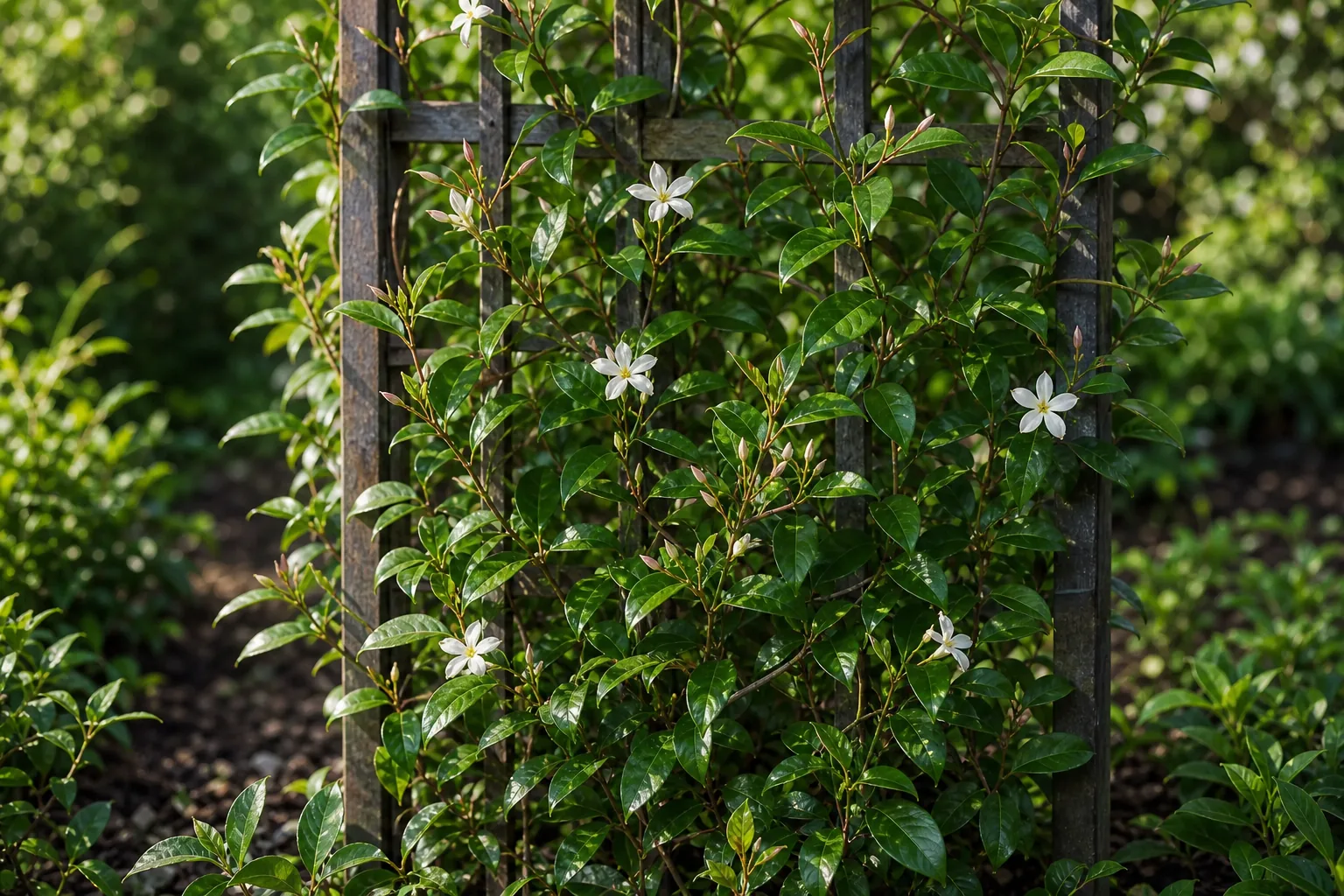
Trachelospermum jasminoides climbs by twining rather than clinging directly to masonry. Install horizontal wires or trellis first, guide young shoots loosely, and allow enough wall area for its eventual woody framework.
Light
Full sun encourages the strongest flowering in a mild site, while light shade can reduce stress in hotter climates. Shelter the vine from cold, drying wind and avoid moving glasshouse-grown foliage abruptly into intense sun.
Water
Keep a new plant evenly moist while roots establish, then water when the upper root zone begins to dry. Large containers need closer summer checks, but heavy damp soil can encourage root rot.
Soil and repotting
Use fertile, free-draining soil and keep the crown at grade. A container needs durable support attached independently of loose potting mix and enough volume for a long-lived woody climber.
Temperature, humidity, and fertilizer
A warm sheltered microclimate supports evergreen foliage and flowering; cold snaps may bronze, spot, or shed leaves. Feed only where growth or soil evidence indicates need, not as a substitute for warmth and light.
Pruning and propagation
Tie in young shoots and prune wayward or congested stems after flowering or in spring, cleaning tools after contact with sticky latex. Propagate by layering or semi-ripe cuttings from healthy shoots.
Common problems
Start with the pattern, current soil moisture, and recent changes. One symptom can have several causes, so change the most likely factor first and observe before making another major adjustment.
| Symptom | Check first | First action |
|---|---|---|
| Leaves bronze in winter | Check temperature history and whether tissue remains firm. | Protect from cold wind and wait for spring growth before pruning. |
| Yellow leaves in wet soil | Check drainage, root odor, and whether the site stays saturated. | Reduce irrigation and improve drainage before feeding. |
| Vine grows but does not flower | Check direct light, pruning timing, and excess nitrogen. | Increase sun gradually or stop unnecessary high-nitrogen feed. |
| Stems fall away from wall | Check whether the support offers wires the stems can twine around. | Retie loosely to a secure trellis without constricting stems. |
| Sticky bumps or leaf stippling | Inspect stems and leaf undersides for scale or mites. | Isolate container plants and identify the pest before treatment. |
Pet and household safety
NC State's species profile includes Star Jasmine among plants with toxic or poisonous characteristics and notes milky latex in damaged stems. No species-specific ASPCA page was found in the reviewed sources. Wear gloves for pruning, prevent pets and children from chewing it, and contact a veterinarian or poison service after a concerning exposure.
Frequently asked questions
How often should I water Star Jasmine?
Water when the upper root zone begins to dry, more closely monitoring new plants and containers.
Does Star Jasmine need full sun?
It flowers best with good light but also grows in light shade; shelter matters in cold or windy sites.
Why does Star Jasmine need a trellis?
Its stems twine around supports and cannot safely grip a bare wall without wires or a framework.
Can Star Jasmine grow in a pot?
Yes, in a large draining container with independent support and winter protection where needed.
How do I propagate Star Jasmine?
Use layering in spring or semi-ripe cuttings in summer or autumn.
Is Star Jasmine safe for pets?
Do not treat it as pet-safe; keep animals away from the plant and its milky sap.
Sources and editorial review
This editorial draft is based on the sources below and awaits named horticulture-expert approval before publication.
- Star Jasmine — Trachelospermum jasminoidesNC State Extension · Checked
- How to grow trachelospermumRoyal Horticultural Society · Checked
- Trachelospermum jasminoidesRoyal Horticultural Society · Checked
- Landscape Plants for GeorgiaUniversity of Georgia Cooperative Extension · Checked
What works well
- Highly fragrant flowers
- Evergreen screen in mild climates
- Works in large containers
What to consider
- Needs support
- Cold-sensitive in exposed sites
- Milky sap requires care