Key takeaways
- Plant in full sun to part shade in moist, well-drained soil; it tolerates clay and a fairly wide range of conditions.
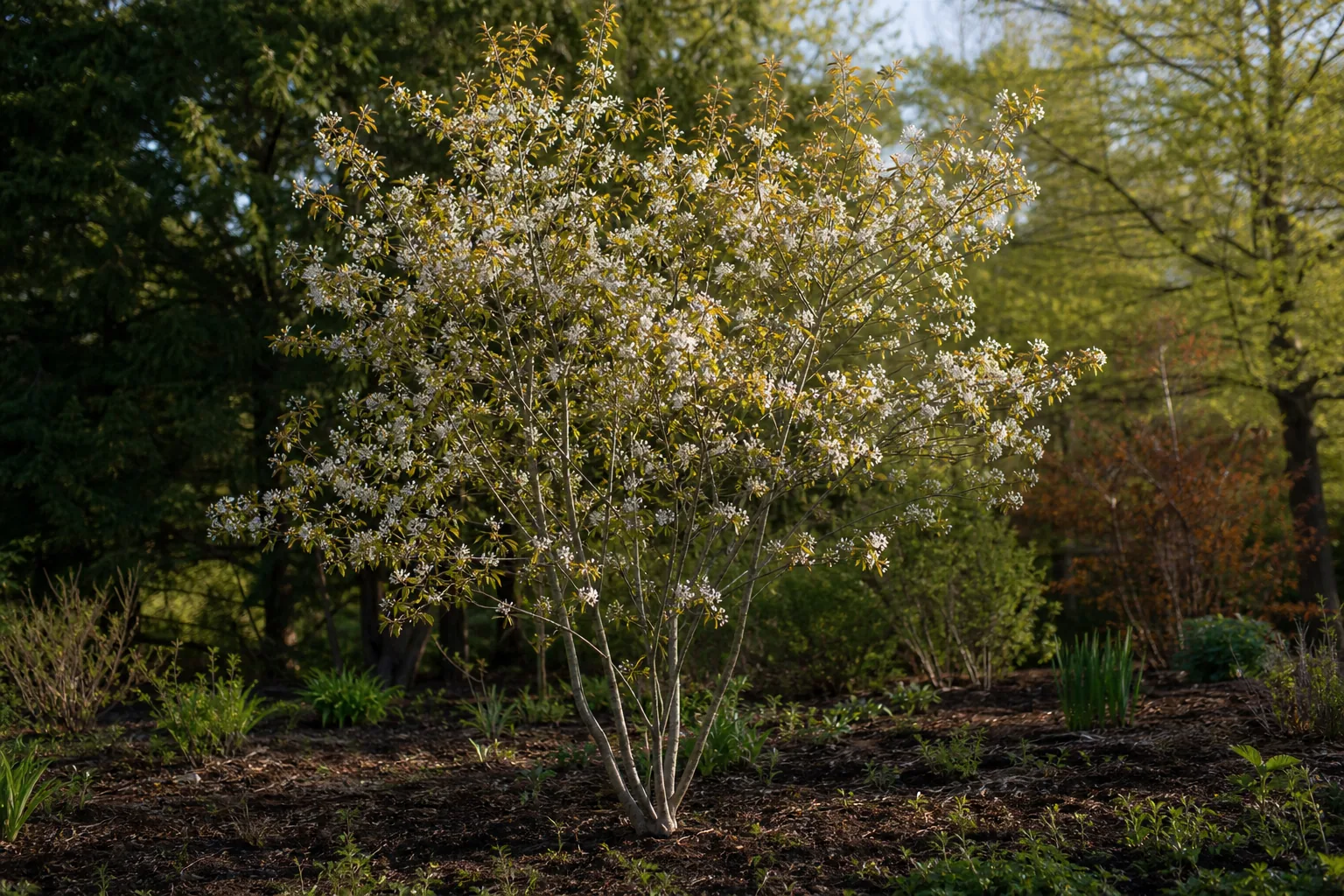
- Expect white flowers in early spring and edible, blueberry-like fruit in early summer - birds often harvest the berries first.
- Prune sparingly to shape and remove suckers; the tree has no serious pests or diseases in most gardens.
How to care for serviceberry
Serviceberry (Amelanchier canadensis) is an easy, early-flowering small tree or large shrub that earns attention in every season. Plant it in full sun to part shade in average, medium, well-drained soil - it tolerates clay, sand, wet spots, and a fairly wide pH range, and is happiest in cool, moist ground. Set the root ball at nursery depth, mulch the root zone, and water through the first season; after that it needs little. The white flowers open before the leaves in early spring, the edible purplish-black berries ripen in early summer, and the foliage turns orange-red in fall. Remove root suckers and dead or crossing stems in the dormant season, and let the birds and butterflies enjoy the fruit.
Light
Serviceberry flowers and fruits best in full sun to part shade - at least 4-6 hours of direct light. It tolerates light shade, especially in the afternoon in warmer zones, but heavy shade reduces flowering and fruit set and makes the crown thin. In southern gardens some afternoon shade is helpful.
Water
Serviceberry prefers moist, well-drained soil and grows naturally in damp lowlands, but once established it tolerates dry spells and even brief flooding. Water deeply through the first growing season and during extended drought; established trees usually need little supplemental irrigation except in hot, dry summers.
Soil and planting
Plant serviceberry in average, medium-moisture, well-drained soil in full sun to part shade; it grows on clay, loam, or sand and tolerates a somewhat wide range of soil conditions, including damp sites. As a garden tree it is planted in the ground - it does not repot - so set the root ball at grade, keep the crown at the soil line, and mulch without mounding against the trunk. Suckers may appear from the base and can be removed to keep a single- or few-stemmed form.
Temperature, humidity, and fertilizer
Hardy in USDA zones 4-8, serviceberry is a cold-hardy, adaptable tree for temperate gardens. It grows best in cool, moist conditions and is somewhat sensitive to urban heat islands and pollution. Fertilizer is rarely needed; a light compost mulch in spring is sufficient. In humid summers watch for rust, leaf spot, and powdery mildew, and keep fallen leaves cleaned up to reduce disease carry-over.
Pruning and propagation
Prune serviceberry lightly in the dormant season to remove dead, damaged, or crossing stems and to keep a pleasing multi-stem form; it needs little pruning beyond that. Remove root suckers whenever they appear if you want a tree form. Propagate from stratified seed sown in fall or spring, from softwood cuttings taken in early summer, or by division of suckering clumps.
Common problems
Start with the pattern, current soil moisture, and recent changes. One symptom can have several causes, so change the most likely factor first and observe before making another major adjustment.
| Symptom | Check first | First action |
|---|---|---|
| Orange, rust-colored spots or galls on leaves | Check for rust fungi, which alternate between serviceberry and junipers/cedars. | Remove heavily infected leaves and avoid planting near junipers; rust is usually cosmetic. |
| Scorched or blackened shoot tips | Check for fire blight on stressed trees. | Prune out infected shoots below the damage with disinfected tools and improve airflow. |
| Powdery white coating on leaves | Check for powdery mildew in humid, shaded, or crowded sites. | Improve airflow and light, avoid overhead watering, and remove affected foliage. |
| Suckers crowding the trunk base | Check for natural multi-stem suckering growth. | Rub or prune out suckers in the dormant season to maintain the desired form. |
| Fruit disappearing before it ripens | Check bird and wildlife pressure - serviceberry fruit is a favorite food. | Accept the wildlife value or harvest berries early for jams before birds take them. |
Pet and household safety
Serviceberry is not listed on the ASPCA Toxic and Non-Toxic Plants list, and no species-specific veterinary classification for cats and dogs was confirmed in the reviewed sources. NC State Extension reports no known toxicity and the berries are a traditional human food, but the small seeds contain trace cyanogenic compounds, as in other rose-family fruit. Discourage pets from eating large quantities and contact a veterinarian after substantial ingestion.
Frequently asked questions
How much sun does serviceberry need?
Full sun to part shade - at least 4-6 hours of direct light for good flowering and fruit. Light afternoon shade is fine in warmer zones.
How often should I water serviceberry?
Deeply through the first season and during drought; established trees tolerate dry spells and brief wet soil but prefer even moisture.
What soil suits serviceberry?
Average, medium, well-drained soil; it tolerates clay, sand, damp sites, and a fairly wide pH range.
Are serviceberries edible?
Yes - the purplish-black berries resemble blueberries and are used in jams, jellies, and pies, though birds often harvest them first.
When should I prune serviceberry?
Lightly in the dormant season to remove dead or crossing stems and control suckers; the tree needs little pruning.
Is serviceberry safe for pets?
ASPCA has no species page for serviceberry and no classification for cats and dogs was confirmed; NC State reports no known toxicity and the berries are edible for people, but the seeds contain trace cyanogenic compounds, so discourage pets from eating large quantities.
Sources and editorial review
This editorial draft is based on the sources below and awaits named horticulture-expert approval before publication.
- Amelanchier canadensisRoyal Botanic Gardens, Kew (Plants of the World Online) · Checked
- Toxic and Non-Toxic PlantsASPCA · Checked
- Amelanchier canadensisNorth Carolina State University Extension · Checked
- Amelanchier canadensisMissouri Botanical Garden Plant Finder · Checked
What works well
- Four-season value: spring flowers, edible early-summer fruit, and orange-red fall foliage.
- Edible berries for jams and pies and a favorite food source for birds and wildlife.
- Low-maintenance, adaptable small tree for woodland, native, and streamside gardens.
What to consider
- Fruit is often gone quickly - birds and wildlife compete for the berries.
- Prone to suckering and to rust, leaf spot, blight, and powdery mildew in humid sites.
- No ASPCA listing and no confirmed species-specific classification for cats and dogs.