Key takeaways
- Plant in full sun to part shade in moist, acidic, organically rich, well-drained soil; the fleshy roots need room and cool mulch.
- Shelter from strong winds and late frosts - the early flowers are easily killed by frost, and buds open too soon on warm south-facing walls.
- Prune immediately after flowering; otherwise leave this tree mostly alone.
How to care for saucer magnolia
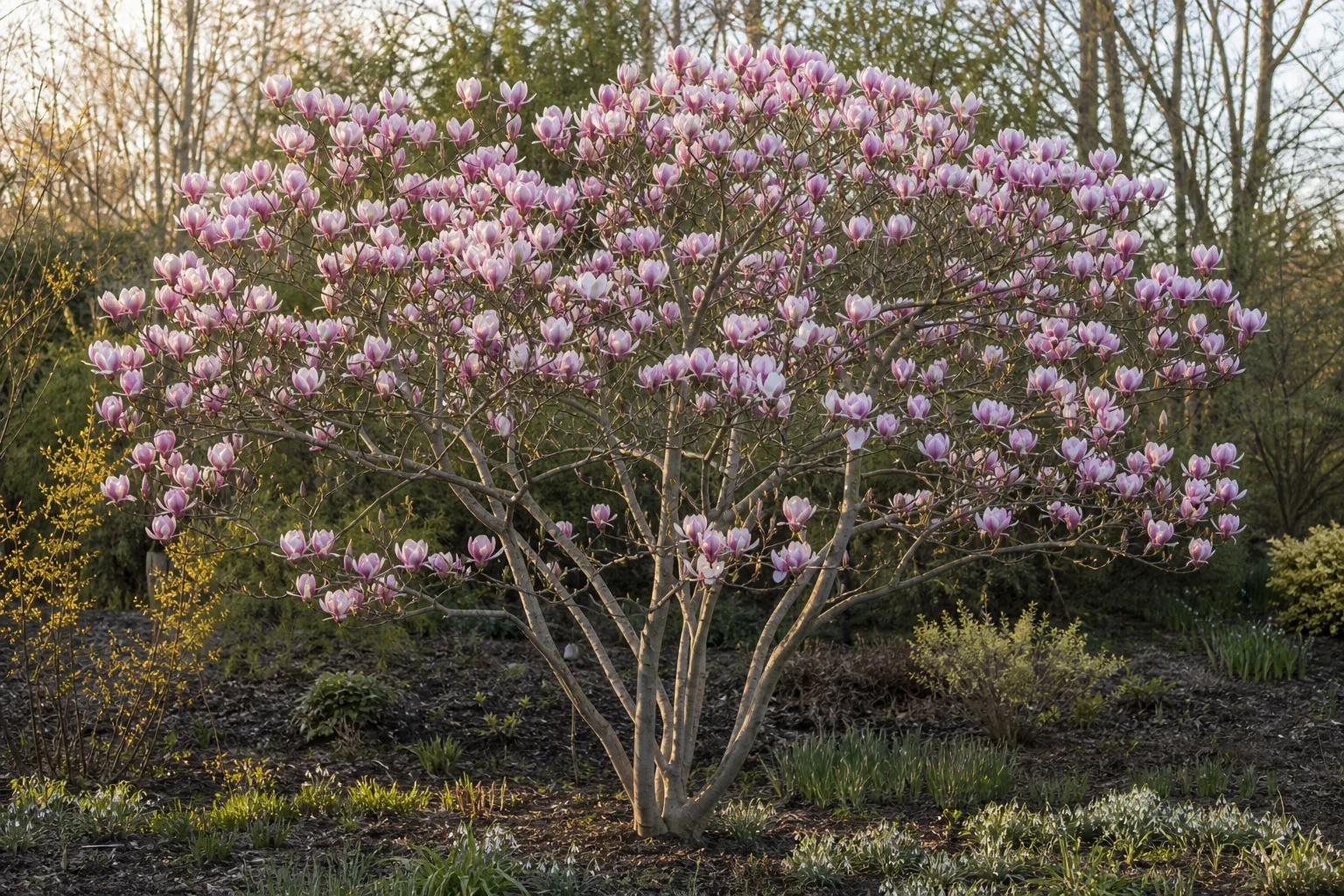
Saucer magnolia (Magnolia × soulangeana) is a broad, low-branching tree grown almost entirely for its spectacular early bloom, so siting is everything. Plant it in full sun to part shade in moist, acidic, organically rich, well-drained soil, in a spot protected from strong winds and late frosts; avoid warm south-facing walls that push buds open early into frost. Mulch the wide-spreading, fleshy root system to keep it cool and moist, water during dry spells, and disturb the roots as little as possible. Prune only right after flowering, when necessary.
Light
Saucer magnolia flowers best in full sun to part shade, with at least 4-6 hours of direct light. It does not flower well in deep shade. In hot-summer regions, light afternoon shade helps, but keep it out of southern exposures next to buildings, which absorb heat and force buds open early where frost can kill them.
Water
Saucer magnolias prefer consistent, moderate moisture. Water deeply during dry spells, especially through the first few years, and keep the root zone mulched to conserve moisture and keep roots cool. The fleshy roots resent both drought and waterlogged ground, so improve drainage where needed and avoid frequent shallow watering that keeps the surface wet.
Soil and planting
Plant saucer magnolia in moist, acidic (pH about 5.5-6.5), organically rich, well-drained soil, working in leaf compost at planting. The fleshy, wide-spreading root system needs plenty of room and dislikes disturbance, compaction, and wet, heavy ground, so choose the site carefully and avoid digging or trampling around the root zone. Magnolias are planted in the ground, not repotted; set the root ball at its nursery depth and mulch without mounding against the trunk.
Temperature, humidity, and fertilizer
Saucer magnolia is hardy in USDA zones 4-9, but the flowers are the vulnerable part: late frosts and cold wind destroy the bloom, while hot south-facing sites force buds open too early. Choose late-flowering cultivars where frosts are common. Fertilizer is rarely needed on established trees - a light compost mulch in spring is enough - and excess nitrogen produces soft growth at the expense of flowers. Watch for soft scale, leaf spot, and canker in humid regions.
Pruning and propagation
Prune saucer magnolia only immediately after flowering, removing dead, damaged, or crossing branches. The soft wood heals slowly and large cuts invite decay, so train the tree when young and keep cuts small; never top it. Propagate named cultivars by softwood cuttings in summer, layering, or grafting, because the hybrid does not come true from seed, and seedlings also take many years to bloom.
Common problems
Start with the pattern, current soil moisture, and recent changes. One symptom can have several causes, so change the most likely factor first and observe before making another major adjustment.
| Symptom | Check first | First action |
|---|---|---|
| Flowers turn brown and fall before opening | Check whether a freeze or cold wind hit while the buds were swelling. | Site away from frost pockets and warm south walls, and plant late-flowering cultivars. |
| Yellow leaves with green veins on a wet site | Check soil pH and drainage; wet, alkaline, or compacted soil blocks nutrient uptake. | Improve drainage, mulch the root zone, and adjust soil toward acidic pH; avoid disturbing the roots. |
| Honeydew and sooty mold on leaves | Check branches and leaf undersides for soft scale insects. | Rinse off sooty mold, encourage natural enemies, and treat heavy infestations with horticultural oil. |
| Spotted leaves in humid weather | Check for algal or fungal leaf spot in humid, shaded conditions. | Improve airflow, rake fallen leaves, and avoid overhead watering. |
| Cankers and dying branches | Look for sunken bark and dieback, often after root damage or wounding. | Prune out affected branches, avoid trunk wounds, and keep the tree vigorous with water and mulch. |
Pet and household safety
Saucer magnolia has no individual ASPCA species page, but the ASPCA classifies the closely related star magnolia (Magnolia bush, M. stellata) as non-toxic to dogs, cats, and horses, and no university or botanical-garden source reports toxic principles in magnolias. As with any plant, eating large amounts can cause mild stomach upset, so discourage chewing and contact a veterinarian if signs persist.
Frequently asked questions
How much sun does a saucer magnolia need?
Full sun to part shade, with at least 4-6 hours of direct light. It flowers best in bright light but appreciates some afternoon shade in hot regions.
How often should I water saucer magnolia?
Consistently through establishment and during dry spells. The fleshy roots need even moisture but resent waterlogged ground, so mulch to keep the root zone cool and moist.
What soil suits saucer magnolia?
Moist, acidic (pH 5.5-6.5), organically rich, well-drained soil. Work in leaf compost at planting and avoid compacted or wet ground.
Why did my magnolia buds fail to open?
Usually late frost or cold wind, or buds pushed open early by a warm south-facing wall. Site away from frost pockets and hot walls, and choose late-flowering cultivars.
When should I prune a saucer magnolia?
Immediately after flowering, removing dead, damaged, or crossing branches. The soft wood heals slowly, so keep cuts small and train the tree young.
Is saucer magnolia safe for pets?
Generally yes - the ASPCA classifies the closely related star magnolia as non-toxic to dogs, cats, and horses, and no toxic principles are reported for magnolias.
Sources and editorial review
This editorial draft is based on the sources below and awaits named horticulture-expert approval before publication.
- Magnolia × soulangeanaRoyal Botanic Gardens, Kew (Plants of the World Online) · Checked
- Magnolia BushASPCA · Checked
- Magnolia x soulangeanaNorth Carolina State University Extension · Checked
- Magnolia (HGIC 1015)Clemson Cooperative Extension Home & Garden Information Center · Checked
What works well
- Spectacular early-spring display of large cup-shaped pink-and-white flowers.
- Rounded, multi-stemmed form works well as a specimen, lawn, or patio tree.
- Generally non-toxic to cats and dogs, and reasonably deer resistant and pollution tolerant.
What to consider
- Late frosts or warm south-facing sites can destroy the flowers before they open.
- The fleshy root system resents disturbance, drought, and wet, compacted ground.
- Soft scale, leaf spot, and canker can disfigure the tree in humid regions.