Key takeaways
- Use acidic soil and a woodland-edge exposure.
- Keep roots cool with mulch but keep mulch off the trunk.
- Avoid planting where dogwood anthracnose is a severe local problem.
How to care for Flowering Dogwood
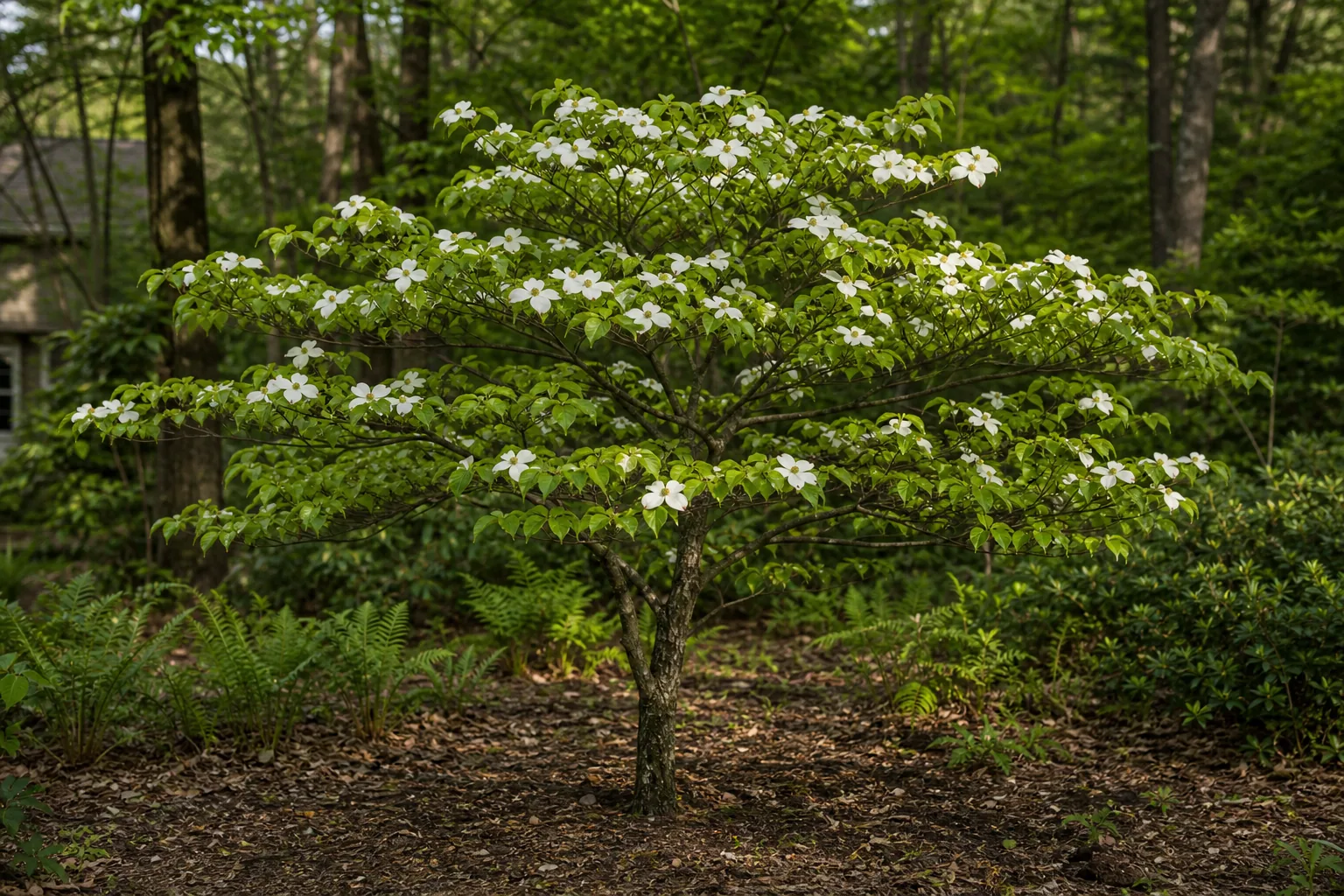
Place Cornus florida at a woodland edge or in an open site with cool roots, good air movement, and protection from severe heat. Keep the root flare visible, minimize digging beneath its shallow crown, and choose resistant nursery stock where dogwood anthracnose occurs.
Light
Partial shade, especially afternoon shade in hot climates, resembles its understory habitat. Adequate filtered or morning sun supports flowers, while deep shade reduces bloom and exposed hot sun increases drought stress.
Water
Keep newly planted roots evenly moist but never waterlogged. During drought, soak the root zone slowly and keep foliage dry when possible, because stressed trees become more vulnerable to borers and disease.
Soil and planting
Use acidic, organically rich, well-drained soil and a two- to four-inch mulch layer that stops short of the trunk. Avoid alkaline fill, soil compaction, and grade changes over the shallow roots.
Temperature, humidity, and fertilizer
Flowering dogwood performs best in a temperate woodland-edge microclimate rather than reflected heat. Do not force soft growth with heavy nitrogen; diagnose pale foliage with a soil test and preserve airflow around the crown.
Pruning and propagation
Prune sparingly to remove dead, diseased, or crossing branches, using clean tools and retaining the layered form. Grow the species from prepared seed; cuttings or grafting preserve named cultivar traits.
Common problems
Start with the pattern, current soil moisture, and recent changes. One symptom can have several causes, so change the most likely factor first and observe before making another major adjustment.
| Symptom | Check first | First action |
|---|---|---|
| Tan leaf spots with purple margins | Check recent wet weather and whether lesions spread to twigs. | Remove fallen leaves and seek local diagnosis for anthracnose before treatment. |
| White coating on leaves | Check whether the coating wipes away and growth is distorted. | Improve airflow and choose locally resistant cultivars for future planting. |
| Leaves scorch at edges | Check soil moisture, afternoon sun, and root disturbance. | Water deeply and protect the root zone with correctly placed mulch. |
| Branch tips die back | Check cankers, borer holes, and drought history. | Prune confirmed dead wood and correct the underlying stress. |
| Tree declines in wet ground | Check drainage and roots for dark, soft tissue. | Stop irrigation and improve drainage; seek diagnosis before replanting. |
Pet and household safety
The reviewed sources do not establish Flowering Dogwood as toxic or non-toxic to cats and dogs. Its bitter red fruit is wildlife food, not a pet treat. Prevent chewing and contact a veterinarian after substantial ingestion or symptoms rather than relying on an unverified safety claim.
Frequently asked questions
How much sun does Flowering Dogwood need?
Partial shade with morning sun is ideal in hot regions; it can take more sun where roots stay cool and moist.
How often should I water Flowering Dogwood?
Keep new roots evenly moist and soak during drought, while avoiding continuously saturated soil.
Why are the leaves spotted?
Anthracnose, leaf spot, and other causes overlap, so document symptoms and seek local diagnosis.
Should I mulch Flowering Dogwood?
Yes; use a broad two- to four-inch layer and leave the trunk flare uncovered.
How do I propagate Flowering Dogwood?
Use prepared seed for the species and cuttings or grafting to preserve cultivars.
Is Flowering Dogwood safe for pets?
A species-specific authoritative veterinary classification was not found, so this profile does not claim it is pet-safe.
Sources and editorial review
This editorial draft is based on the sources below and awaits named horticulture-expert approval before publication.
- Cornus florida L.Royal Botanic Gardens, Kew — Plants of the World Online · Checked
- Cornus floridaNC State Extension · Checked
- Flowering dogwood — Cornus floridaThe Morton Arboretum · Checked
- Cornus floridaMissouri Botanical Garden · Checked
What works well
- Four-season interest
- Valuable bird fruit
- Compact native tree
What to consider
- Anthracnose-sensitive
- Shallow roots dislike disturbance
- Drought and heat stress increase pests