Key takeaways
- Plant in full sun for the heaviest bloom, in moist, fertile, well-drained loam.
- Expect a short lifespan (often 15-20 years) and monitor for cankers, borers, and root rot.
- The leaves, stems, and seeds are toxic to cats, dogs, and horses - keep pets from chewing the tree.
How to care for ornamental cherry
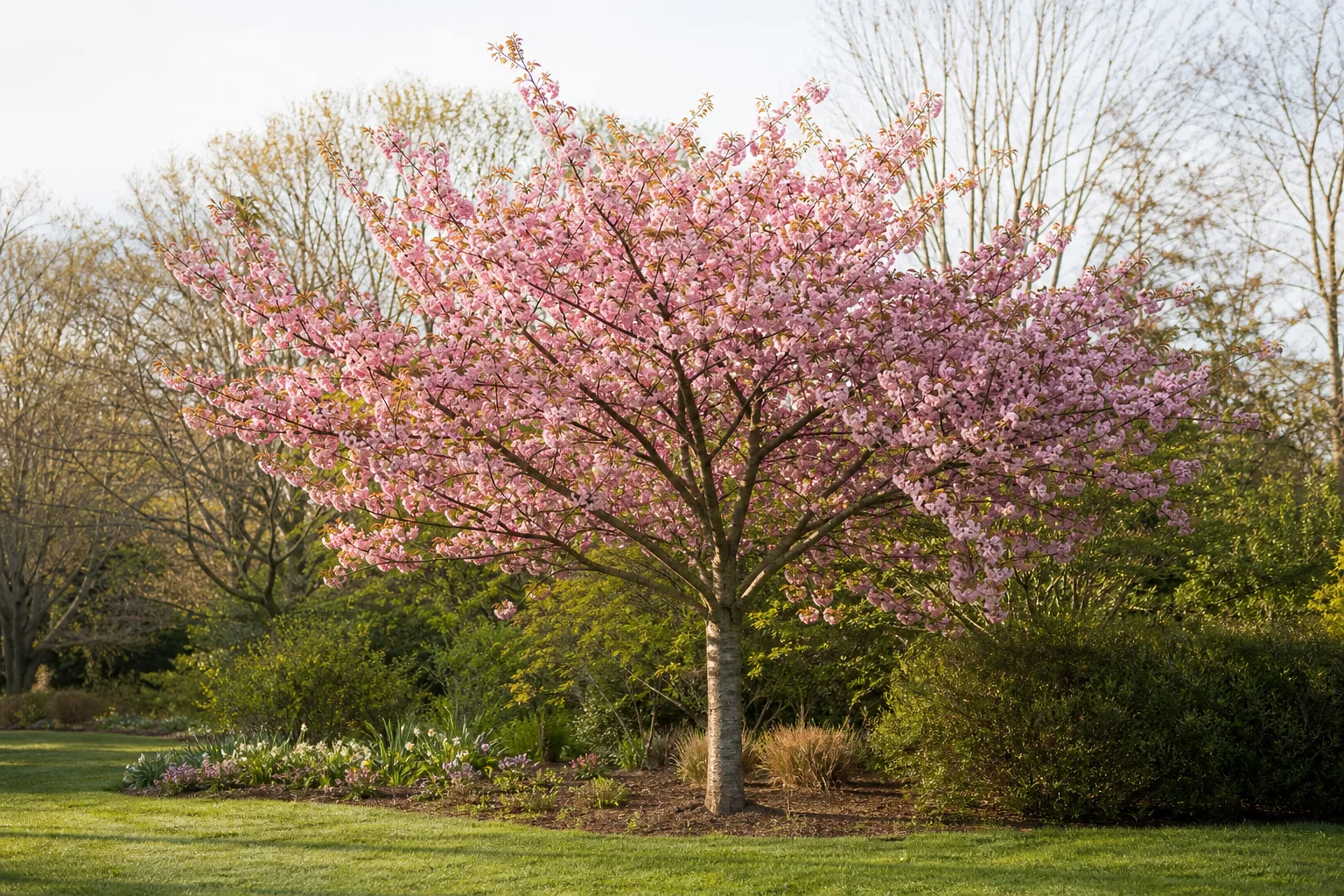
Ornamental cherry (Prunus serrulata) is a showy but comparatively short-lived flowering tree. Plant it in full sun to part shade in moist, fertile, well-drained loam - full sun gives the best flowering - and set the root ball at nursery depth with the root flare at grade. Water deeply and regularly through the first few seasons, then during dry spells; cherries resent both drought and soggy roots. Prune only in the dormant season to remove dead or crossing branches, and make clean cuts because the bark is thin and easily wounded. Expect a working lifespan of roughly 15-20 years in many gardens; many plants sold as 'Japanese flowering cherry' are grafted cultivars such as 'Kwanzan' that stay in the 15-25 ft range.
Light
Ornamental cherry flowers best in full sun - at least 6 hours of direct light daily - producing the densest blossom display. It tolerates part shade, where it still grows but blooms less heavily and may hold more foliar disease. Choose the sunniest spot available for the best spring show.
Water
Keep the soil consistently moist but well drained; cherries need regular water through establishment and during dry summer spells, but never stand in soggy ground, which promotes root rot. Mulch the root zone to conserve moisture and keep roots cool, and avoid overhead irrigation that keeps foliage wet and raises disease pressure.
Soil and planting
Plant ornamental cherry in moist, fertile, well-drained loam; it adapts to acidic to alkaline pH but dislikes poorly drained or compacted ground. Plant in the ground at nursery depth with the graft union (on grafted cultivars) above the soil line, and mulch to the dripline without mounding on the trunk. Good drainage and airflow matter more than fertility for keeping this tree healthy.
Temperature, humidity, and fertilizer
Hardy in USDA zones 5-8, ornamental cherry is a temperate tree whose blossoms are easily damaged by late frosts. It performs best with good airflow, which lowers the risk of leaf spot, powdery mildew, and cankers in humid weather. Fertilizer is rarely needed; a light compost mulch in spring is sufficient, and excess nitrogen produces soft growth that attracts borers.
Pruning and propagation
Prune ornamental cherry only in the dormant season, removing dead, diseased, or crossing branches and any watersprouts; avoid spring and summer pruning, which exposes the tree to disease and beetle attack. Keep pruning cuts small and clean, as the bark heals slowly. Propagate named cultivars by grafting or budding onto cherry rootstock, or from softwood cuttings in early summer; most garden forms do not come true from seed.
Common problems
Start with the pattern, current soil moisture, and recent changes. One symptom can have several causes, so change the most likely factor first and observe before making another major adjustment.
| Symptom | Check first | First action |
|---|---|---|
| Sunken cankers and dieback on trunk or branches | Check for canker fungi entering through wounds or pruning cuts. | Prune out affected limbs with clean cuts in dry weather and avoid wounding the bark; severe trunk cankers may end the tree. |
| Black, rough knots or swellings on branches | Check for black knot, a fungal disease of Prunus. | Prune out galls at least 4 inches below the swelling in the dormant season and dispose of the wood. |
| Twisted, distorted, or blistered leaves in spring | Check for leaf curl on young foliage. | Rake and remove infected leaves; improve airflow and avoid wetting foliage. |
| Gummy ooze on trunk and branches | Check for borers or cankers entering through bark wounds. | Keep the tree vigorous with water and mulch, avoid wounding bark, and remove heavily infested wood. |
| Ragged chewed leaves and skeletonized foliage | Check for Japanese beetles, tent caterpillars, and aphids. | Hand-pick beetles and caterpillars and support natural predators; avoid broad pesticides that harm pollinators. |
Pet and household safety
Ornamental cherry is toxic to dogs, cats, and horses. The ASPCA classifies Prunus species as toxic via cyanogenic glycosides, and NC State Extension specifically flags Prunus serrulata leaves, stems, and seeds as toxic to cats, dogs, and horses. Cyanide release is greatest in wilting plant material, with signs including brick-red mucous membranes, dilated pupils, difficulty breathing, and shock. Prevent pets from chewing the tree and contact a veterinarian after ingestion.
Frequently asked questions
How much sun does ornamental cherry need?
Full sun - at least 6 hours of direct light daily - for the heaviest blossom display; it tolerates part shade but blooms less.
How often should I water a cherry tree?
Deeply through establishment and during dry spells, keeping soil moist but well drained; avoid soggy roots and overhead watering.
When should I prune ornamental cherry?
Only in the dormant season. Spring and summer pruning expose fresh wounds to disease and beetle attack.
Why is my ornamental cherry dying after about 15-20 years?
Ornamental cherries are naturally short-lived with weak wood and heavy pest/disease pressure; replace with a new grafted cultivar.
What problems affect flowering cherries?
Cankers, black knot, leaf spot, leaf curl, powdery mildew, root rot, borers, aphids, tent caterpillars, and Japanese beetles.
Is ornamental cherry safe for pets?
No - the ASPCA classifies Prunus species as toxic to dogs, cats, and horses, and NC State flags Prunus serrulata leaves, stems, and seeds as toxic; keep pets from chewing the tree.
Sources and editorial review
This editorial draft is based on the sources below and awaits named horticulture-expert approval before publication.
- Prunus serrulataRoyal Botanic Gardens, Kew (Plants of the World Online) · Checked
- CherryASPCA · Checked
- Prunus serrulataNorth Carolina State University Extension · Checked
- Prunus serrulataMissouri Botanical Garden Plant Finder · Checked
What works well
- Spectacular spring blossom in white, pink, or deep pink, single, semi-double, or double.
- Small size (15-25 ft) and graceful vase to rounded form suit gardens and streets.
- Attracts early pollinators and provides colorful, if brief, seasonal interest.
What to consider
- Short-lived (often 15-20 years) with weak wood and thin, easily damaged bark.
- Susceptible to many diseases and pests: leaf spot, leaf curl, black knot, cankers, borers, aphids, and Japanese beetles.
- Toxic to cats, dogs, and horses - leaves, stems, and seeds contain cyanogenic glycosides.