Key takeaways
- Plant in full sun with sharply drained soil; established olives are drought tolerant and fail in wet, poorly drained ground.
- Give about two months of cool winter temperatures (40-50°F) to set flowers and fruit.
- In cold climates, grow olives in large containers and overwinter them in a cool, bright, frost-free place.
How to care for olive
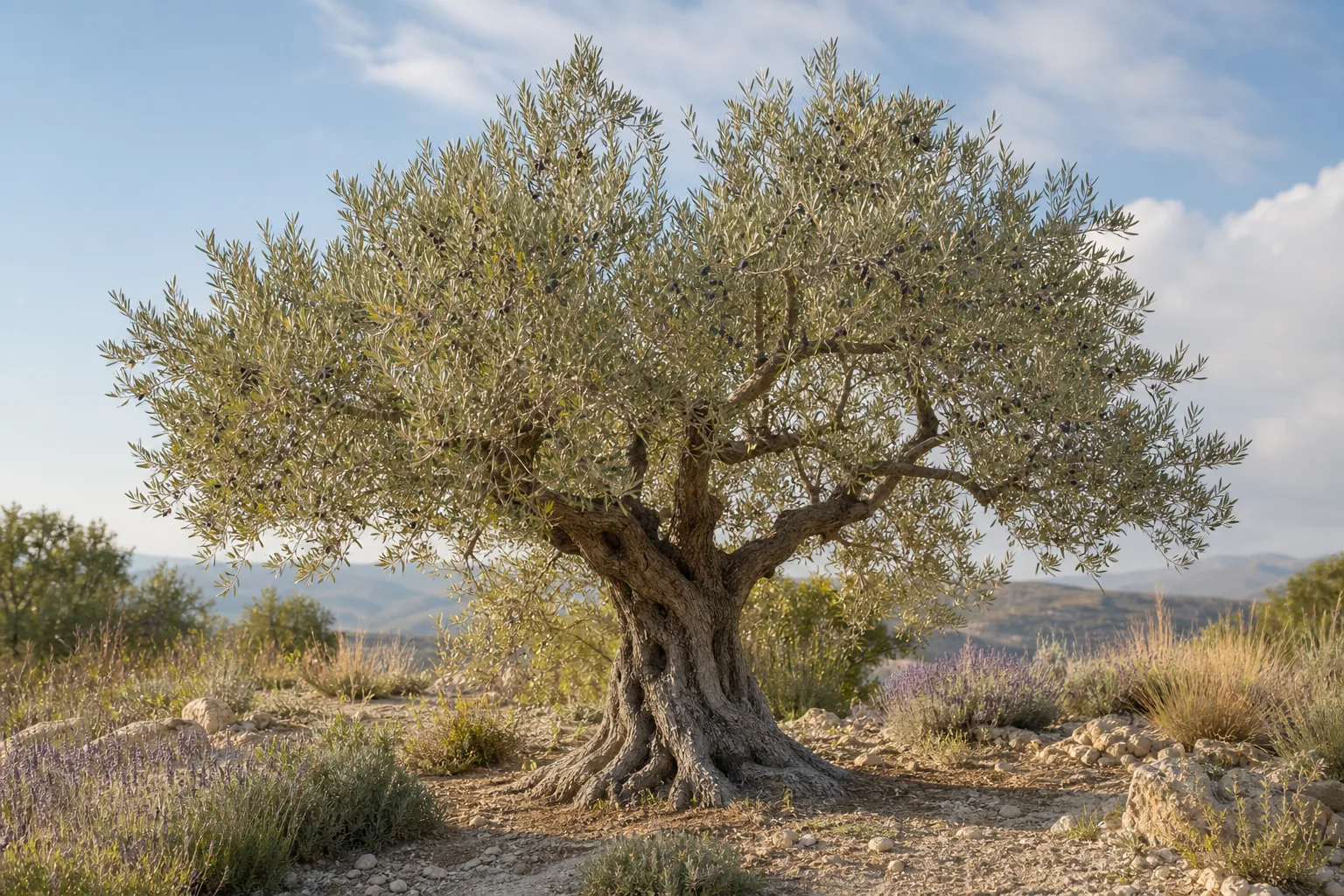
Olive (Olea europaea) is a drought-adapted evergreen that thrives on a Mediterranean rhythm of hot, dry summers and mild, wet winters. Plant it in full sun in lean to moderately fertile, sharply drained soil, and water deeply but infrequently once established - wet feet cause root rot. In cold climates, grow olives in large containers and overwinter them in a cool (40-50°F), bright, frost-free place. Feed lightly in spring, prune to open the crown in late winter, and pick fruit when it colors. Fruiting trees near patios or driveways drop messy fruit, so fruitless cultivars are a tidy alternative.
Light
Olives need full sun - at least 6 hours of direct light daily, and more is better - to stay compact, flower, and ripen fruit. In shade they grow thin and leggy and rarely fruit. Position container trees against a sunny south- or west-facing wall.
Water
Olives are drought tolerant once established, but young trees need regular deep watering through the first few years to build roots. Thereafter, water deeply every 2-4 weeks during dry periods and let the soil dry out between waterings; in Mediterranean climates rainfall alone is often enough. Containers dry out faster and need more frequent water, but always let the top few inches dry before the next watering to avoid root rot.
Soil and planting
Plant olives in lean to moderately fertile, sharply drained soil, from sandy loam to clay, provided drainage is good; they thrive in the well-drained, often alkaline soils typical of the Mediterranean. In containers use a gritty, freely draining mix and a large pot with drainage holes; olives are happy in pots for years. Repot or refresh the mix every 3-4 years, moving up one pot size, and keep the crown at the same depth.
Temperature, humidity, and fertilizer
Olives are hardy in USDA zones 8-10 (some cultivars to 7) and need about two months of cool 40-50°F winter temperatures to flower; they withstand summer heat and low humidity far better than cold, wet winters. In cold climates, protect containers from hard freezes and place them in a cool, bright room. Feed lightly with a balanced fertilizer in early spring, avoid excess nitrogen, and watch for olive knot, verticillium wilt, root rot, and scale.
Pruning and propagation
Prune olives in late winter or early spring to open the crown, remove dead wood, and balance the tree; olives tolerate hard pruning and regrow well, but heavy cutting reduces a season's fruit. On fruitless cultivars, occasional shaping is all that is needed. Propagate named cultivars by semi-ripe cuttings or grafting, because seedlings are variable; remove suckers and self-sown seedlings from the rootstock.
Common problems
Start with the pattern, current soil moisture, and recent changes. One symptom can have several causes, so change the most likely factor first and observe before making another major adjustment.
| Symptom | Check first | First action |
|---|---|---|
| Gnarled galls on twigs and branches | Look for round bacterial galls on twigs and pruning wounds. | Prune out galls well below the knot in dry weather, disinfecting tools between cuts. |
| Wilt and dieback on one side of the tree | Check for streaked wood and one-sided decline; prune a small twig to look inside. | Maintain vigor with water and good drainage, remove affected wood, and avoid replanting olives in the same soil. |
| Yellowing and collapse with soggy roots | Check drainage and watering; lift the plant to inspect for dark, soft roots. | Improve drainage, water less frequently and more deeply, and repot container olives in a grittier mix. |
| White or brown scale on leaves and stems | Check stems and leaf undersides for scale insects and sooty mold. | Rinse or scrub light infestations, apply horticultural oil in the dormant season, and encourage natural predators. |
| Poor flowering or fruit set | Check winter temperatures; olives need about two months below 50°F to flower. | Site for cool winter exposure (or a cool bright room for containers) and wait for the tree to mature. |
Pet and household safety
Olive is generally regarded as non-toxic to cats and dogs. The ASPCA Toxic and Non-Toxic Plants list has no entry for common olive (Olea europaea) - its 'Russian olive' and 'autumn olive' entries are unrelated Elaeagnus species - and no toxic principles are reported by NC State Extension or the Missouri Botanical Garden. The fruit is edible, though the single pit is a choking hazard and large amounts of unprocessed fruit or leaves can cause mild stomach upset, so discourage chewing and contact a veterinarian if signs persist.
Frequently asked questions
How much sun does an olive tree need?
Full sun - at least 6 hours of direct light daily, and more is better. Olives grow thin and rarely fruit in shade.
How often should I water an olive tree?
Deeply but infrequently. Water young trees regularly to establish, then let the soil dry between deep waterings; established olives are drought tolerant and resent wet feet.
What soil suits an olive tree?
Lean to moderately fertile, sharply drained soil, ideally with a neutral to alkaline pH. Good drainage matters more than richness; wet ground causes root rot.
Why is my olive tree not fruiting?
Usually insufficient winter chill (about two months below 50°F), a young tree, or too little sun. Give it a cool winter and full sun; some cultivars need a pollinizer.
Can olives grow in containers?
Yes - olives are classic container plants. Use a large pot with drainage, a gritty freely draining mix, and overwinter them in a cool, bright, frost-free place.
Is olive safe for pets?
Generally yes - no toxic principles are reported, and the ASPCA has no entry for common olive. The fruit is edible, though the pit is a choking hazard and large amounts of leaves or unprocessed fruit can cause mild stomach upset.
Sources and editorial review
This editorial draft is based on the sources below and awaits named horticulture-expert approval before publication.
- Olea europaeaRoyal Botanic Gardens, Kew (Plants of the World Online) · Checked
- Toxic and Non-Toxic Plants List (Olive)ASPCA · Checked
- Olea europaeaNorth Carolina State University Extension · Checked
- Olea europaeaMissouri Botanical Garden Plant Finder · Checked
What works well
- Silver-grey evergreen foliage and a gnarled, picturesque trunk with year-round interest.
- Drought tolerant once established, with few serious pests or diseases.
- Edible fruit and oil; excellent in large patio containers.
What to consider
- Frost tender (zones 8-10); containers need protection from hard freezes.
- Needs specific winter chill to flower and fruit reliably.
- Fruiting trees are messy near hardscapes, and scale or root rot can occur in wet conditions.