Key takeaways
- Site in full sun with moist, acidic, well-drained soil and room for a 40-60 ft mature tree.
- Choose cool northern climates; Norway spruce grows poorly and is stress-prone where summers are hot and dry.
- Low maintenance: water during establishment and extended drought, and prune only dead or damaged branches.
How to care for Norway spruce
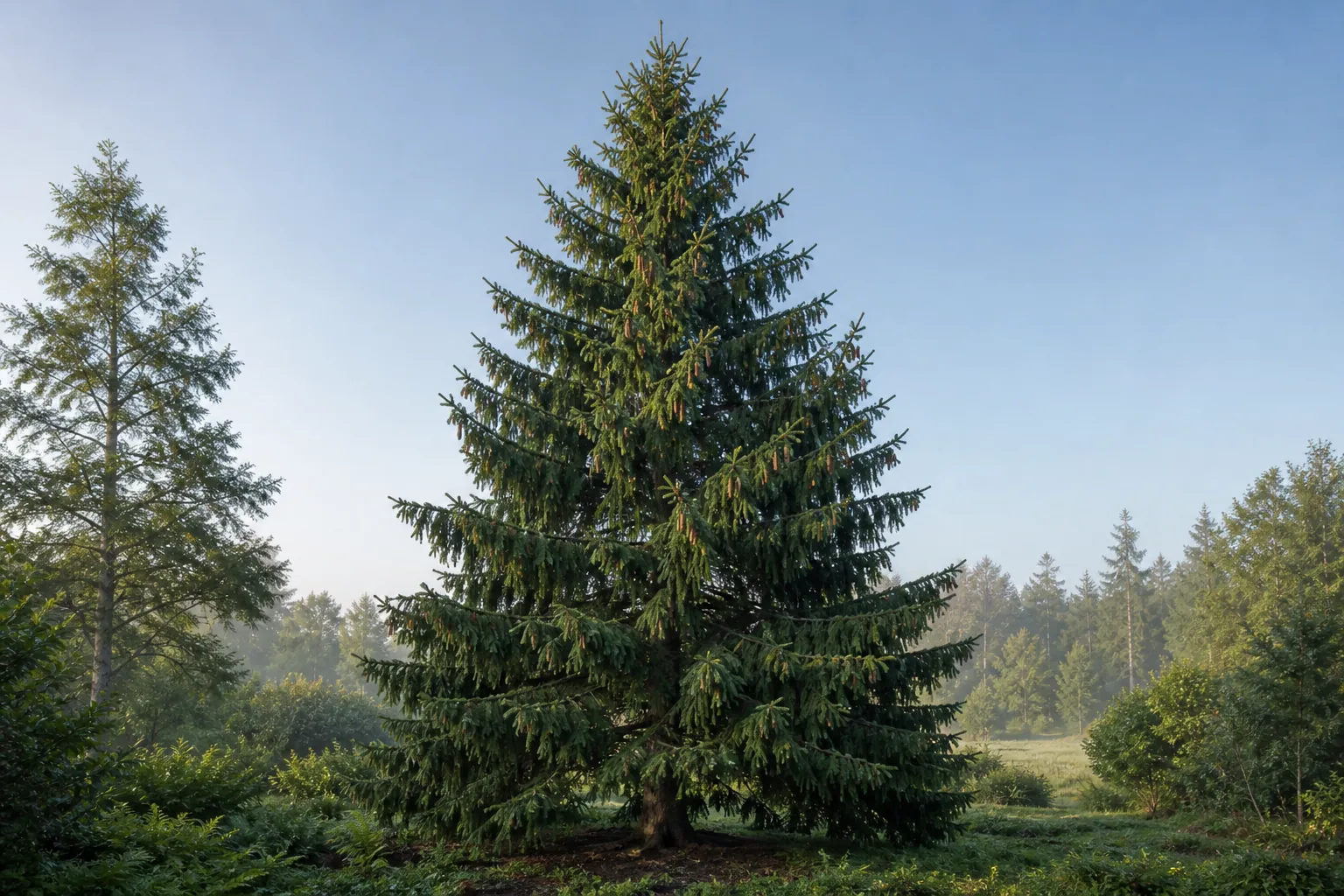
Norway spruce (Picea abies) is a large, fast-growing evergreen that needs the right climate and plenty of space. Plant it in full sun in average, acidic, evenly moist, well-drained soil, preferably in a cool northern site; it grows poorly south of USDA zone 7 and stresses in hot, dry summers. Water young trees through the first two seasons and during extended drought, then provide little else. Give the mature tree 40-60 ft of clearance, keep the root zone mulched, and prune only dead or damaged branches.
Light
Norway spruce grows best in full sun, with at least 6 hours of direct light daily, which keeps the crown dense and symmetrical. It tolerates a little shade when young, but deep shade produces thin, open growth. In hot-summer regions, choose a site that avoids the worst afternoon heat.
Water
Water newly planted Norway spruce regularly through the first two seasons to establish the root system, then during prolonged dry spells. Established trees tolerate moderately dry soil but grow best with even moisture; avoid both drought and waterlogged ground. Because the roots are shallow, a bark mulch over the root zone helps retain moisture and keep roots cool.
Soil and planting
Plant Norway spruce in average, acidic, evenly moist, well-drained soil, ideally rich sandy loam; it does poorly in heavy, wet, or alkaline ground. In cold climates it is a low-maintenance landscape tree planted in the ground, never repotted - set the root ball at grade and keep mulch away from the trunk. Established trees tolerate somewhat dryish soil.
Temperature, humidity, and fertilizer
Norway spruce is one of the hardiest conifers (USDA zones 2-7) and performs best in cool-summer climates; it grows poorly south of zone 7 and dislikes hot, dry, exposed sites. It needs no regular fertilizer - a light mulch of compost in spring is enough. Stressed trees are attacked by red spider mites, aphids, cytospora canker, and needle cast, so good siting and even moisture are the best prevention.
Pruning and propagation
Norway spruce needs almost no pruning; remove dead or damaged branches and, on specimen trees, occasional lower branches to keep the crown open. Do not top the tree or cut into old wood, which heals poorly. Propagate the species from seed (after cold stratification) and named cultivars by grafting, since cultivars do not come true from seed.
Common problems
Start with the pattern, current soil moisture, and recent changes. One symptom can have several causes, so change the most likely factor first and observe before making another major adjustment.
| Symptom | Check first | First action |
|---|---|---|
| Browning, stippled needles and fine webbing | Check branch interiors and needle bases for spider mites and webbing in hot, dry weather. | Hose off foliage, increase humidity, and treat with horticultural oil or insecticidal soap. |
| Yellowing needles and dieback starting from the top | Look for sunken cankers and resin on lower branches; stressed trees are most affected. | Remove affected branches with clean cuts and reduce stress through proper watering and mulching. |
| Needles turning brown and dropping | Check whether new or old needles are affected and look for fruiting bodies on the needles. | Rake and remove fallen needles, improve airflow, and avoid overhead watering. |
| Sparse, thin crown in a hot or dry site | Check climate fit; this species grows poorly south of zone 7 and in drought. | Water during dry spells and mulch the root zone; consider a better-suited spruce for warm regions. |
| Broken or split branches after snow and ice | Check for split and damaged branches after heavy snow or ice loads. | Remove damaged branches cleanly and gently brush heavy snow from young trees. |
Pet and household safety
Norway spruce is not individually listed on the ASPCA Toxic and Non-Toxic Plants list, and no species-specific non-toxic classification for cats and dogs was confirmed in the reviewed sources. The sharp, resinous needles can cause mechanical irritation and stomach upset if chewed or swallowed, so treat ingestion conservatively and contact a veterinarian if a pet shows persistent vomiting or other signs.
Frequently asked questions
How much sun does a Norway spruce need?
Full sun - at least 6 hours of direct light daily. It grows best in cool climates and tolerates a little shade when young.
How often should I water Norway spruce?
Deeply through the first two seasons and during prolonged drought. Established trees tolerate moderately dry soil but grow best with even moisture.
What soil suits Norway spruce?
Average, acidic, evenly moist, well-drained soil, ideally rich sandy loam. It grows poorly in heavy, wet, or alkaline ground and in hot, dry sites.
Why is my spruce turning brown?
Check for spider mites, cytospora canker, or needle cast - all favored by drought or site stress. Improve watering and mulch, and remove affected branches.
How big does Norway spruce get?
In landscapes it matures to about 40-60 ft tall and 25-30 ft wide, so give it generous space; in its native European range it can reach 100-150 ft.
Is Norway spruce safe for pets?
Not confirmed - the ASPCA does not list spruce, and no species-specific non-toxic classification for cats and dogs was confirmed. The sharp, resinous needles can irritate the mouth and stomach, so prevent chewing.
Sources and editorial review
This editorial draft is based on the sources below and awaits named horticulture-expert approval before publication.
- Picea abiesRoyal Botanic Gardens, Kew (Plants of the World Online) · Checked
- Toxic and Non-Toxic Plants List (Spruce)ASPCA · Checked
- Picea abiesNorth Carolina State University Extension · Checked
- Picea abiesMissouri Botanical Garden Plant Finder · Checked
What works well
- Fast, vigorous evergreen growth with a handsome pyramidal form.
- Very cold hardy (zones 2-7) and tolerant of deer and urban conditions.
- Good screen, windbreak, or specimen for large cool-climate landscapes.
What to consider
- Grows poorly south of zone 7 and in hot, dry, or exposed sites.
- Susceptible to red spider mites, aphids, cytospora canker, and needle cast on stressed trees.
- Not individually listed by the ASPCA; not confirmed non-toxic for cats and dogs, and sharp needles can irritate if chewed.