Key takeaways
- Give lemons at least 6-8 hours of direct sun and sharply drained, slightly acidic soil; they rot in wet or heavy ground.
- Protect from frost: grow in zones 9-11 in the ground, or overwinter container trees in a cool, bright room.
- Feed regularly through the growing season and water freely when actively growing; container citrus need year-round fertilizing.
How to care for lemon
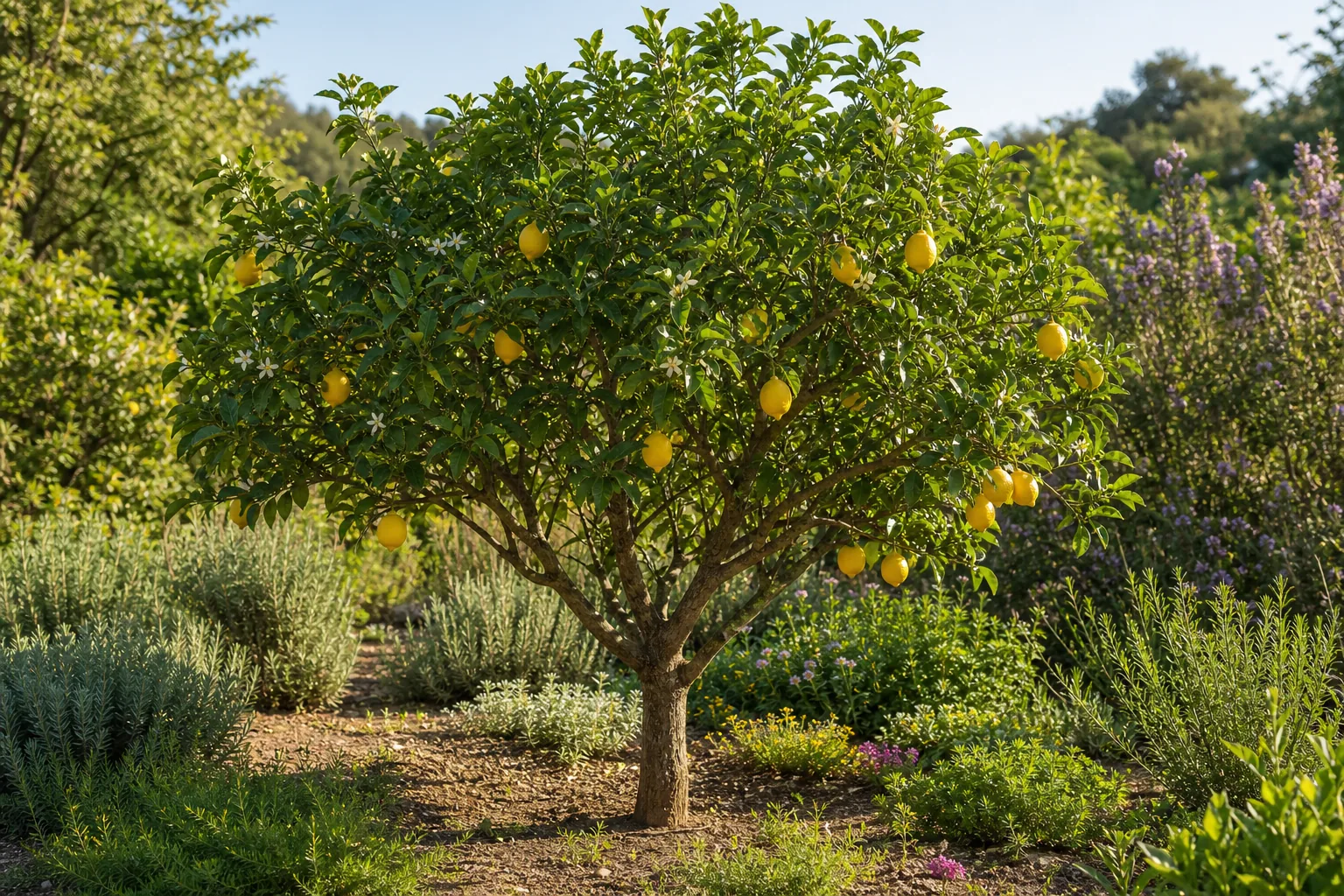
Lemon (Citrus × limon) is a frost-tender evergreen that stays healthy when matched to its needs. Grow it in full sun in sharply drained, slightly acidic, fertile soil, protected from wind. In zones 9-11 it thrives outdoors; elsewhere, grow it in a large container with drainage holes and move it to a cool, bright, frost-free room for winter. Water freely through the growing season, feed regularly with a citrus fertilizer, and prune only to shape or remove damaged growth. Moving a tree between indoors and outdoors causes some leaf drop, so do it gradually in late spring and early fall.
Light
Lemons need maximum light - at least 6-8 hours of direct sun daily - to flower and fruit well. Indoors, place the tree at the brightest window or under a grow light; too little light causes sparse growth, leaf drop, and no fruit. Outdoors, a south- or west-facing spot sheltered from wind is ideal.
Water
Water lemons deeply and regularly through the growing season - the soil should stay evenly moist but never soggy. Container trees dry out fast and may need water every few days in warm weather; let the top inch of soil dry slightly between waterings. Reduce watering in winter when growth slows, but do not let the root ball dry out completely.
Soil and planting
Plant lemons in slightly acidic (pH about 5.5-6.5), fertile, sharply drained soil. In containers, use a quality citrus or freely draining soilless mix and a pot with large drainage holes; many growers use a 5-1-1 blend of pine bark fines, potting mix, and perlite. Repot or refresh the mix every 2-3 years as roots fill the pot, moving up one pot size at a time, and root-prune if the tree must stay in the same container.
Temperature, humidity, and fertilizer
Lemons are frost tender (zones 9-11 outdoors) and need protection below about 40°F; container trees overwinter best in a cool, bright room at 40-55°F, which also encourages flowering. They are heavy feeders: fertilize with a citrus-specific fertilizer regularly through the growing season, and fertilize container trees year-round because nutrients leach with each watering. Watch for scale, spider mites, and root rot from overwatering.
Pruning and propagation
Lemons need very little pruning - remove dead or damaged wood, rub off low suckers, and pinch young shoots to keep the plant shapely. Because the tree blooms in flushes and fruit takes months to color, do not cut heavily or you will remove developing fruit. Propagate named cultivars by grafting or budding onto a hardy rootstock, or by semi-ripe cuttings; seed-grown trees vary and take many years to fruit.
Common problems
Start with the pattern, current soil moisture, and recent changes. One symptom can have several causes, so change the most likely factor first and observe before making another major adjustment.
| Symptom | Check first | First action |
|---|---|---|
| Yellowing leaves with green veins | Check soil pH and drainage; alkaline or overwatered soil locks up iron. | Amend the soil or repot in acidic mix, feed with a citrus fertilizer, and avoid overwatering. |
| Sticky leaves and sooty mold | Check stems and leaf undersides for brown scale insects and honeydew. | Scrub or rinse off light infestations, apply horticultural oil, and encourage natural predators. |
| Fine webbing and stippled leaves | Check leaf undersides for spider mites and webbing in dry, indoor conditions. | Increase humidity, rinse foliage with water, and treat with insecticidal soap. |
| Leaf drop after moving indoors or outdoors | Check for recent location changes, temperature swings, or dry air. | Move the tree gradually, keep light bright, and water consistently while it acclimates. |
| Yellowing, wilting tree with soggy roots | Check drainage and lift the pot to look for dark, soft roots. | Improve drainage, water less, and repot in a freely draining citrus mix if roots are damaged. |
Pet and household safety
Lemon is toxic to dogs, cats, and horses according to the ASPCA (listed under Citrus limonia). The toxic principles are essential oils and psoralens found in the skins and plant material; clinical signs include vomiting, diarrhea, and depression, with potential dermatitis. The fruit flesh is edible, but keep pets from chewing the peel, leaves, or stems and contact a veterinarian after substantial ingestion.
Frequently asked questions
How much sun does a lemon tree need?
At least 6-8 hours of direct sun daily. Indoors, use the brightest window or a grow light; low light causes leaf drop and poor fruiting.
How often should I water a lemon tree?
Deeply and regularly through the growing season, keeping the soil evenly moist but not soggy. Containers dry out fast and may need water every few days; reduce watering in winter.
What soil suits a lemon tree?
Slightly acidic (pH 5.5-6.5), fertile, sharply drained soil. In pots, use a citrus or freely draining soilless mix with large drainage holes.
Why is my lemon tree dropping leaves?
Usually a move between indoors and outdoors, low light, dry air, or overwatering. Move it gradually, keep light bright, and water consistently.
When do lemons ripen?
Fruit develops over months and colors slowly; it can take up to a year from flower to ripe fruit, so harvest only after the fruit is fully yellow.
Is lemon safe for pets?
No - the ASPCA lists lemon (Citrus limonia) as toxic to dogs, cats, and horses (essential oils and psoralens). The fruit flesh is edible, but keep pets away from the peel, leaves, and stems.
Sources and editorial review
This editorial draft is based on the sources below and awaits named horticulture-expert approval before publication.
- Citrus × limonRoyal Botanic Gardens, Kew (Plants of the World Online) · Checked
- LemonASPCA · Checked
- Citrus limonMissouri Botanical Garden Plant Finder · Checked
- Home Citrus: A Louisiana TraditionLSU AgCenter (Louisiana State University) · Checked
What works well
- Fragrant flowers, glossy evergreen foliage, and nearly year-round fruiting in warm conditions.
- Excellent patio container plant that can be overwintered indoors in cold climates.
- Edible fruit; the tree is small enough for a sunny balcony or courtyard.
What to consider
- Frost tender; below about 40°F the tree needs protection or indoor overwintering.
- Toxic to dogs, cats, and horses (essential oils and psoralens) per the ASPCA.
- Prone to scale, spider mites, and root rot in pots, and drops leaves after moving.