Key takeaways
- Use full sun and fast drainage rather than rich, wet soil.
- Deadhead to encourage bloom and reduce unwanted seedlings.
- Divide an aging border clump when its vigor declines, not on a fixed annual schedule.
How to care for Lanceleaf Coreopsis
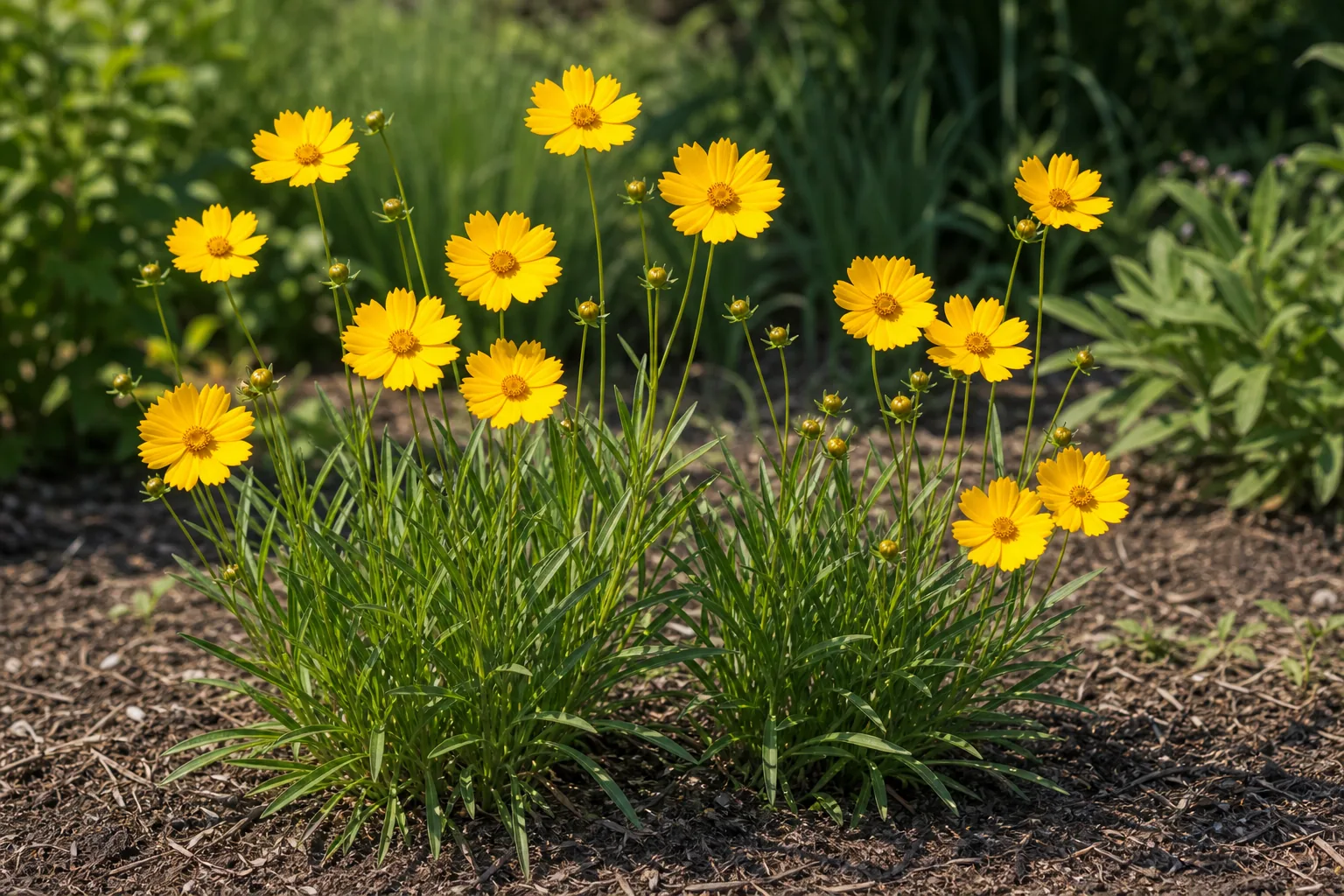
Coreopsis lanceolata is a temperate perennial native from southeastern Canada through central and eastern parts of the United States. It forms a basal clump of narrow leaves and carries solitary yellow flower heads above the foliage in late spring and early summer.
Plant it where lean soil drains quickly after rain. A site that is too fertile or consistently moist often produces looser stems and more maintenance rather than a healthier, longer-lived crown.
Light
Full sun supports compact growth, upright flower stems, and the heaviest bloom. Shade reduces flowering and can compound sprawling where the soil is already rich or moist.
Harden greenhouse-grown plants into direct exposure over several days. If a once-sunny border becomes shaded by shrubs, address the changed site rather than adding fertilizer to compensate for low light.
Water
Water newly planted crowns when the active root zone begins to dry, then allow excess to drain. Established plants tolerate drought, but a new transplant still needs enough moisture to make roots beyond its nursery plug.
Check below the soil surface after rain before irrigating. Persistent wetness is more dangerous than a short dry interval because crown rot can develop in poorly drained ground.
Soil and repotting
Dry to medium-moisture sandy or rocky soil is well suited to Lanceleaf Coreopsis. Avoid automatically enriching the planting hole; a sharp change from amended soil to surrounding ground can hold water around the crown.
The straight species can grow temporarily in a drained outdoor container, but its naturalizing habit is most useful in the ground. If container roots become crowded, plant it out or divide a healthy crown rather than repeatedly moving it into oversized wet mix.
Temperature, humidity, and fertilizer
The species is commonly grown in USDA zones 4-9 and tolerates heat and humidity when drainage is good. Cold hardiness does not protect a crown sitting in saturated winter soil.
Lean conditions usually produce the best habit. Skip routine high-nitrogen feeding; if growth is genuinely weak, check light, drainage, root condition, and soil test results before making one restrained correction.
Pruning and propagation
Remove spent flower stalks promptly when longer bloom and fewer seedlings are priorities. If foliage sprawls after the main flush, it can be cut back, but first correct excess moisture, shade, or fertility that contributed to weak growth.
Propagate the species from seed or divide an established border clump when vigor declines. Seed-grown plants vary naturally; division preserves the selected clump and should retain firm roots and a viable crown on each piece.
Common problems
Start with the pattern, current soil moisture, and recent changes. One symptom can have several causes, so change the most likely factor first and observe before making another major adjustment.
| Symptom | Check first | First action |
|---|---|---|
| Crown becomes soft and plant collapses | Check whether the planting site stays wet and inspect the crown for rot. | Stop irrigation and improve drainage before replacing affected material. |
| Flower stems sprawl | Check soil fertility, moisture, direct sun, and crowding. | Pause feeding and reduce unnecessary irrigation before cutting back untidy growth. |
| Many seedlings appear | Confirm young plants are clustered around ripened seed heads. | Deadhead earlier and thin seedlings while their roots are small. |
| Few flowers | Check whether the clump receives long direct sun and whether the crown is deeply buried. | Restore full-sun exposure or uncover a buried crown without disturbing healthy roots. |
| Old clump loses vigor | Check the center for dead crown tissue and rule out chronic wet soil first. | Divide healthy outer sections during suitable cool weather and discard dead material. |
Pet and household safety
ASPCA lists Coreopsis species as non-toxic to cats and dogs, which covers the genus that includes Coreopsis lanceolata. Non-toxic does not mean edible or incapable of causing stomach upset. Discourage chewing, avoid allowing pets to ingest treated plant material, and contact a veterinarian if concerning signs develop.
Frequently asked questions
How often should I water Lanceleaf Coreopsis?
Water when the active root zone begins to dry during establishment. Mature plants usually need supplemental water only during extended dry periods, depending on soil and weather.
Does Lanceleaf Coreopsis need full sun?
Yes. Full sun supports its strongest flowering and helps prevent the loose growth common in shaded, rich, or wet sites.
Should I deadhead Lanceleaf Coreopsis?
Deadhead promptly to encourage additional bloom and reduce self-seeding, or retain selected heads when naturalizing is the goal.
Why is my Lanceleaf Coreopsis falling over?
Excess moisture, fertile soil, shade, or crowding can produce weak growth. Check those conditions before staking or feeding.
How do I propagate Lanceleaf Coreopsis?
Use seed for the species or divide a healthy established clump, keeping viable crown tissue and roots on each division.
Is Lanceleaf Coreopsis safe for pets?
ASPCA lists Coreopsis species as non-toxic to cats and dogs, but prevent chewing because any plant material may cause stomach upset.
Sources and editorial review
This editorial draft is based on the sources below and awaits named horticulture-expert approval before publication.
- Coreopsis lanceolata L.Royal Botanic Gardens, Kew — Plants of the World Online · Checked
- Lanceleaf Coreopsis — Coreopsis lanceolataNC State Extension · Checked
- Coreopsis lanceolataMissouri Botanical Garden · Checked
- CoreopsisASPCA · Checked
What works well
- Tolerates lean dry sites
- Useful to pollinators
- ASPCA genus listing is pet-safe
What to consider
- Can self-seed aggressively
- Sprawls in rich moist soil
- Crown rot occurs in poor drainage