Key takeaways
- Plant bulbs in autumn, pointed end up, 6-8 inches deep in well-drained soil.
- Give full sun and a cool winter chill; water during growth but avoid wet soil.
- All parts are toxic (tulipalin A and B) - keep bulbs away from pets.
How to care for garden tulip
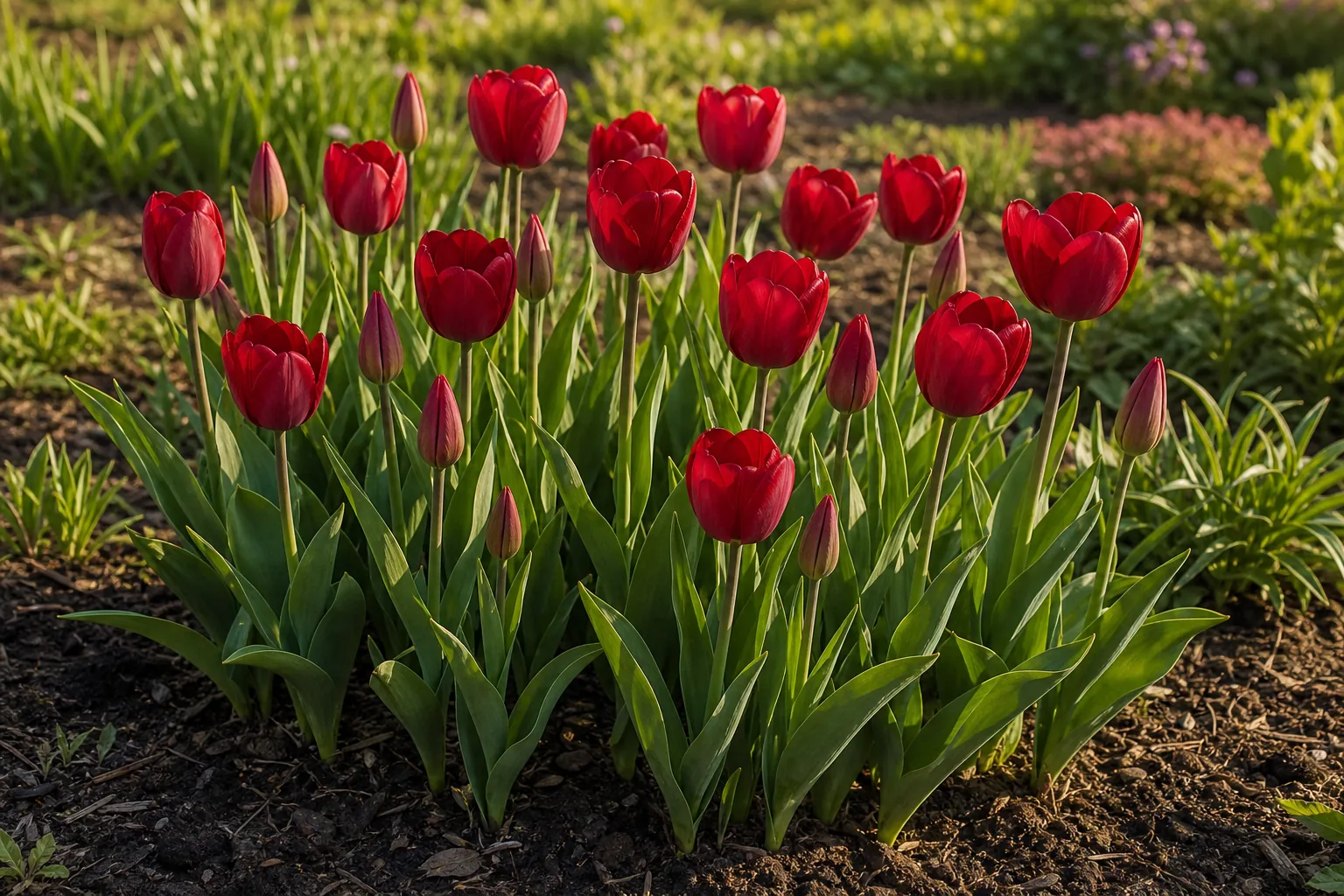
Garden tulip (Tulipa gesneriana) is grown from bulbs planted in autumn. Set bulbs pointed end up, 6-8 inches deep and a few inches apart in full sun and sharply drained soil. Water after planting and during growth in spring if dry; then let the leaves yellow naturally to feed the bulb. In warm climates pre-chill bulbs in the refrigerator for 8-12 weeks before planting so they bloom. Mulch after the ground freezes in cold regions, and lift and replant or replace bulbs if flowering declines.
Light
Tulips need full sun - at least 6 hours of direct light daily - for the sturdiest stems and best colour. In warm regions a little morning sun with afternoon shade can prolong bloom, but too much shade produces weak, floppy stems.
Water
Water after planting and during active growth in spring if rainfall is low, about 1 inch per week. Tulips are drought tolerant once dormant but very prone to bulb rot in wet or heavy soil; the main watering rule is 'do not overdo it.'
Soil and planting
Plant in average to lean, sharply drained soil with a neutral pH; improve clay with grit or sand. In containers use a deep, freely draining bulb mix, keep pots cool and moist in winter, and discard bulbs after bloom (most types are not worth saving in pots). Bulbs are planted fresh each autumn rather than repotted.
Temperature, humidity, and fertilizer
Tulips are hardy spring bulbs that require a cold winter period to flower well. Good air circulation limits fungal leaf spots in humid springs. Feed with a balanced bulb fertilizer at planting and again as shoots emerge; avoid high-nitrogen feeds that favor leaves over flowers.
Pruning and propagation
Deadhead spent flowers to prevent seed set but leave the foliage until brown. Propagate by dividing offsets after foliage dies, or by seed for species types (slow). Replant offsets in autumn at the correct depth.
Common problems
Start with the pattern, current soil moisture, and recent changes. One symptom can have several causes, so change the most likely factor first and observe before making another major adjustment.
| Symptom | Check first | First action |
|---|---|---|
| No flowers or blind buds | Check planting depth, crowding, or insufficient winter chill. | Replant at proper depth, pre-chill in warm climates, and divide crowded clumps. |
| Bulbs rot or fail to emerge | Check drainage and overwatering. | Improve soil drainage, plant in grit, and avoid wet sites. |
| Floppy, leaning stems | Check light and wind exposure. | Move to fuller sun and site in a sheltered spot; stake if needed. |
| Spotted or distorted leaves | Check for fungal leaf spot or aphids in humid weather. | Improve airflow, avoid overhead watering, and remove affected foliage. |
| Animals digging bulbs | Check for squirrels or rodents. | Use netting or plant in protected, deeply mulched beds. |
Pet and household safety
Tulip is toxic to dogs, cats, and horses according to the ASPCA. The toxic principles are tulipalin A and B (highest in the bulbs), causing mouth and stomach irritation, drooling, vomiting, and diarrhea; severe cases from eating many bulbs can involve heart effects. Keep pets and children from chewing any part and contact a veterinarian if ingested.
Frequently asked questions
When should I plant tulip bulbs?
In autumn, before the ground freezes, after pre-chilling in warm climates.
How deep do I plant tulip bulbs?
About 6-8 inches deep, pointed end up, in well-drained soil.
Why didn't my tulips bloom?
Usually insufficient winter chill, planting too shallow, or crowding; pre-chill and divide.
Can I leave tulip foliage after bloom?
Yes - let it yellow naturally to refill the bulb; cut only once brown.
Are tulips good in pots?
Yes, but use a deep freely draining mix and cool, moist winter conditions; most are replanted yearly.
Are tulips safe for pets?
No - the ASPCA lists tulip as toxic to dogs, cats, and horses (tulipalin A and B, mainly in bulbs). Keep pets away.
Sources and editorial review
This editorial draft is based on the sources below and awaits named horticulture-expert approval before publication.
- Tulipa gesnerianaRoyal Botanic Gardens, Kew (Plants of the World Online) · Checked
- TulipASPCA · Checked
- Tulipa gesnerianaNorth Carolina State University Extension · Checked
- Growing tulipsUniversity of Minnesota Extension · Checked
What works well
- Spectacular, colourful spring display in beds, borders, and containers.
- Good for forcing indoors and cutting for arrangements.
- Deer and rodent tolerant of the bulbs compared with many other bulbs.
What to consider
- Toxic to dogs, cats, and horses (tulipalin A and B); bulbs are most hazardous.
- Bulbs rot in wet soil and many types bloom poorly without a cold winter.
- Foliage is untidy after bloom and must be left to die back.