Key takeaways
- Maintain consistent root moisture without leaving the crown waterlogged.
- Space and thin stems for airflow, especially in humid summers.
- Use named mildew-resistant cultivars when that disease is locally persistent.
How to care for Garden Phlox
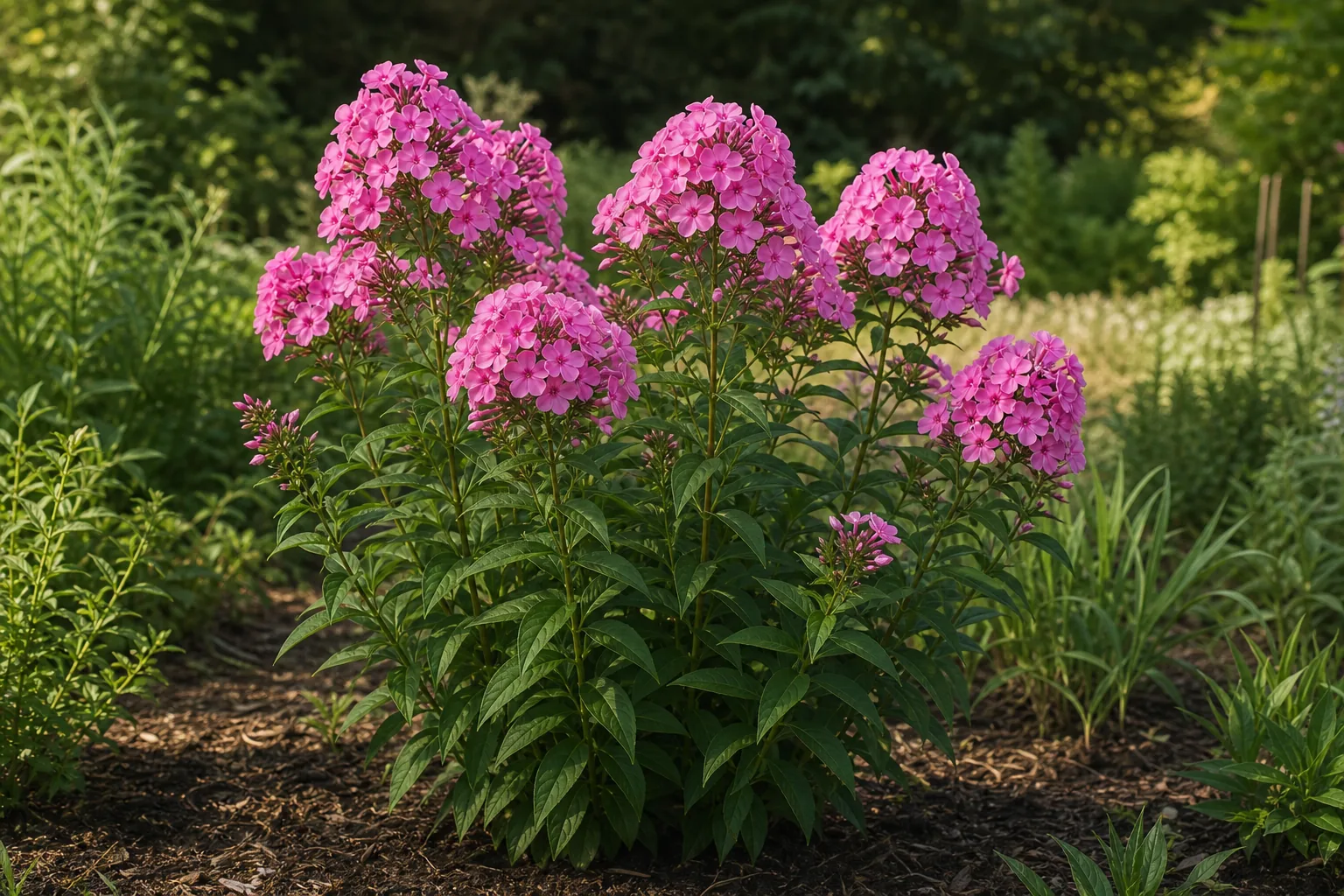
Phlox paniculata is an upright perennial native to north-central and eastern parts of the United States. The straight species and its many cultivars form a permanent crown and carry dense, often fragrant flower panicles above opposite leaves in midsummer.
Choose the site for the cultivar's mature height and width, and keep neighboring plants from closing off airflow. The plant prefers reliable moisture but still needs drainage around the crown and roots.
Light
Full sun gives the strongest stems and fullest bloom, while light partial shade is tolerated. Deep shade reduces flowers and encourages a dense, slow-drying canopy where powdery mildew can be more severe.
In very hot climates, a little afternoon shade may reduce stress if the plant still receives substantial direct sun. Move container-grown plants into stronger exposure gradually and keep the root zone moist during the transition.
Water
Garden Phlox is not drought tolerant. Check the active root zone and water deeply when it begins to dry, especially during dry summer weather and while flower stems are developing.
Direct water to the soil rather than routinely wetting foliage, then allow excess to drain. Mulch can keep roots cooler and slow evaporation, but keep it away from the crown and do not let it conceal saturated soil.
Soil and repotting
Use moderately fertile to rich soil that holds useful moisture without remaining waterlogged. Incorporate organic matter across the planting area when soil structure needs improvement instead of creating a small, water-holding pocket around one plant.
Compact cultivars can grow in large outdoor containers, but tall forms are more stable in the ground. Use a drained mix, monitor moisture closely in summer, and divide or plant out a crowded crown rather than burying it in an oversized wet pot.
Temperature, humidity, and fertilizer
Garden Phlox is commonly hardy in USDA zones 4-8 and often performs best where summers are not extremely hot and humid. Humid conditions make cultivar resistance, generous spacing, and stem thinning particularly valuable for powdery mildew prevention.
Base fertilizer on soil need. Too much nitrogen produces lush susceptible tissue, so use a soil test and restrained feeding rather than trying to solve sparse bloom or mildew with repeated fertilizer.
Pruning and propagation
Remove faded panicles to extend the display and prevent unwanted seedlings; named cultivars do not reliably come true from seed. Thin selected stems early enough to improve airflow without leaving the remaining stems unsupported, and remove dead top growth after the season ends.
Propagate a cultivar by division or vegetative cuttings so its traits are retained. Species plants can also be grown from seed; use clean material, keep propagation media moist but aired, and transplant only after roots are established.
Common problems
Start with the pattern, current soil moisture, and recent changes. One symptom can have several causes, so change the most likely factor first and observe before making another major adjustment.
| Symptom | Check first | First action |
|---|---|---|
| White powder spreads on leaves | Check shaded inner and lower foliage and whether stems are crowded. | Thin for airflow and tolerate minor infection while removing only badly affected leaves. |
| Crown wilts despite wet soil | Check drainage and inspect roots and crown for rot before adding water. | Stop irrigation and correct standing moisture around the root zone. |
| Leaves have pale stippling or fine webbing | Inspect leaf undersides for spider mites, especially during hot dry weather. | Rinse a confirmed light infestation from foliage and restore even root moisture. |
| Leaves have distorted spots and visible insects | Look for phlox bugs before assuming a fungal leaf spot. | Hand-remove confirmed insects or badly damaged tips and monitor new growth. |
| Tall stems lean or fall | Check cultivar height, light, crowding, and recent heavy feeding. | Add discreet support and avoid further high-nitrogen fertilizer. |
Pet and household safety
The authoritative sources reviewed for Phlox paniculata did not provide a species-specific veterinary toxic or non-toxic classification for cats and dogs. The ASPCA listing for Moss Phlox concerns a different Phlox species and is not evidence for Garden Phlox. Prevent chewing, and contact a veterinarian after a concerning ingestion or unusual signs.
Frequently asked questions
How often should I water Garden Phlox?
Check the root zone and water deeply when it begins to dry. Dry summer weather, a flowering plant, and a container all shorten the interval.
Can Garden Phlox grow in partial shade?
Yes, in light shade, but full sun usually produces sturdier stems and more flowers; deeper shade can worsen mildew pressure.
How do I prevent powdery mildew on Garden Phlox?
Choose a resistant cultivar, provide sun and airflow, thin crowded stems, avoid excess nitrogen, and accept minor infection that does not reduce growth.
Should I deadhead Garden Phlox?
Yes when you want a longer display and fewer seedlings. Cultivars grown from their seed may not match the parent.
How do I propagate Garden Phlox?
Divide the crown or use root or stem cuttings to preserve a cultivar; seed is appropriate for the straight species when variation is acceptable.
Is Garden Phlox safe for pets?
A species-specific veterinary classification was not confirmed, so prevent chewing and consult a veterinarian about concerning exposure.
Sources and editorial review
This editorial draft is based on the sources below and awaits named horticulture-expert approval before publication.
- Phlox paniculata L.Royal Botanic Gardens, Kew — Plants of the World Online · Checked
- Phlox paniculataNC State Extension · Checked
- Phlox paniculataMissouri Botanical Garden · Checked
- Powdery mildew in the flower gardenUniversity of Minnesota Extension · Checked
What works well
- Long fragrant summer bloom
- Supports hummingbirds and butterflies
- Many garden cultivars
What to consider
- Powdery mildew is common
- Intolerant of drought
- Tall cultivars may need support