Key takeaways
- Plant as soon as soil can be worked in early spring (and again in late summer); peas stall and stop producing once it heats up above about 85°F.
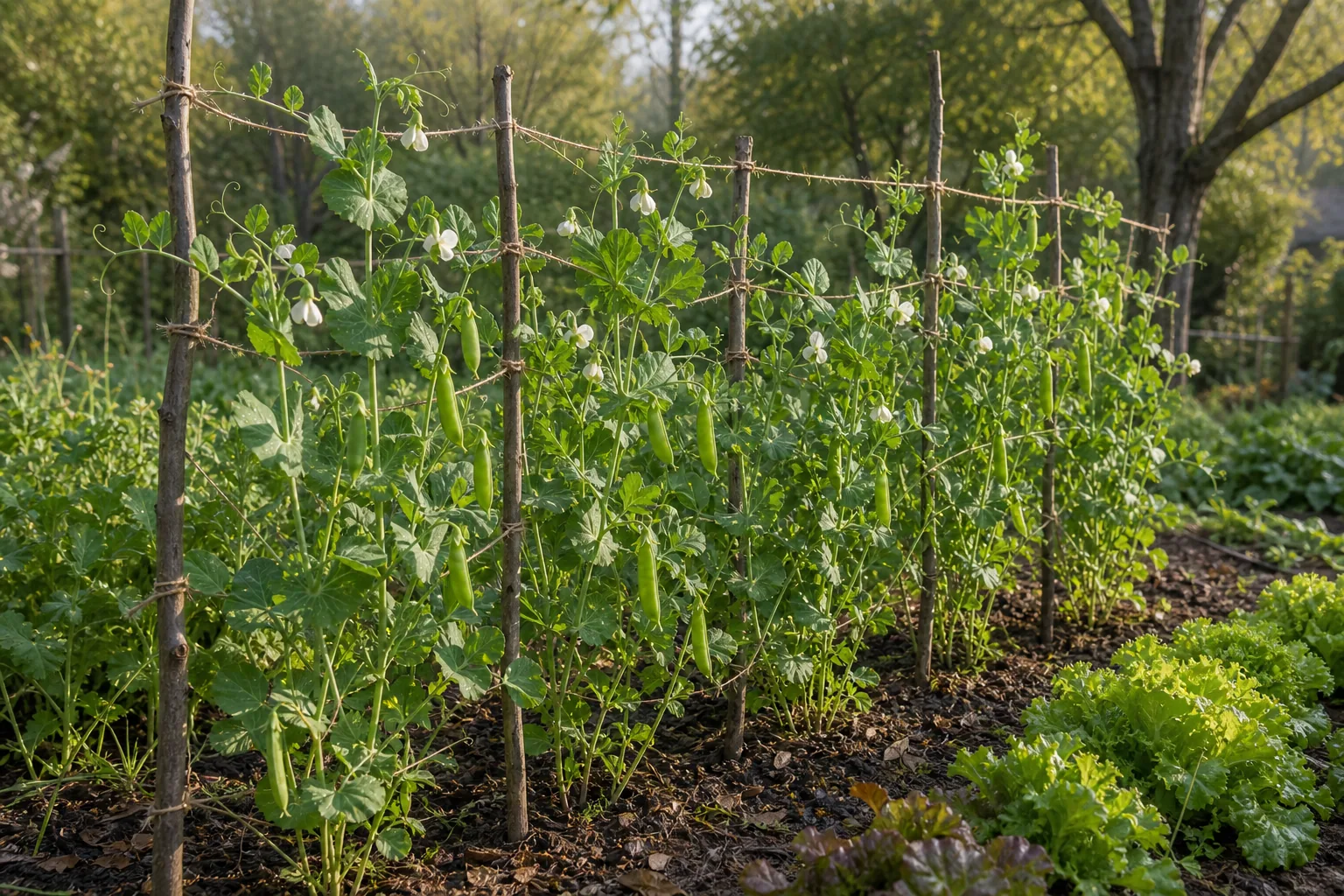
- Give tall vining types a trellis and keep the soil evenly moist, about 1 inch per week.
- Harvest as soon as pods fill and cool the picked peas quickly — sweetness fades to starch within a day or two.
How to care for garden pea
Garden pea (Pisum sativum) is a cool-season, nitrogen-fixing annual that wants cool soil and steady moisture. Sow seed 1 inch deep as soon as the ground thaws and is workable, spacing tall types at a trellis and bush types 12-18 inches wide; make a second and third sowing a week apart for a longer harvest. Mulch 3-4 inches to hold moisture and suppress weeds, and water the soil (not the vines) to limit disease. Harvest when pods fill and cool the peas immediately; once plants flower and set a crop, young plants survive light frost but flowering can be damaged by late cold.
Light
Peas need full sun for the best yield and quality, but they grow well in cool weather and tolerate light partial shade; peas grown in hot weather may be poorer in quality, so an early start matters most.
Water
Water to keep the soil evenly moist, soaking to at least 1 inch per week during the season, and more on sandy soils. Because peas grow in cool, wetter months you may not need to water, but dry springs require it; water the soil not the vines to reduce disease.
Soil and planting
Plant in well-drained soil, from sandy to heavy clay, with a pH of about 6.0-7.5. In containers use a deep pot with a rich, free-draining mix and sow in place (peas dislike root disturbance). Add well-rotted manure or compost at planting, use low- or no-phosphorus fertilizer if soil tests high, and avoid 'Weed and Feed' products.
Temperature, humidity, and fertilizer
Peas grow best between about 55°F and 65°F and survive light frost, but they stop growing and fail to flower or pod once temperatures exceed about 85°F. High humidity with poor airflow raises powdery-mildew risk, so space and trellis for air movement. Feed lightly — peas need less fertilizer than most crops; a low-phosphorus or balanced feed at planting is enough.
Pruning and propagation
No pruning beyond harvesting pods and removing diseased foliage; you can cut six-inch vine tips (pea shoots) for stir-fries. Propagate from seed only: direct-sow as soon as soil is workable in spring and again in late summer for fall; treat seed carefully as cracked seeds may not germinate in cool, wet soil.
Common problems
Start with the pattern, current soil moisture, and recent changes. One symptom can have several causes, so change the most likely factor first and observe before making another major adjustment.
| Symptom | Check first | First action |
|---|---|---|
| Plants cut off at the base as seedlings | Check for cutworms feeding at soil level. | Use collars around seedlings and keep the area clear; replant if needed. |
| Curled, sticky leaves with colonies of small insects | Check leaf undersides for pea aphids. | Rinse with water or apply insecticidal soap; welcome lady beetles and lacewings. |
| White powdery coating on leaves and pods | Check for powdery mildew in hot, dry, or humid weather. | Improve airflow and trellis, avoid wetting foliage, and choose resistant varieties. |
| Flowers drop and few pods in hot weather | Check temperature — above about 85°F stops flowering and pollination. | Plant for the cool season, water steadily, and avoid mid-summer heat. |
| Stems rot and wilt at the base | Check for white mold in dense, wet plantings. | Improve spacing and airflow, water early in the day, and remove infected plants. |
Pet and household safety
Garden peas are considered non-toxic to dogs and cats and are not listed as a poison by the ASPCA; the pods, peas, and tender shoot tips are safe. As with any plant, very large amounts may cause mild stomach upset, so discourage pets from over-eating and contact a veterinarian if a pet shows persistent signs.
Frequently asked questions
How much sun do garden peas need?
Full sun for best yield, though they tolerate light shade; cool weather matters more than maximum sun.
How often should I water garden peas?
Evenly moist, about 1 inch per week; soak the soil and water the ground not the vines.
When do I plant garden peas?
As soon as the soil is workable in early spring, and again in late summer for a fall crop.
When do I harvest garden peas?
When pods fill but before they over-mature; cool them right after picking because sweetness turns to starch fast.
Do peas need a trellis?
Tall vining types do; dwarf bush types are short and self-supporting, though a little support helps.
Are garden peas safe for pets?
Yes — garden peas are non-toxic to dogs and cats per the ASPCA; pods, peas, and shoots are safe in moderation.
Sources and editorial review
This editorial draft is based on the sources below and awaits named horticulture-expert approval before publication.
- Lathyrus oleraceus (Pisum sativum)Royal Botanic Gardens, Kew (Plants of the World Online) · Checked
- Toxic and Non-Toxic Plants ListASPCA · Checked
- Growing peas in home gardensUniversity of Minnesota Extension · Checked
- How to Grow PeasMichigan State University Extension · Checked
What works well
- Cool-season and frost-tolerant; one of the first crops to plant and harvest.
- Fixes its own nitrogen, so it needs little fertilizer.
- Three forms (shelling, snow, snap) suit fresh eating, stir-fries, and freezing.
What to consider
- Short season — growth and pod set stop when temperatures rise above about 85°F.
- Needs well-drained soil and careful, shallow weeding to avoid harming surface roots.
- Susceptible to powdery mildew, pea aphids, and cutworms.