Key takeaways
- Plant tubers after frost in full sun and rich, well-drained soil, eye up.
- Water and feed regularly and stake tall types; deadhead for continuous bloom.
- All parts can irritate pets - keep dogs and cats from chewing foliage or tubers.
How to care for garden dahlia
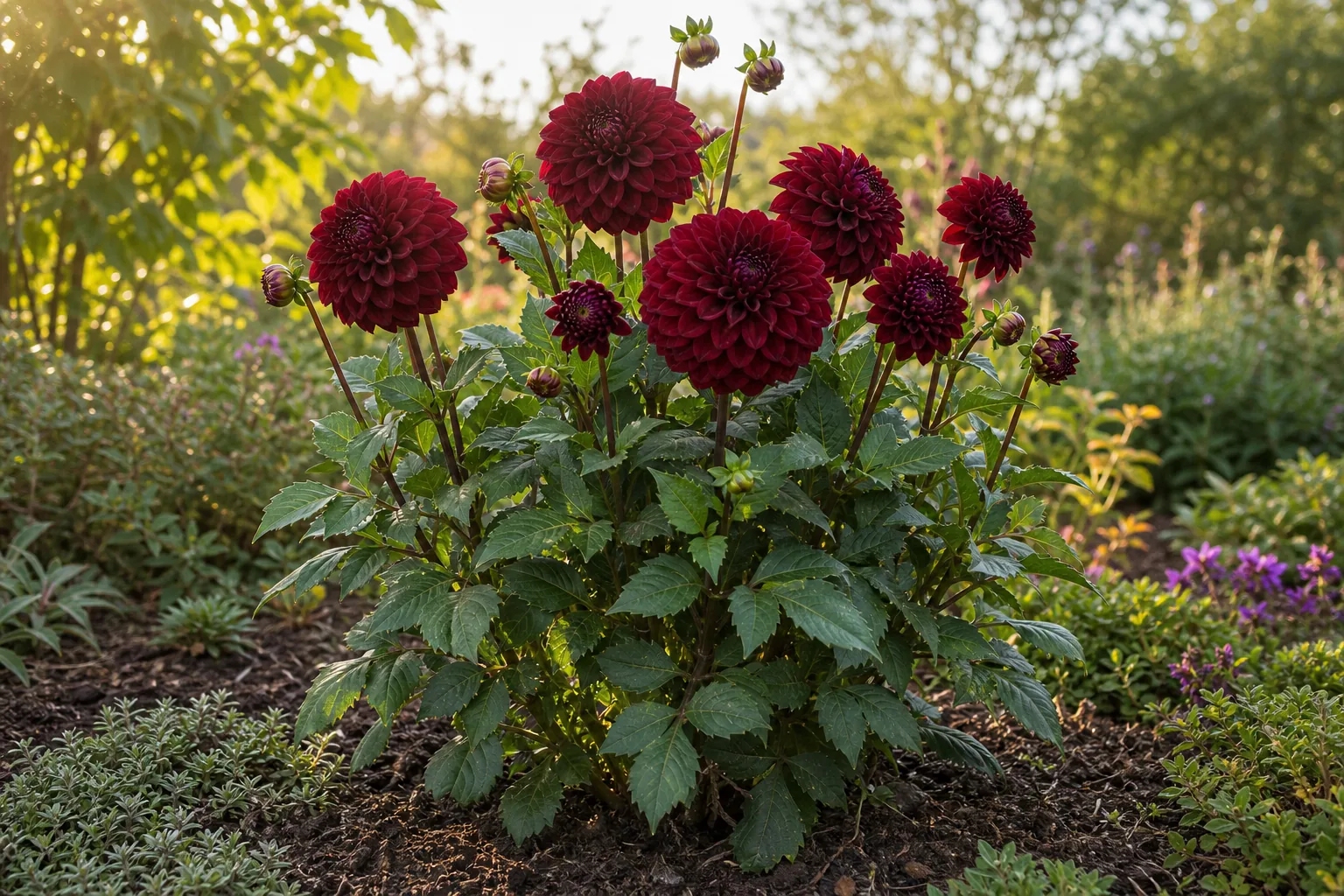
Garden dahlia (Dahlia pinnata) grows from tuberous roots planted after the last frost when soil is warm. Choose a sunny, sheltered site with rich, well-drained soil, set tubers 4-6 inches deep with the eye up, and water lightly until shoots appear (wet soil before growth rots tubers). Place stakes at planting to avoid damage later. Once growing, water deeply 2-3 times weekly and feed a low-nitrogen fertilizer every few weeks; deadhead spent blooms to keep flowering to frost. In cold climates lift and store tubers after the first hard frost.
Light
Dahlias need full sun - at least 6 to 8 hours of direct light daily - for the most blooms and strongest stems. In the hottest climates a little afternoon shade helps flowers last, but too much shade reduces flowering and makes plants leggy.
Water
Water consistently: about 1 inch per week, more in heat and drought, aiming at the base. Dahlias like even moisture but hate wet feet - tubers rot in soggy soil. Mulch to conserve moisture and keep roots cool once plants are up.
Soil and planting
Plant in rich, fertile, well-drained soil with a slightly acidic to neutral pH (about 6.5-7.0); amend with compost and grit. In containers use a deep, freely draining mix and a large pot for dwarf types; tubers are planted fresh each spring and lifted in autumn in cold zones rather than repotted.
Temperature, humidity, and fertilizer
Dahlias are frost-tender tender perennials that love warmth (60-70°F) and sulk in cold wet soil. Good air circulation limits powdery mildew. Feed a low-nitrogen, higher-phosphorus and potassium fertilizer every 3-4 weeks once budding; too much nitrogen makes leaves at the expense of flowers.
Pruning and propagation
Pinch the center tip when plants have 3-4 sets of leaves to encourage branching, and deadhead spent flowers to keep blooming. Propagate by dividing tubers in spring or autumn, ensuring each piece has a viable eye; seed is possible but hybrids will not come true.
Common problems
Start with the pattern, current soil moisture, and recent changes. One symptom can have several causes, so change the most likely factor first and observe before making another major adjustment.
| Symptom | Check first | First action |
|---|---|---|
| No sprouts after planting | Check for tuber rot from wet, cold soil. | Plant after soil warms, water lightly until shoots show, and improve drainage. |
| Flopping or broken stems | Check support; dahlias are top-heavy. | Stake at planting and tie stems as they grow. |
| White powdery coating on leaves | Check humidity, airflow, and overhead watering for powdery mildew. | Improve spacing and airflow, avoid wetting foliage, and remove affected leaves. |
| Slugs or earwigs on shoots and petals | Check for slugs and earwigs in damp weather. | Use traps or barriers and remove earwig shelters; hand-pick slugs at night. |
| Tubers rot in storage | Check curing and storage humidity. | Cure in a dry, airy place, then store in cool, slightly moist medium and check for rot. |
Pet and household safety
Dahlia is listed by the ASPCA among plants that may cause mild toxicity; the foliage and tubers can irritate the mouth and stomach and may cause vomiting or diarrhea in dogs and cats if chewed. It is not considered highly toxic, but prevent pets from eating the plant and contact a veterinarian if a pet shows persistent signs.
Frequently asked questions
When should I plant dahlia tubers?
After the last frost, when soil has warmed to about 60°F; water lightly until shoots appear.
How much sun do dahlias need?
Full sun - at least 6 to 8 hours daily for the most flowers and strongest stems.
How often should I water dahlias?
About 1 inch per week, more in heat; keep soil evenly moist but never soggy.
Should I stake and deadhead dahlias?
Yes - stake tall types at planting and deadhead spent blooms to keep flowering.
Do I lift dahlia tubers in winter?
In cold climates (roughly zone 7 and colder) lift, cure, and store tubers; in mild zones mulch and leave them.
Are dahlias safe for pets?
Dahlia can cause mild stomach upset in dogs and cats if chewed (irritant foliage and tubers); prevent eating and call a vet if signs persist.
Sources and editorial review
This editorial draft is based on the sources below and awaits named horticulture-expert approval before publication.
- Dahlia pinnataRoyal Botanic Gardens, Kew (Plants of the World Online) · Checked
- DahliaASPCA · Checked
- Dahlia (group)Ohio State University Extension · Checked
- Dahlia pinnataNorth Carolina State University Extension · Checked
What works well
- Spectacular, long-lasting bloom from midsummer to frost in many forms.
- Excellent cut flower; the more you cut, the more it blooms.
- Attracts bees and butterflies; good for borders and containers (dwarf types).
What to consider
- Mildly toxic to dogs and cats (irritant; possible GI upset).
- Needs staking, regular water and food, and tuber lifting in cold winters.
- Susceptible to powdery mildew, slugs, earwigs, and viruses.