Key takeaways
- Plant in full sun in medium-moisture, well-drained, acidic loam; established trees tolerate some drought.
- Prune only in late winter; avoid spring pruning because fresh cuts let fire blight bacteria enter.
- The crabapples are toxic via their seeds (cyanogenic compounds), so keep pets from chewing stems, leaves, or seeds.
How to care for flowering crabapple
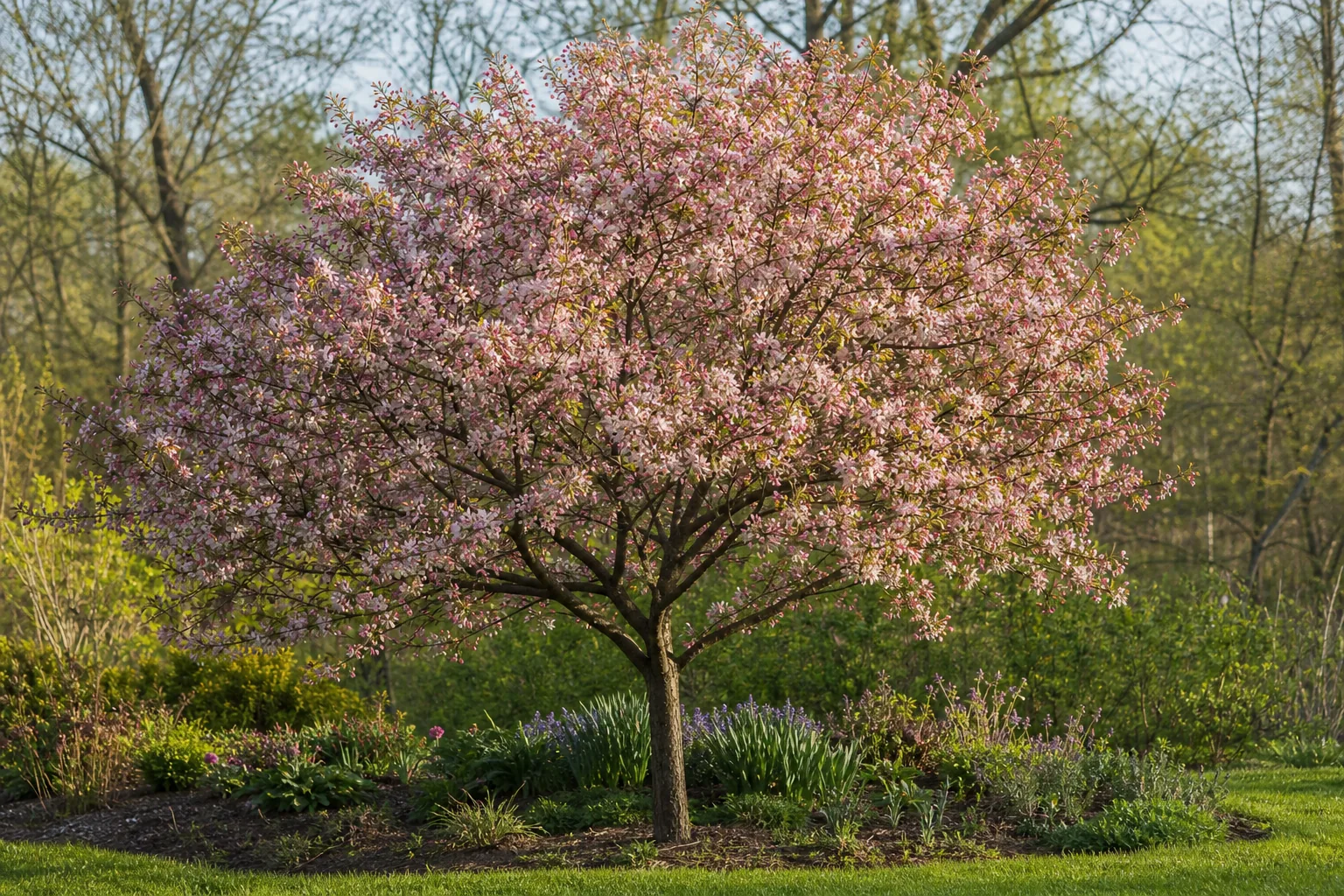
Flowering crabapple (Malus floribunda) is a dense, broad-spreading small tree that produces one of the finest mid-spring flower displays of any crabapple. Plant it in full sun in medium-moisture, well-drained, acidic loam; it adapts to a wide range of soils and tolerates urban conditions, and established trees have some drought tolerance. Set the root ball at nursery depth, mulch the root zone, and water through the first season. Prune only as needed in late winter to shape and remove dead wood - never in spring, when fresh cuts are entry points for fire blight. The red buds open to fragrant pale-pink flowers that mature white, followed by small yellowish crabapples that birds enjoy.
Light
Flowering crabapple flowers and fruits best in full sun - at least 6 hours of direct light daily. Too much shade reduces bloom and encourages foliar disease. In hot-summer regions a little afternoon relief is acceptable, but full sun produces the densest flower display and healthiest canopy.
Water
Water deeply and regularly through the first season to establish roots, then crabapple is fairly tolerant; established trees can handle moderate dry spells. It prefers medium moisture and well-drained soil, and consistently wet ground invites root and crown problems. Mulch to conserve moisture and keep the soil evenly moist during summer heat.
Soil and planting
Plant flowering crabapple in medium-moisture, well-drained, slightly acidic loam in full sun; it adapts to a wide range of soils, including clay and urban fill, and tolerates some drought once established. As a garden tree it is planted in the ground; set the root flare at grade, avoid mounding soil on the trunk, and mulch to the dripline. Good drainage matters more than fertility - rich, soggy ground promotes disease.
Temperature, humidity, and fertilizer
Hardy in USDA zones 4-8, flowering crabapple is a cold-hardy temperate tree suited to full-sun lawns and streets. High humidity and poor airflow increase apple scab, powdery mildew, and fire blight pressure, so site for breeze and avoid overhead watering. Fertilizer is rarely needed; a light compost mulch in spring is enough, and excess nitrogen encourages soft, disease-prone growth.
Pruning and propagation
Prune flowering crabapple in late winter to remove dead, diseased, or crossing branches and to maintain a balanced form; some flowers may be lost, but late-winter pruning is safest. Avoid spring pruning entirely because fresh, open cuts allow fire blight bacteria to enter. Water sprouts (suckers) can be rubbed out as they appear. Propagate cultivars by chip budding or grafting in late summer or midwinter, since seedlings do not come true.
Common problems
Start with the pattern, current soil moisture, and recent changes. One symptom can have several causes, so change the most likely factor first and observe before making another major adjustment.
| Symptom | Check first | First action |
|---|---|---|
| Dark, olive-green to black scabby spots on leaves and fruit | Check for apple scab in wet springs. | Rake and remove fallen leaves, improve airflow, and choose resistant cultivars; fungicide sprays are rarely worth it for home trees. |
| Scorched, blackened shoot tips and branch dieback | Check for fire blight, especially after spring pruning or storms. | Prune out infected branches well below the damage with disinfected tools and avoid spring pruning. |
| White powdery coating on leaves | Check for powdery mildew in humid, crowded sites. | Improve airflow and light, avoid overhead watering, and remove affected foliage. |
| Water sprouts and vertical shoots crowding the crown | Check for vigorous re-growth after pruning or storm damage. | Rub out or prune water sprouts in late winter and keep the center open. |
| Fallen crabapples staining paving | Check autumn fruit drop near walks and patios. | Site the tree away from paving or rake fallen fruit promptly; fruit is messy but not a plant-health problem. |
Pet and household safety
Flowering crabapple is toxic to dogs, cats, and horses according to the ASPCA; the Apple listing explicitly includes crabapples. Stems, leaves, and seeds contain cyanogenic glycosides that release cyanide, particularly as the material wilts, with clinical signs of brick-red mucous membranes, dilated pupils, difficulty breathing, panting, and shock. The fruit flesh is less concerning, but keep pets from chewing stems, leaves, or seeds and contact a veterinarian after ingestion.
Frequently asked questions
How much sun does flowering crabapple need?
Full sun - at least 6 hours of direct light daily - for the heaviest bloom and healthiest canopy. Shade reduces flowers and encourages disease.
How often should I water a crabapple?
Deeply through the first season, then during dry spells; established trees tolerate moderate drought but prefer even, medium moisture.
When should I prune flowering crabapple?
In late winter only. Spring pruning leaves open cuts where fire blight bacteria enter, so avoid all spring pruning.
What problems affect flowering crabapple?
Apple scab, leaf spot, powdery mildew, and fire blight in humid climates, plus tent caterpillars and aphids; choose disease-resistant cultivars.
Are crabapples edible?
The fruit is generally edible when cooked, but the seeds contain toxins (cyanogenic compounds) and should be removed; the tree is usually grown as an ornamental.
Is flowering crabapple safe for pets?
No - the ASPCA Apple listing includes crabapples and classifies them toxic to dogs, cats, and horses via cyanogenic glycosides in stems, leaves, and seeds; keep pets from chewing plant parts.
Sources and editorial review
This editorial draft is based on the sources below and awaits named horticulture-expert approval before publication.
- Malus × floribundaRoyal Botanic Gardens, Kew (Plants of the World Online) · Checked
- AppleASPCA · Checked
- Malus × floribunda (Japanese crab)Royal Horticultural Society · Checked
- Malus floribundaMissouri Botanical Garden Plant Finder · Checked
What works well
- One of the best spring-flowering crabapples, with crimson buds opening to fragrant pink-to-white blooms.
- Small size (15-25 ft) suits lawns, streets, and small gardens, with autumn fruit for birds.
- Moderate disease resistance and good urban tolerance once established.
What to consider
- Susceptible to apple scab, leaf spot, powdery mildew, and fire blight, especially in humid climates.
- Small crabapples drop in autumn and can stain walks and patios.
- Toxic to dogs, cats, and horses - stems, leaves, and seeds contain cyanogenic glycosides.