Key takeaways
- Plant in full sun to part shade in cool, moist, acidic, well-drained soil; it dislikes heat, humidity, and compaction.
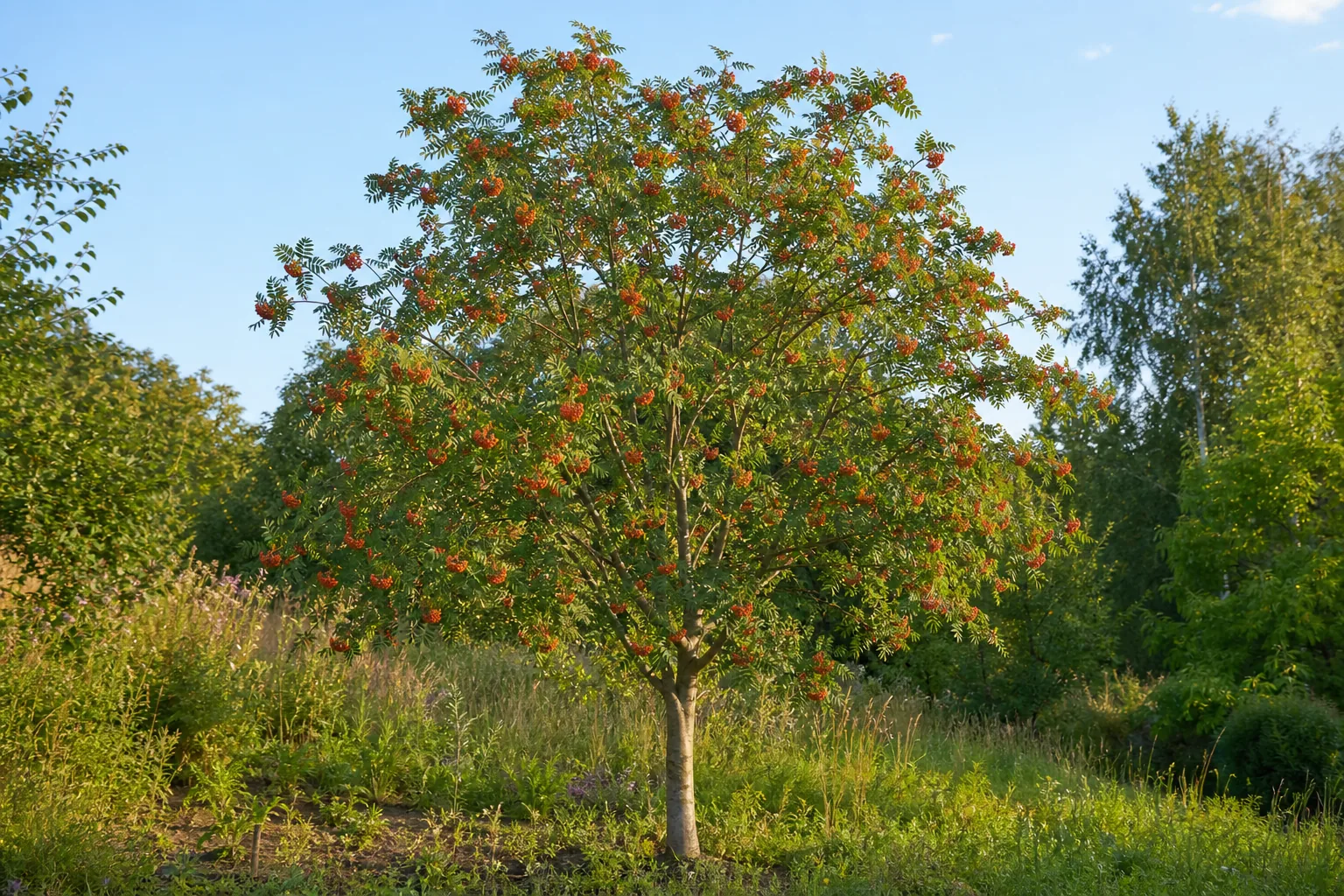
- Grow it as a small 20-40 ft specimen with white spring flowers, autumn color, and bird-friendly berries.
- Keep pets from eating the raw berries - the RHS flags the fruit as potentially harmful - and prune only in the dormant season.
How to care for European rowan
European rowan (Sorbus aucuparia) is a small, undemanding tree of cool climates that gives spring flowers, autumn color, and bird-attracting berries. Plant it in full sun to light shade in moist, acidic to neutral, well-drained soil, in a position with good airflow; it is ideal in small gardens, wildlife gardens, or woodland edges. Water regularly through establishment, then rowan is reasonably drought tolerant once its roots are down, though it resents compacted ground. This is a tree for cooler gardens - in hot, humid summers it declines and becomes vulnerable to fire blight and borers. Prune lightly in the dormant season to shape, and let the berries ripen into autumn for birds.
Light
Rowan grows best in full sun to part shade, needing at least 6 hours of direct light for dense flowering and good autumn color. It tolerates light shade but blooms less heavily. In warm regions, some afternoon shade helps reduce heat stress, but the tree still needs bright light for a balanced crown.
Water
Keep the soil consistently moist but well drained, especially during establishment and in dry spells. Rowan grows naturally on cool, damp sites and dislikes drought; irrigate deeply when the upper root zone dries and mulch to conserve moisture. Avoid waterlogged ground, which encourages root problems.
Soil and planting
Plant rowan in moist, acidic to neutral, well-drained soil - loam or sand suits it best. It tolerates a wide range of soils but grows poorly in compacted, heavy, or waterlogged ground and is not heat tolerant. As a garden tree it is planted in the ground at the nursery depth with the root flare at grade; mulch over the root zone, keeping mulch clear of the trunk.
Temperature, humidity, and fertilizer
Hardy in USDA zones 3-7, rowan is a cool-temperate tree that performs best where summers stay mild; it is widely planted in northern North America and does not grow well south of about zone 6 in humid heat. Fertilizer is rarely needed - a light compost mulch in spring is enough. Good airflow and dry foliage help limit scab and other foliar diseases, and clean up fallen leaves to reduce disease carry-over.
Pruning and propagation
Prune rowan lightly in the dormant season to remove dead, damaged, or crossing branches; mature trees need little pruning. It is generally best left unpruned except to shape young trees. Propagate from stratified seed (fresh berries need cold treatment), softwood cuttings taken in early summer, or by grafting named cultivars; the common species is most often grown from seed.
Common problems
Start with the pattern, current soil moisture, and recent changes. One symptom can have several causes, so change the most likely factor first and observe before making another major adjustment.
| Symptom | Check first | First action |
|---|---|---|
| Scorched branch tips with curling, blackened leaves | Check for fire blight, which is severe on rowan, and confirm with a local diagnosis. | Prune out infected branches well below the damage with disinfected tools; avoid spring nitrogen feeding. |
| Brown or black leaf spots and heavy defoliation | Check for scab and other leaf fungi in humid, crowded sites. | Rake and remove fallen leaves, improve airflow, and choose a cooler, more open position. |
| Wilting shoots, sunken cankers, and dieback | Check for canker fungi and borer entry on stressed trees. | Prune out affected limbs, maintain vigor with water and mulch, and avoid wounding the bark. |
| Pale, sparse growth in a hot, humid garden | Check climate fit and soil compaction. | Move to a cooler, well-drained site or choose a more heat-tolerant tree for warm lowlands. |
| Berries stripped before they color | Check bird pressure - rowan fruit is a major bird food. | Accept fruit loss as normal wildlife value, or harvest berries for preserves before birds finish them. |
Pet and household safety
European rowan is not listed on the ASPCA Toxic and Non-Toxic Plants list, and no species-specific classification for cats and dogs was confirmed. The RHS flags the ornamental berries as potentially harmful and not to be eaten: raw fruit contains parasorbic acid, which can be mildly toxic if eaten in quantity, and the seeds contain cyanogenic compounds. Prevent pets from eating the raw berries and contact a veterinarian after substantial ingestion.
Frequently asked questions
How much sun does a rowan tree need?
Full sun to part shade, with at least 6 hours of direct light for the best flowering, fruiting, and autumn color.
How often should I water rowan?
Consistently during establishment and dry spells; keep soil moist but well drained. Mature trees tolerate some drought once established.
What soil suits rowan?
Moist, acidic to neutral, well-drained loam or sand. It grows poorly in compacted, heavy, or waterlogged soil.
Why are my rowan branch tips blackening and curling?
Usually fire blight, a bacterial disease that is severe on rowan. Prune out infected branches and avoid spring nitrogen feeding.
When should I prune rowan?
Lightly in the dormant season, removing dead, damaged, or crossing branches; rowan generally needs very little pruning.
Are rowan berries safe for pets?
No confirmed listing exists from the ASPCA for rowan, and the RHS flags the ornamental fruit as potentially harmful; raw berries contain parasorbic acid and seeds contain cyanogenic compounds, so keep pets from eating them.
Sources and editorial review
This editorial draft is based on the sources below and awaits named horticulture-expert approval before publication.
- Sorbus aucupariaRoyal Botanic Gardens, Kew (Plants of the World Online) · Checked
- Toxic and Non-Toxic PlantsASPCA · Checked
- Sorbus aucupariaNorth Carolina State University Extension · Checked
- Sorbus aucuparia (rowan)Royal Horticultural Society · Checked
What works well
- Compact size (20-40 ft) suits small gardens, with spring flowers, autumn leaf color, and colorful berries.
- Excellent wildlife value - the orange-red berries feed birds through late summer and autumn.
- Tolerant of cold winters, atmospheric pollution, and exposed or coastal sites.
What to consider
- Dislikes hot, humid summers and compacted soil; often short-lived in warm lowland gardens.
- Prone to fire blight, scab, cankers, and borer attack when stressed.
- Raw berries contain parasorbic acid and seeds contain cyanogenic compounds; not confirmed as safe for cats and dogs.