Key takeaways
- Plant in full sun in fertile, well-drained soil; European plums do poorly in wet, heavy ground and show iron chlorosis on alkaline soil.
- Prune in late winter or early spring into a modified central leader; avoid late-summer and fall pruning.
- Most European plums are self-fruitful, but a compatible pollinator such as 'Stanley' improves the crop.
How to care for European plum
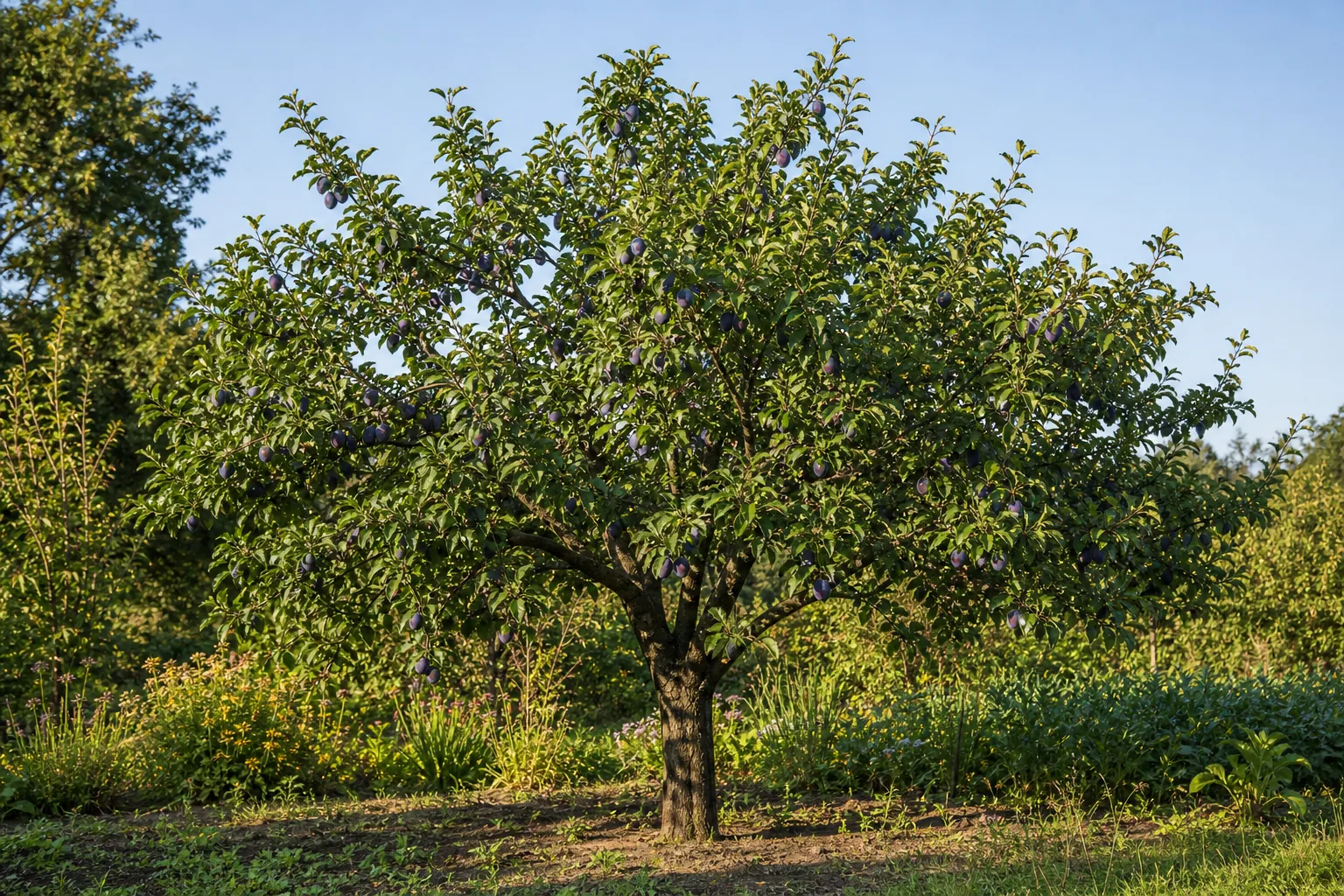
European plum (Prunus domestica) is one of the more reliable stone fruits for cool temperate gardens, but it needs a good site. Plant it in full sun in fertile, moisture-retentive yet well-drained soil, and avoid heavy, wet ground and lawns, where frequent irrigation causes root rot and iron chlorosis. Water deeply through establishment, then during dry periods, and feed lightly, because excess nitrogen invites disease. Prune in late winter or early spring into a modified central leader with 4-5 well-spaced main branches, and remove suckers and dead wood each year. Choose a self-fruitful cultivar such as 'Stanley', or plant a compatible pollinator, for the heaviest crops.
Light
European plums need full sun - at least 6 hours of direct light daily - for good flowering, fruit quality, and healthy wood. Shaded trees grow weakly, fruit poorly, and stay wet, which encourages fungal disease. Site the tree away from buildings and large trees so the canopy dries quickly after rain.
Water
Water new plum trees deeply about twice a week through the first season, letting water penetrate 1-2 ft into the root zone. In later years, deep irrigation every couple of weeks during dry weather supports fruit size and quality, but European plums resent overwatering, which causes root disease and iron chlorosis on heavy or alkaline soils. Water at the drip line and keep the trunk dry.
Soil and planting
Plant plums in fertile, well-drained, moisture-retentive soil with a neutral pH; European plums grow in most soil types provided drainage is good and they are not overwatered. They are prone to iron chlorosis (yellowing leaves with green veins) on alkaline soils, so check soil pH and avoid planting in lawns with frequent irrigation. Plums are planted in the ground and are not repotted; choose a dwarfing rootstock for a small garden and stake the tree for the first few years.
Temperature, humidity, and fertilizer
European plums are hardy in USDA zones 5-8 and are the latest-blooming plums, which makes them more reliable than Japanese plums in frost-prone northern climates, though a hard freeze during bloom can still kill the crop. They need cold winters for dormancy and flower well after a normal chill. Feed new trees lightly - fertilizer in the first year is usually unnecessary - and prune in winter, avoiding late-summer and fall pruning that invites canker and winter injury.
Pruning and propagation
Prune European plums in late winter or early spring, shaping young trees to a modified central leader with 4-5 main branches spaced 8-10 inches apart on the trunk and the lowest branch at least 24 inches up. Remove dead, diseased, or damaged wood first, then about a quarter of older growth to open the canopy; avoid pruning after midsummer. Propagate named cultivars by grafting or budding onto rootstocks, because seedlings vary and are rarely planted.
Common problems
Start with the pattern, current soil moisture, and recent changes. One symptom can have several causes, so change the most likely factor first and observe before making another major adjustment.
| Symptom | Check first | First action |
|---|---|---|
| Blossom blight and rotting fruit with grey spore tufts | Check flowers and fruit for tan-brown rot in warm, wet weather. | Remove mummified fruit, prune to open the canopy, and apply a labeled fungicide at bloom if the disease recurs. |
| Black, rough swellings on twigs and branches | Look for hard black galls on small branches, most visible in winter. | Prune out galls at least 4 inches below the swelling in winter and dispose of the wood; replant resistant types if severe. |
| Amber gum and sunken bark at wounds or branch bases | Check for bacterial or fungal canker after injury or late-season pruning. | Avoid trunk wounds, prune out affected limbs in dry weather, and stop pruning after midsummer. |
| Shot-holed leaves with small purple spots | Check leaves and fruit for purple spots that drop out leaving holes. | Rake fallen leaves, prune out cankered shoots, and apply a dormant-season fungicide where the disease recurs. |
| Poor fruit set after a late freeze | Check whether bloom coincided with freezing temperatures. | Site in a frost-free spot and choose later-blooming European types; killed buds cannot be recovered in-season. |
Pet and household safety
European plum is toxic to dogs, cats, and horses according to the ASPCA. The toxic principle is cyanogenic glycosides in the stems, leaves, and seeds, which are particularly hazardous when the plant material is wilting; clinical signs can include brick red mucous membranes, dilated pupils, difficulty breathing, panting, and shock. The ripe fruit flesh is edible, but keep pets from chewing leaves, twigs, or pits and contact a veterinarian immediately after substantial ingestion.
Frequently asked questions
How much sun does a European plum need?
Full sun - at least 6 hours of direct light daily. Good light improves flowering, fruit quality, and disease resistance.
How often should I water a plum tree?
Deeply about twice a week the first season, then every couple of weeks during dry weather. European plums resent overwatering, which causes root rot and iron chlorosis.
What soil suits European plum?
Fertile, well-drained, moisture-retentive soil with a neutral pH. They do poorly in wet, heavy ground and show iron chlorosis on very alkaline soil.
When should I prune a plum tree?
In late winter or early spring, shaping to a modified central leader. Avoid late-summer and fall pruning, which invites canker and winter injury.
Do I need two plum trees for fruit?
Many European plums are self-fruitful, but a compatible pollinator such as 'Stanley', 'Italian', or 'Green Gage' improves the crop.
Is European plum safe for pets?
No - the ASPCA lists plum as toxic to dogs, cats, and horses (cyanogenic glycosides in stems, leaves, and seeds, especially when wilted). Keep pets from chewing any part of the tree except the ripe fruit flesh.
Sources and editorial review
This editorial draft is based on the sources below and awaits named horticulture-expert approval before publication.
- Prunus domesticaRoyal Botanic Gardens, Kew (Plants of the World Online) · Checked
- PlumASPCA · Checked
- Prunus domesticaNorth Carolina State University Extension · Checked
- Plums in the Home GardenUtah State University Extension · Checked
What works well
- Compact, cold-hardy tree (zones 5-8) with showy early-spring blossom.
- Fruit is edible fresh, dried as prunes, or cooked, and young trees crop heavily.
- Wide cultivar choice, including self-fertile types such as 'Stanley'.
What to consider
- Susceptible to brown rot, black knot, coryneum blight, and cankers in wet seasons.
- Frost-sensitive bloom; a hard late freeze can wipe out the crop.
- Toxic to cats and dogs (cyanogenic glycosides in stems, leaves, and pits) per the ASPCA.