Key takeaways
- Plant two or more compatible pear varieties in full sun; most European pears need a cross-pollinator to set a good crop.
- Give pears deep, fertile, well-drained soil; they tolerate clay better than many fruit trees but fail in wet, compacted ground.
- Harvest fruit while still firm and ripen it in cool storage; most pear cultivars ripen best off the tree.
How to care for European pear
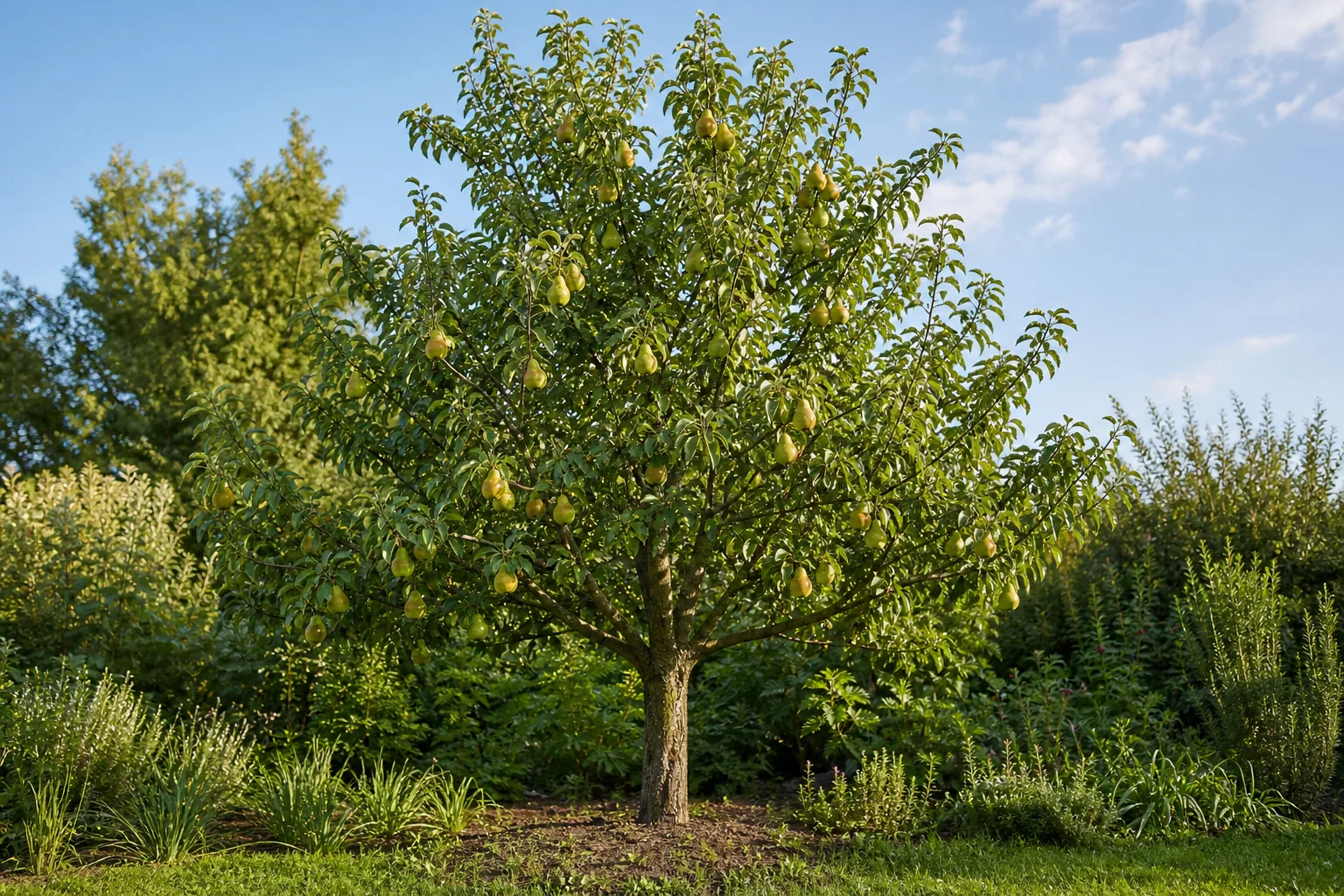
European pear (Pyrus communis) is a long-lived deciduous fruit tree that rewards careful siting more than fussy care. Plant it in full sun in deep, fertile, well-drained loam, setting the graft union well above the soil line and staking young trees. Because most cultivars are not self-fertile, plant two or more compatible varieties that flower at the same time to ensure cross-pollination. Water deeply through the first two seasons, then during dry spells; pears tolerate occasional drought and heavier clay than many fruit trees. The main job after establishment is disease watch: fire blight, pear scab, and canker are common in warm, wet springs, so fire blight-resistant cultivars are worth choosing where the disease occurs.
Light
Pears need full sun - at least 6 hours of direct light daily - for strong growth, good fruit set, and clean, open branching. Too much shade makes the tree leggy and reduces flowering and fruit quality. In hot-summer regions a little afternoon protection helps, but the tree still needs bright direct light for most of the day.
Water
Water newly planted pears deeply and regularly through the first two growing seasons to build a strong root system. Established trees need water during extended dry spells - about 1 inch per week in drought - but tolerate occasional dry soil better than most fruit trees. Aim water at the base, avoid keeping the trunk wet, and never leave the ground waterlogged, which encourages root disease.
Soil and planting
Pears grow in most well-drained soils and tolerate heavy clay better than many fruit trees, but they perform best in deep, fertile, well-drained loam with a neutral to slightly acidic pH. Improve poor ground with compost before planting and avoid compacted or waterlogged sites. Like all large fruit trees, pears are planted in the ground, not repotted; dwarfing rootstocks keep trees at 8-15 ft and are far easier to manage for harvest, pruning, and pest control.
Temperature, humidity, and fertilizer
European pears are hardy in USDA zones 4-8 and need a cold-winter, moderate-summer climate; they ripen fruit in cool autumn weather and the fruit actually ripens best after harvest in cool storage. Fire blight is much worse in warm, wet springs, so choose resistant cultivars where that pattern is common. Fertilize sparingly - a light compost mulch in spring is usually enough - because excess nitrogen produces soft growth and increases fire blight susceptibility.
Pruning and propagation
Prune pears lightly in late winter while dormant, removing dead, damaged, or crossing branches and keeping the center open; avoid heavy pruning that removes fruiting spurs, which bear for many years. Early spring flowers can be frosted, so delay any heavy cuts until buds show. Propagate named cultivars by grafting or budding onto a rootstock, because seedlings do not come true; tree size and fire blight resistance are both controlled largely by the rootstock.
Common problems
Start with the pattern, current soil moisture, and recent changes. One symptom can have several causes, so change the most likely factor first and observe before making another major adjustment.
| Symptom | Check first | First action |
|---|---|---|
| Blackened, wilted branch tips as if scorched | Check for shepherd's-crook tips and oozing cankers after warm, wet spring weather. | Prune out infected shoots 8-12 inches below visible damage, sterilizing tools between cuts, and choose fire blight-resistant cultivars. |
| Rough, scabby spots on fruit and leaves | Check foliage and young fruit for olive-brown scabby lesions in wet springs. | Rake and remove fallen leaves, improve airflow, and apply a labeled fungicide at bud break if the disease has been severe. |
| Sunken cankers and dieback on branches | Look for sunken, discolored bark on limbs and trunk. | Prune out affected wood with clean cuts, avoid wounding the trunk, and support vigor with water and mulch. |
| Sticky leaves and sooty mold with tiny insects | Check the undersides of leaves for pear psylla nymphs and honeydew. | Rinse foliage, encourage natural predators, and treat heavily infested trees with a labeled insecticide at the correct timing. |
| Poor fruit set despite healthy blossom | Check whether a compatible pollinizer is nearby and whether frost damaged the flowers. | Plant a compatible variety that blooms at the same time; frost damage cannot be fixed in-season. |
Pet and household safety
European pear has no species page on the ASPCA Toxic and Non-Toxic Plants list, and no species-specific non-toxic classification for cats and dogs was confirmed. Like related apple and stone-fruit trees, pear seeds, leaves, and stems contain cyanogenic glycosides that can release cyanide, especially when the plant material is wilted, so the closest ASPCA entries (apple, and the plum/cherry group) are treated as the relevant toxic guidance. Ripe pear flesh is edible, but keep pets from chewing seeds, leaves, or wilted prunings and contact a veterinarian after substantial ingestion.
Frequently asked questions
How much sun does a European pear need?
Full sun - at least 6 hours of direct light daily. Good light keeps the tree healthy, flowering, and productive; shade reduces fruit set.
How often should I water a pear tree?
Deeply and regularly through the first two seasons, then during dry spells (about 1 inch weekly in drought). Established trees tolerate occasional dry soil but not waterlogged ground.
What soil suits European pear?
Deep, fertile, well-drained loam with a neutral to slightly acidic pH. Pears tolerate heavy clay better than most fruit trees but fail in wet, compacted ground.
Why did my pear tree not set fruit?
Usually a lack of a compatible pollinizer or frost damage to the flowers. Plant a second variety that blooms at the same time; most European pears are not self-fertile.
When should I prune my pear tree?
In late winter while dormant, removing dead, damaged, or crossing branches. Avoid heavy spring pruning, which opens the tree to fire blight.
Is European pear safe for pets?
Not confirmed - the ASPCA has no pear page, and no species-specific non-toxic classification for cats and dogs was confirmed. Pear seeds, leaves, and stems contain cyanogenic glycosides that can release cyanide, especially when wilted, so prevent pets from chewing them.
Sources and editorial review
This editorial draft is based on the sources below and awaits named horticulture-expert approval before publication.
- Pyrus communisRoyal Botanic Gardens, Kew (Plants of the World Online) · Checked
- Toxic and Non-Toxic Plants List (Pear)ASPCA · Checked
- Pyrus communisNorth Carolina State University Extension · Checked
- Pyrus communisMissouri Botanical Garden Plant Finder · Checked
- Plants Poisonous to Livestock - Pyrus/Prunus/Malus FAQCornell University Department of Animal Science · Checked
What works well
- Attractive early-spring blossom and a long-lived, easy tree form.
- Tolerates heavy clay soils better than most other fruit trees.
- Pears ripen and keep well in cool storage, stretching the harvest season over several months.
What to consider
- Highly susceptible to fire blight, scab, canker, and anthracnose in warm, wet springs.
- Most cultivars need a second compatible variety for good pollination.
- Seeds, leaves, and stems contain cyanogenic glycosides; the ASPCA has no pear page, so the tree is not confirmed safe for cats and dogs.