Key takeaways
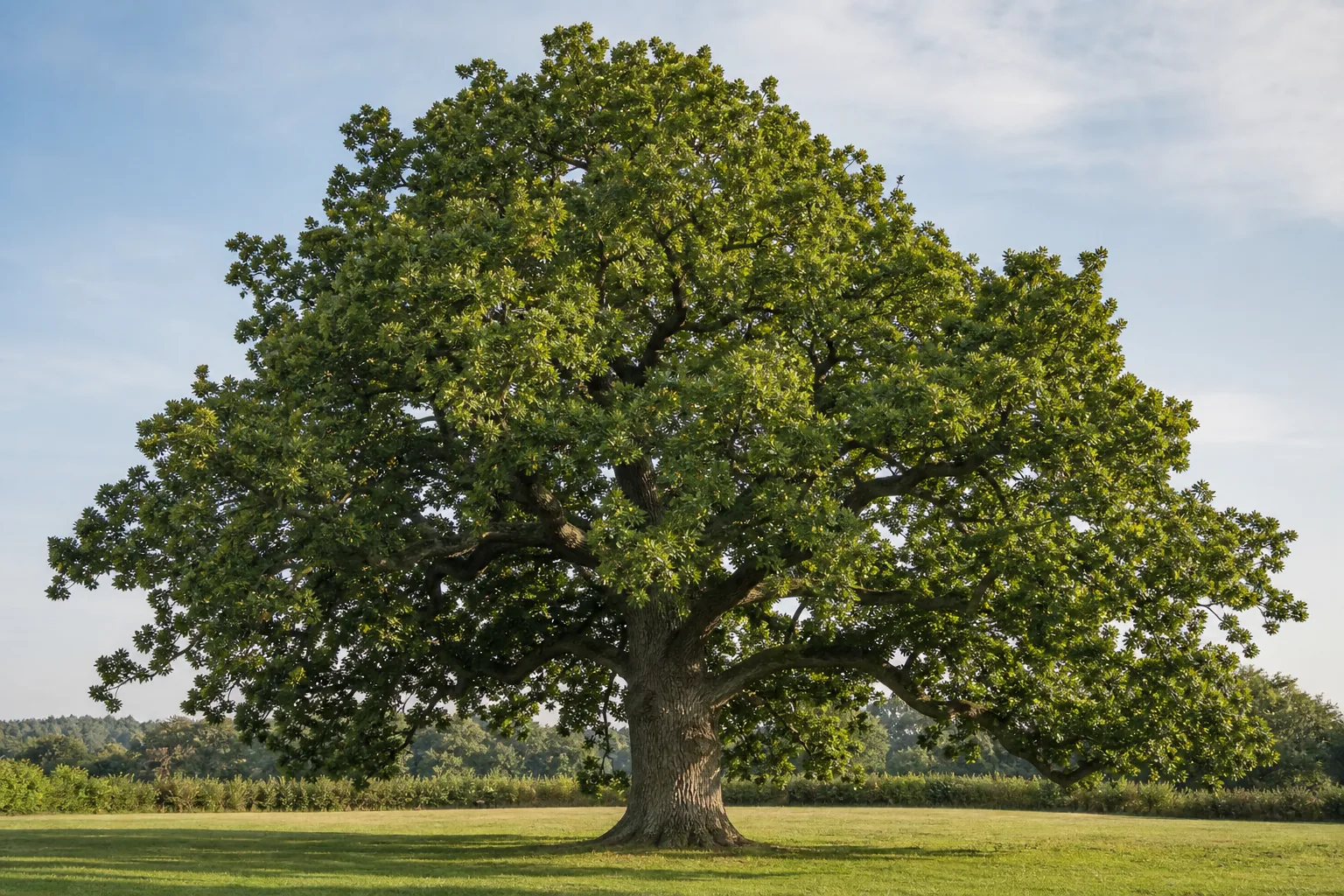
- Plant in full sun with 60+ ft of space; English oak matures to 40-70 ft tall and wide.
- Use average, medium, well-drained soil - it adapts to a wide range but prefers moist loam.
- Expect the first acorn crop only after 20-30 years; keep young leaves and raw acorns away from pets and livestock.
How to care for English oak
English oak (Quercus robur) is a large, low-maintenance deciduous oak best treated as a specimen for big lawns, parks, or fields. Plant it in full sun in average, medium-moisture, well-drained soil; it prefers moist loams but adapts to clay, sand, and a wide pH range. Give the mature crown 40-70 ft - and ideally more - of clearance in every direction. Water young trees regularly through the first two seasons, then English oak is quite drought tolerant. Acorn production takes 20-30 years, and once mature the tree drops a heavy annual or mast crop of acorns that wildlife loves. This is a tree for large properties, not small urban lots.
Light
English oak needs full sun - at least 6 hours of direct light daily - to develop its broad, rounded crown. It will grow in part shade but produces a thinner, lopsided canopy. In hot-summer regions some afternoon relief is tolerated, but full sun is preferred for best structure and health.
Water
Water deeply and regularly during the first two establishment seasons, then English oak is largely self-sufficient, with good drought tolerance once the taproot is established. It prefers evenly moist, well-drained ground but adapts to both drier and wetter sites. Avoid planting in low, waterlogged areas where roots sit wet for long periods.
Soil and planting
Plant English oak in average, medium-moisture, well-drained soil in full sun. It grows on clay, loam, or sand, tolerates acidic to alkaline pH, and handles drought once established. As a large garden tree it is always planted in the ground; set the root ball at nursery depth, keep the trunk flare at grade, and mulch to the dripline without piling mulch on the trunk.
Temperature, humidity, and fertilizer
Hardy in USDA zones 5-8, English oak is a temperate tree that handles winter cold and summer heat well. High humidity raises the risk of powdery mildew, especially on young foliage, so site for good airflow. Fertilizer is rarely needed on established trees; a light compost mulch in spring is sufficient, and heavy feeding is unnecessary for a tree adapted to lean conditions.
Pruning and propagation
Prune English oak only to remove dead, damaged, or crossing branches, and prune when young to establish a strong single leader; mature oaks need little or no pruning. Time pruning to avoid the spring sap-flow and beetle-active periods, and keep wounds small. Propagate from fresh acorns collected in autumn and sown promptly, or graft cultivars such as 'Fastigiata' to preserve columnar form.
Common problems
Start with the pattern, current soil moisture, and recent changes. One symptom can have several causes, so change the most likely factor first and observe before making another major adjustment.
| Symptom | Check first | First action |
|---|---|---|
| White powdery coating on young leaves in humid weather | Check for powdery mildew; most common on new growth in crowded, humid sites. | Improve airflow and siting; mildew is usually cosmetic on established trees, so no spray is typically needed. |
| Sudden wilting, leaf drop, and browning in summer | Check for oak wilt - look for leaf veins that turn brown while tissue stays green, and confirm locally. | Avoid wounding trees in spring, prune out affected limbs, and consult a local arborist; oak wilt can be fatal. |
| Chewed or skeletonized leaves | Check for caterpillars, oak skeletonizers, leaf miners, and other defoliators. | Tolerate light defoliation; support birds and natural predators and only intervene for repeated severe damage. |
| Holes, galls, or bumps on leaves and twigs | Check for gall-forming wasps and scale insects; galls are usually harmless. | Leave galls alone - they rarely threaten tree health - and prune out heavily infested twigs. |
| Acorns failing to appear | Check tree age and mast cycle - English oak takes 20-30 years to first bear. | Nothing is wrong; wait for maturity and accept the natural biennial rhythm of acorn production. |
Pet and household safety
ASPCA lists oak (Quercus species) as toxic to horses, and NC State Extension notes low-severity poison characteristics for English oak: young leaves and raw acorns contain gallotannins that can cause gastric pain, constipation followed by diarrhea, excessive thirst, and increased urination. ASPCA does not specifically classify oak for cats and dogs, but dogs that chew acorns risk tannin-related stomach upset or an intestinal blockage. Prevent acorn and leaf ingestion and contact a veterinarian after a concerning exposure.
Frequently asked questions
How much sun does English oak need?
Full sun - at least 6 hours of direct light daily - for a broad, balanced crown. It tolerates part shade but becomes thin and lopsided.
How often should I water English oak?
Deeply through the first two seasons, then rarely; established trees are drought tolerant and prefer evenly moist, well-drained soil.
What soil suits English oak?
Average, medium-moisture, well-drained soil. It adapts to clay, sand, acidic, or alkaline ground but dislikes prolonged wet feet.
When will my oak start producing acorns?
English oak commonly takes 20-30 years to produce its first crop of acorns; mature trees bear on a variable, often biennial cycle.
How big does English oak get?
Typically 40-70 ft tall and wide in cultivation (to 100 ft in ideal conditions), so it needs very large spaces.
Is oak safe for pets?
ASPCA classifies oak as toxic to horses, and the leaves and raw acorns contain gallotannins that can upset the stomach of pets and livestock; keep pets away from acorns and foliage.
Sources and editorial review
This editorial draft is based on the sources below and awaits named horticulture-expert approval before publication.
- Quercus roburRoyal Botanic Gardens, Kew (Plants of the World Online) · Checked
- OakASPCA · Checked
- Quercus roburNorth Carolina State University Extension · Checked
- Quercus roburMissouri Botanical Garden Plant Finder · Checked
What works well
- Majestic, long-lived specimen with a broad, spreading crown and strong autumn wildlife value.
- Low-maintenance and adaptable once established, tolerating a wide range of soils and drought.
- Hosts many moths, butterflies, and other insects and supplies acorns for wildlife.
What to consider
- Needs very large spaces; roots and crown outgrow small gardens and streets.
- Susceptible to powdery mildew in humid climates and a long list of oak diseases and insects.
- Young leaves and raw acorns contain gallotannins that are toxic (ASPCA lists oak as toxic to horses).