Key takeaways
- Wait for warm soil (above 60°F) and all danger of frost; beans rot in cold, wet ground and sulk in cool air.
- Keep the root zone evenly moist, about 1 inch of water per week, especially while flowering and filling pods.
- Harvest frequently and succession-sow every 2-3 weeks into midsummer for a continuous crop.
How to care for bush bean
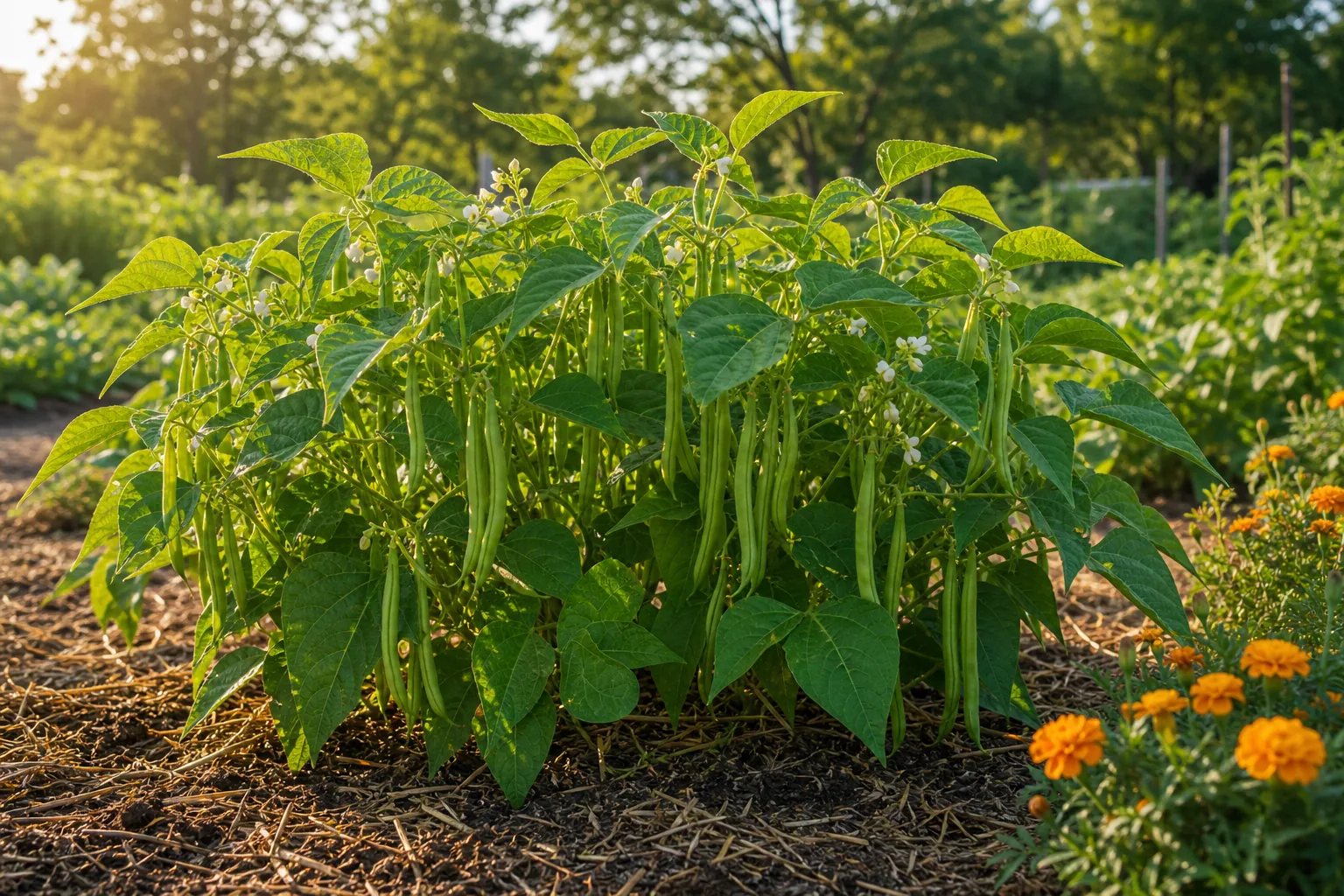
Bush bean (Phaseolus vulgaris) is a warm-season, nitrogen-fixing annual that wants heat, sun, and even moisture. Sow seed 1 inch deep (a little deeper in dry soil) about 2-4 inches apart in rows 18-36 inches apart, after the soil has warmed past 60°F and frost danger has passed. Do not start beans indoors — they dislike transplanting. Mulch after the second set of true leaves to hold moisture, and make a new short sowing every 2-3 weeks until midsummer for a rolling harvest. Pick pods every day or two; frequent harvesting keeps the plants flowering and filling new pods.
Light
Bush beans need full sun — at least 6 hours of direct light, ideally 6-8. They tolerate light partial shade but yield less and grow lankier in low light; in hot climates morning sun with a little afternoon shade is fine.
Water
Water to keep the soil evenly moist, about 1 inch per week, and more in heat and containers. Beans need steady moisture especially while flowering and the pods develop; drought causes poor pod set and tough, misshapen pods. Water at the base and early in the day so foliage dries quickly, which limits white mold and bacterial blight.
Soil and planting
Plant in well-drained, fertile soil with a pH of about 6.0-6.8; clay or silt loams hold moisture better than sand and suit beans well. In containers use a deep pot with a rich, free-draining mix and sow in place. Beans fix nitrogen through soil bacteria, so skip high-nitrogen fertilizer and avoid 'Weed and Feed' products; inoculating seed with rhizobium can boost yields in soils where beans have not grown before.
Temperature, humidity, and fertilizer
Bush beans are frost tender and germinate best at 70-80°F (poorly below 60°F); they grow well from about 60-85°F. High humidity with poor airflow raises white-mold and blight risk, so space for air movement. Feed lightly — too much nitrogen gives leaves and few pods; a side-dressing of compost or a low-nitrogen feed is plenty. Pod set often fails when temperatures exceed about 90°F.
Pruning and propagation
No pruning is needed beyond harvesting pods and removing any diseased foliage. Propagate from seed only: direct-sow after soil warms, succession-planting every 2-3 weeks; a 3-4 year rotation helps reduce soil-borne bean diseases.
Common problems
Start with the pattern, current soil moisture, and recent changes. One symptom can have several causes, so change the most likely factor first and observe before making another major adjustment.
| Symptom | Check first | First action |
|---|---|---|
| Plants fail to emerge or seeds rot in cool, wet soil | Check soil temperature and moisture — beans sown below 60°F in damp ground rot. | Wait for warmer, drier soil above 60°F, then re-sow; avoid overhead watering at emergence. |
| Skeletonized leaves or yellow-orange beetles | Check for Mexican bean beetle adults and larvae on leaf undersides. | Hand-pick beetles and eggs, or use neem/pyrethrin; plant early to avoid peak populations. |
| Curled, sticky leaves with tiny insects | Check leaf undersides for aphids. | Rinse with a strong stream of water or apply insecticidal soap; encourage beneficial insects. |
| Few pods and flowers dropping in hot weather | Check temperature — above about 90°F disrupts pollination and pod set. | Sow for a cool-season window, water steadily, and provide light afternoon shade in heat. |
| White, cottony growth on stems and crowns | Check for white mold in wet, crowded conditions. | Improve airflow and spacing, water early in the day, and remove infected plants. |
Pet and household safety
Bush beans are considered non-toxic to dogs and cats and are not listed as a poison by the ASPCA; the pods and tender seeds are safe. As with any plant, very large amounts of raw or dried beans could cause stomach upset, so discourage pets from grazing and contact a veterinarian if a pet shows persistent signs.
Frequently asked questions
How much sun do bush beans need?
Full sun — at least 6 hours of direct light, ideally 6-8; they yield less and grow lanky in shade.
How often should I water bush beans?
Keep soil evenly moist, about 1 inch per week and more in heat; steady water while flowering and podding prevents poor set.
When do I plant bush beans?
After all frost danger passes and soil warms past 60°F; sow a new row every 2-3 weeks into midsummer.
When and how do I harvest bush beans?
About 50-60 days after sowing, when pods are firm and snap cleanly; pick often to keep plants producing.
Why are my bean plants not making pods?
Usually cold soil at sowing or heat above 90°F during flowering; wait for warm soil and keep plants watered.
Are bush beans safe for pets?
Yes — bush beans are non-toxic to dogs and cats per the ASPCA; only very large amounts might cause mild digestive upset.
Sources and editorial review
This editorial draft is based on the sources below and awaits named horticulture-expert approval before publication.
- Phaseolus vulgarisRoyal Botanic Gardens, Kew (Plants of the World Online) · Checked
- Toxic and Non-Toxic Plants ListASPCA · Checked
- Growing beans in home gardensUniversity of Minnesota Extension · Checked
- Bush beansCornell University Home Gardening · Checked
What works well
- Compact, self-supporting bushes need no trellis or staking.
- Fast and reliable — often ready to pick in 50-60 days from seed.
- Fix their own nitrogen, so they need little fertilizer and improve the bed.
What to consider
- Sensitive to cold soil and frost; seeds rot if sown too early.
- Pod set drops and quality falls when temperatures exceed about 90°F.
- Susceptible to Mexican bean beetle, aphids, and white mold in wet, crowded beds.