Key takeaways
- Plant against brick, stone, or concrete - the holdfasts are hard to remove and can ruin painted or shingle walls.
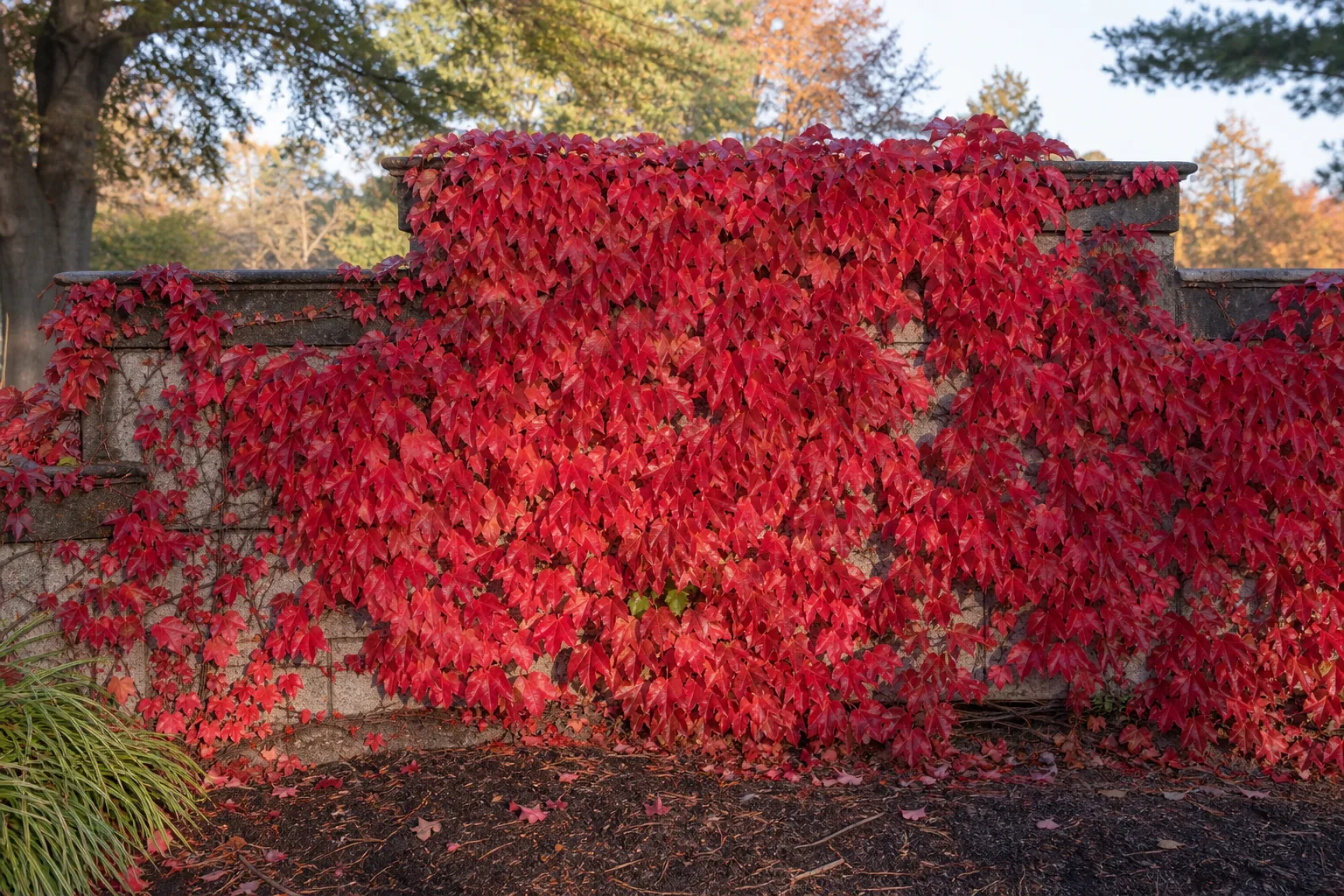
- Best fall color comes in full sun; it tolerates shade and a wide range of soils.
- Trim regularly to keep it in bounds; this is the classic Ivy League wall vine.
How to care for Boston ivy
Boston ivy (Parthenocissus tricuspidata) is a vigorous tendril climber that needs no support: adhesive holdfasts at the tendril tips cling to brick, stone, concrete, and wood. Plant it in average, dry-to-medium, well-drained soil in full sun to part shade; in hot zones it does best on eastern or northern walls. It is generally easy and needs little care, but it must be trimmed regularly to stay in bounds. Do not grow it on wood or shingle walls, because the holdfasts are difficult to remove, creep under shingles, and ruin paint.
Light
Boston ivy tolerates full sun to full shade, but the best scarlet autumn color occurs in sunny locations. In hot summer climates (zones 8-9) an eastern or northern wall is preferable to reduce heat stress. Heavy shade produces a healthy but greener, less colorful vine.
Water
Established Boston ivy is drought tolerant and grows well in dry-to-medium soil; it also tolerates occasional wet conditions. Water regularly during the first season to establish roots, then water during extended dry spells. Avoid soggy soil, especially in containers.
Soil and planting
Boston ivy adapts to clay, sand, rocky, and high-organic-matter soils with an acid-to-alkaline pH, as long as drainage is decent; it tolerates dry soil, compaction, and urban pollution. In containers use a freely draining mix and a sturdy support, and repot in spring when rootbound.
Temperature, humidity, and fertilizer
Hardy in USDA zones 4-8, Boston ivy withstands cold winters, summer heat, wind, and salt spray. It has no serious insect or disease problems; occasional mildew, leaf spots, or beetles are minor. Fertilizer is rarely needed - a light spring feeding on poor soils is enough.
Pruning and propagation
Trim Boston ivy regularly to keep it in bounds and away from gutters, shutters, and wiring. Removing it from a wall is best done by cutting the stems and letting the holdfasts weather away rather than prying. Propagate easily by cuttings; the vine also roots where stems touch soil.
Common problems
Start with the pattern, current soil moisture, and recent changes. One symptom can have several causes, so change the most likely factor first and observe before making another major adjustment.
| Symptom | Check first | First action |
|---|---|---|
| Vine damages paint or shingles | Check whether holdfasts attached to a painted wood or shingle wall. | Cut the stems at the base and let the holdfasts dry and fall; move the vine to masonry. |
| Vine invades gutters or wiring | Check whether canes reached the roof lines. | Trim regularly and redirect growth away from the structure's edges. |
| Powdery coating or spots on leaves | Check airflow, humidity, and overhead watering. | Improve airflow, water at the base, and remove affected foliage. |
| Sparse growth or poor fall color | Check light and soil moisture. | Move to more sun for fall color and keep the soil evenly moist in hot weather. |
| Seedlings sprouting beneath the wall | Check for bird-dispersed seeds in autumn. | Pull up seedlings promptly and trim berry clusters where practical. |
Pet and household safety
Boston ivy is considered non-toxic to cats and dogs: it is not listed in the ASPCA toxic and non-toxic database, and NC State Extension lists no toxicity warning for it, describing the fruit as edible. Non-toxic does not mean edible - the small blue-black berries can cause mild stomach upset if eaten in quantity, so discourage chewing and contact a veterinarian after substantial ingestion.
Frequently asked questions
How much sun does Boston ivy need?
Full sun to part shade; sun gives the best autumn color.
How often should I water Boston ivy?
To establish, then rarely - it is drought tolerant.
Will Boston ivy damage my wall?
On brick or stone, no; on painted wood or shingles, yes - the holdfasts are hard to remove.
How do I remove Boston ivy from a wall?
Cut the stems at the base and let the holdfasts dry and fall off.
Why isn't my Boston ivy turning red?
Usually too much shade; move it to a sunnier wall.
Is Boston ivy safe for pets?
Considered non-toxic to cats and dogs - not on the ASPCA list and no NC State warning - though the berries can cause stomach upset.
Sources and editorial review
This editorial draft is based on the sources below and awaits named horticulture-expert approval before publication.
- Parthenocissus tricuspidataRoyal Botanic Gardens, Kew (Plants of the World Online) · Checked
- Toxic and Non-Toxic Plants ListASPCA · Checked
- Parthenocissus tricuspidataNorth Carolina State University Extension · Checked
- Parthenocissus tricuspidataMissouri Botanical Garden · Checked
What works well
- Rapid, dense cover for walls, trellises, arbors, and fences with brilliant scarlet autumn foliage.
- Very tolerant: full sun to shade, drought, clay soil, pollution, and black walnut.
- Considered non-toxic to cats and dogs (not on the ASPCA list; NC State lists no toxicity warning).
What to consider
- Holdfasts damage paint, creep under shingles, and are very hard to remove.
- Vigorous and can invade unmanaged areas if not trimmed.
- Berries attract birds but create litter and seedlings beneath the walls.