Key takeaways
- Plant in full sun to part shade in moist, well-drained soil; avoid dry, exposed, windy sites that cause winter burn.
- Water during establishment and drought - arborvitae is intolerant of prolonged dry soil.
- Watch for deer browsing, bagworms, and spider mites; remove damaged branches and treat infestations early.
How to care for arborvitae
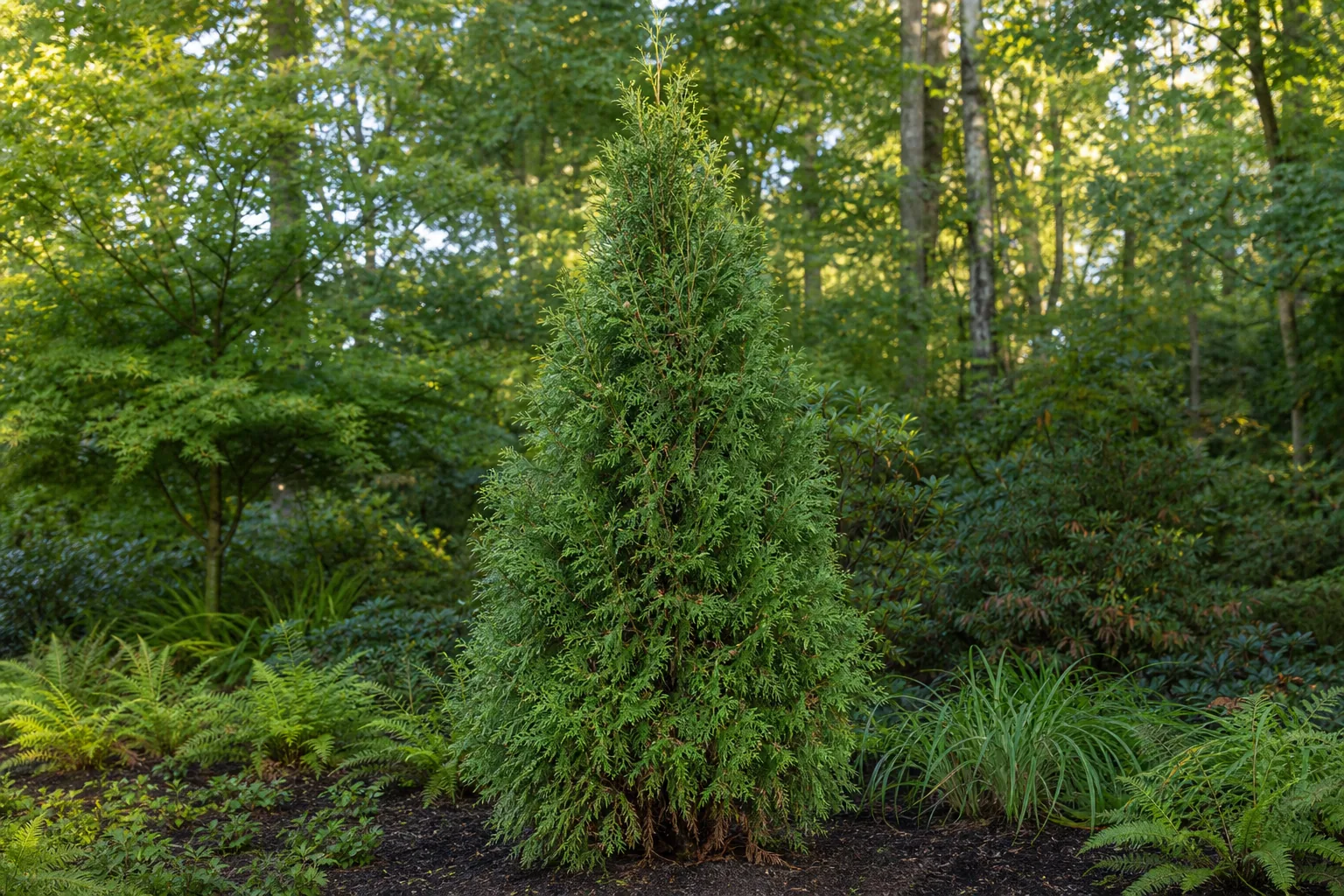
Arborvitae (Thuja occidentalis) is a low-maintenance evergreen that is easiest to keep looking good by choosing the right spot. Plant it in full sun to part shade in moist, well-drained, neutral to slightly alkaline soil, and avoid dry, exposed, windy sites where winter burn turns foliage brown. Water thoroughly through the first two seasons and during drought, because arborvitae is intolerant of prolonged dry soil. It transplants easily and needs little routine care beyond watching for deer browsing, bagworms, and mites, and brushing heavy snow from branches to prevent splitting.
Light
Arborvitae grows best in full sun to part shade, with at least 4-6 hours of direct light. It tolerates light shade, but foliage density drops sharply in deep shade. In hot-summer regions, some afternoon shade is appreciated, but avoid sites that are both shady and wet.
Water
Keep the soil evenly moist, especially for the first two seasons and during drought - arborvitae is intolerant of prolonged dry soil, and the foliage turns yellow-brown in dry, exposed sites (winter burn). Water deeply at the base rather than overhead, and avoid waterlogged ground, though established plants tolerate a wide range of moist soils including clay.
Soil and planting
Plant arborvitae in average, medium-moisture, well-drained soil; it prefers moist, neutral to alkaline loam and tolerates clay, wet, and even black walnut soils, but not dry ground. It is planted in the ground (or a large container for dwarf cultivars) and is never repotted as a tree - set the root ball at grade, firm the soil, and mulch without mounding against the trunk.
Temperature, humidity, and fertilizer
Arborvitae is hardy in USDA zones 2-7 and prefers cool, humid climates; it suffers in hot, dry regions, where winter burn and mites are worse. Protect plants from drying winter winds and from heavy snow and ice loads that split branches. Fertilizer is rarely needed - a light spring mulch of compost is enough - and excess nitrogen produces weak, soft growth.
Pruning and propagation
Arborvitae needs little pruning; remove dead or damaged branches and shape hedges lightly in spring, never cutting into bare old wood, which does not regrow. Leave the natural pyramidal form alone on specimen trees. Propagate the species from seed and cultivars from semi-ripe cuttings in late summer, because cultivars do not come true from seed.
Common problems
Start with the pattern, current soil moisture, and recent changes. One symptom can have several causes, so change the most likely factor first and observe before making another major adjustment.
| Symptom | Check first | First action |
|---|---|---|
| Yellow-brown foliage on the exposed or windward side | Check exposed, windy sites and dry fall/winter conditions that desiccate the foliage. | Water well into fall, mulch, and site or wrap the tree to reduce winter wind exposure. |
| Brown, bag-like cocoons hanging from branches | Look for spindle-shaped bags of dead foliage in late summer and fall. | Hand-pick and destroy bags in fall or winter; treat heavy infestations with a labeled insecticide in early summer. |
| Stippled, bronzing foliage | Check for fine webbing and mites in hot, dry weather. | Rinse the foliage, improve airflow, and treat with horticultural oil or insecticidal soap. |
| Splitting or broken branches after snow and ice | Check for split leaders and branch cracks after heavy snow or ice loads. | Brush heavy snow off gently, prune out damaged wood, and train young trees to a single leader. |
| Foliage stripped by deer | Check for ragged, torn foliage at browsing height, especially in winter. | Protect young plants with fencing or repellents, and choose deer-resistant alternatives where browsing is heavy. |
Pet and household safety
Arborvitae is not listed on the ASPCA Toxic and Non-Toxic Plants list, and no species-specific non-toxic classification for cats and dogs was confirmed in the reviewed sources. The foliage contains thujone and related volatile oils that can cause digestive upset, and concentrated oils are more hazardous, so keep pets from chewing foliage or pruned branches and contact a veterinarian after substantial ingestion.
Frequently asked questions
How much sun does arborvitae need?
Full sun to part shade, with at least 4-6 hours of direct light. Deep shade thins the foliage dramatically.
How often should I water arborvitae?
Keep the soil evenly moist, especially the first two seasons and during drought - it is intolerant of prolonged dry soil and burns in dry, exposed sites.
What soil suits arborvitae?
Moist, well-drained, neutral to slightly alkaline soil. It tolerates clay, wet, and even black walnut soils but not dry ground.
Why is my arborvitae turning brown?
Usually winter burn on dry, exposed, windy sites, or pests such as bagworms and mites. Water well into fall, protect from wind, and check for pests.
How big does arborvitae get?
In cultivation most cultivars grow 20-40 ft tall and 10-15 ft wide (dwarf forms stay much smaller); in the wild trees can reach 40-60 ft.
Is arborvitae safe for pets?
Not confirmed - the ASPCA does not list Thuja, and no species-specific non-toxic classification for cats and dogs was confirmed. Foliage contains thujone and related oils that can cause digestive upset, so prevent chewing.
Sources and editorial review
This editorial draft is based on the sources below and awaits named horticulture-expert approval before publication.
- Thuja occidentalisRoyal Botanic Gardens, Kew (Plants of the World Online) · Checked
- Toxic and Non-Toxic Plants List (Arborvitae)ASPCA · Checked
- Thuja occidentalisNorth Carolina State University Extension · Checked
- Thuja occidentalisMissouri Botanical Garden Plant Finder · Checked
What works well
- Dense, aromatic evergreen foliage useful for screens, hedges, and foundation plantings.
- Cold hardy (zones 2-7), easy to transplant, and tolerant of clay, wet, and urban soils.
- Wide range of cultivars from dwarf shrubs to 40 ft trees.
What to consider
- Foliage yellows and burns in dry, exposed, windy sites; snow and ice can split branches.
- Deer browse it heavily, and bagworms, mites, and scale can disfigure plants.
- Not listed by the ASPCA; foliage contains thujone, and the tree is not confirmed non-toxic for cats and dogs.