Key takeaways
- Plant in full sun and well-drained soil, and include at least two co-blooming varieties for cross-pollination.
- Choose cultivars and rootstocks (dwarf to standard) matched to your space and regional chilling hours.
- Stems, leaves, and especially seeds contain cyanide precursors - keep pets from chewing plant parts and apple cores.
How to care for apple trees
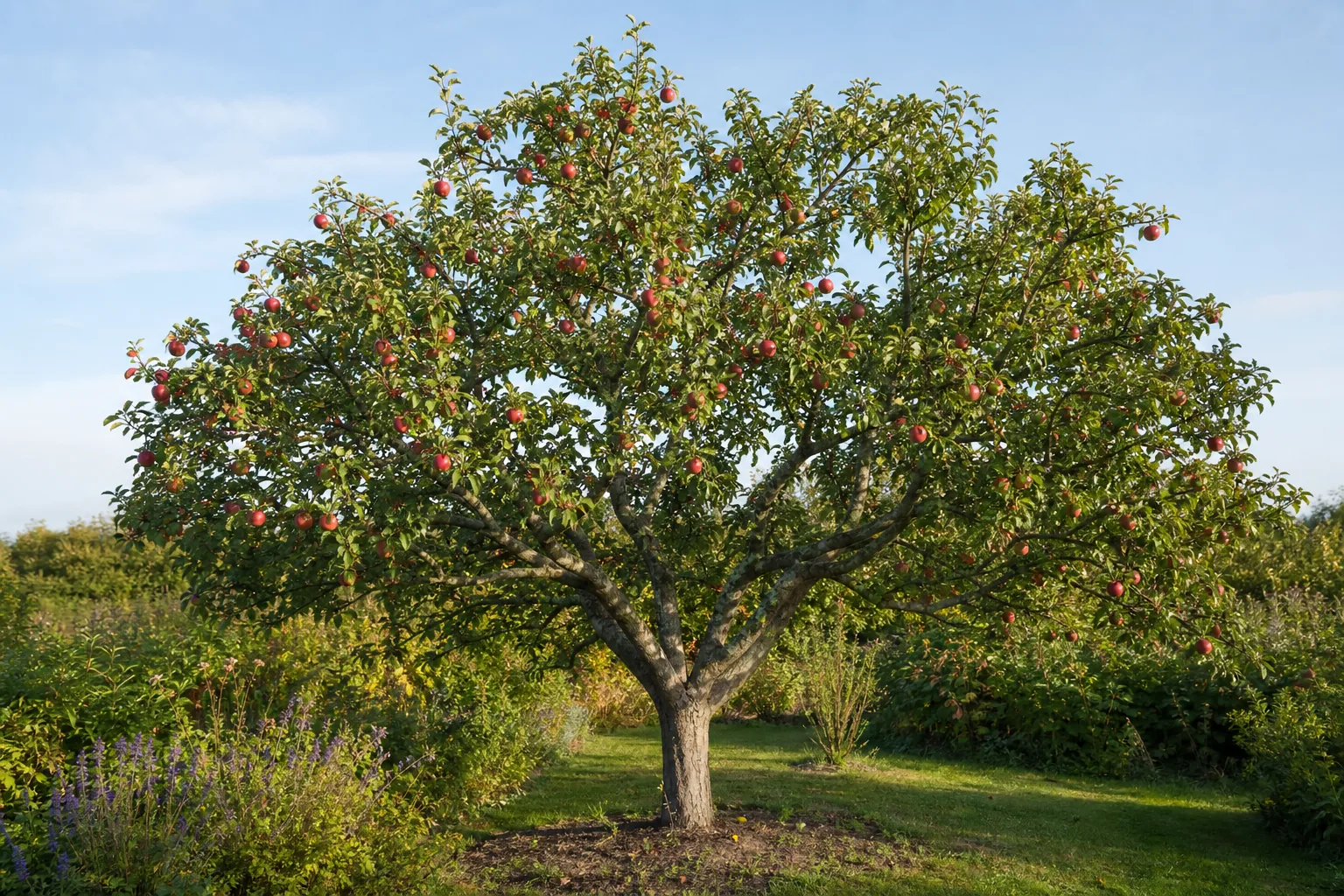
Apple (Malus domestica) is the most popular backyard tree fruit, and success comes from siting, pollination, and pruning discipline. Plant in full sun in fertile, well-drained loam - apple trees will not grow with wet feet - setting the graft union at the correct depth for the rootstock (3-4 inches above soil for dwarfing stocks). Plant at least two co-blooming varieties so they can cross-pollinate, since apple flowers are self-unfruitful. Prune young trees to a central leader with wide-angled scaffold branches, thin heavy crops to keep branches from breaking, and keep the tree open to light. A regular spray and sanitation program is usually needed to manage scab, fire blight, mildew, and codling moth.
Light
Apple trees require full sun - at least three-quarters of the day in direct light - for quality fruit and healthy wood. Shaded trees flower and fruit poorly, hold disease, and produce soft growth. Site the tree away from buildings and large trees so every leaf gets sunlight.
Water
Water deeply and regularly through the first two seasons, then during dry spells and fruit development; apples need steady moisture for even sizing but resent saturated soil. Use soaker hoses or drip irrigation at the root zone and mulch to conserve moisture. Reduce late-season watering to help fruit finish and store well.
Soil and planting
Plant apple in fertile, well-drained loam with a slightly acidic to neutral pH (about 6.0-7.0); it grows in all but the rockiest or heaviest clay soils if drainage is good. Dig a hole large enough for all the roots and plant at the proper depth for the rootstock - the graft union should sit above the soil line for dwarfing stocks. Dwarf trees in containers can be moved up a pot size when rootbound, keeping the graft union clear.
Temperature, humidity, and fertilizer
Apples are temperate trees that need cultivar-specific winter chill and are hardy in roughly USDA zones 3-9 by variety; blossoms are vulnerable to late frosts. Feed young trees lightly in early spring as buds swell, using about 1/5-1/2 lb of balanced fertilizer per year of tree age, and reduce or skip nitrogen when pruning heavily. Good airflow lowers fire blight and scab pressure in humid regions.
Pruning and propagation
Prune apple trees in the dormant season using the central-leader system: head back to about 30 inches at planting, select 6-10 wide-angled scaffold branches over the first few years, and keep the center open to light. Thin fruit in early summer to prevent branch breakage and improve size. Propagation is by grafting or budding onto chosen rootstocks - seedlings do not come true, so named cultivars must be vegetatively propagated.
Common problems
Start with the pattern, current soil moisture, and recent changes. One symptom can have several causes, so change the most likely factor first and observe before making another major adjustment.
| Symptom | Check first | First action |
|---|---|---|
| Dark, olive-green to black scabby spots on leaves and fruit | Check for apple scab in wet spring weather. | Rake and remove fallen leaves, prune for airflow, and use resistant cultivars; follow a local spray schedule if scab is severe. |
| Scorched, blackened blossom spurs and branch tips | Check for fire blight, especially after storms or spring pruning. | Prune out infected wood well below the damage with disinfected tools and avoid spring pruning and nitrogen feeding. |
| Frass-filled holes in fruit and 'stung' apples | Check for codling moth larvae inside fruit. | Use pheromone traps, remove infested fruit, and follow a local codling-moth timing program. |
| Ragged holes chewed in leaves | Check for Japanese beetles and other leaf feeders. | Hand-pick beetles and support natural predators; avoid broad pesticides that harm pollinators. |
| Poor fruit set despite healthy bloom | Check pollination: most apple cultivars need a different co-blooming variety. | Plant a compatible pollinizer and ensure bees visit during bloom; 'Winesap' and 'Turley' have sterile pollen. |
Pet and household safety
Apple is toxic to dogs, cats, and horses according to the ASPCA. Stems, leaves, and seeds contain cyanogenic glycosides that release cyanide, particularly as the material wilts, with clinical signs of brick-red mucous membranes, dilated pupils, difficulty breathing, panting, and shock. Kew's Plants of the World Online profile also notes hydrogen cyanide in the seeds and possibly the leaves but not the fruit. Keep pets away from seeds, stems, and leaves, and contact a veterinarian after ingestion.
Frequently asked questions
How much sun do apple trees need?
Full sun - at least three-quarters of the day in direct light - for quality fruit; shaded trees fruit poorly and hold more disease.
How often should I water an apple tree?
Deeply and regularly through establishment, then during dry spells and fruit development; apples need steady moisture but not soggy roots.
Do I need two apple trees?
Yes, for most cultivars - apple flowers are self-unfruitful, so plant at least two co-blooming varieties for cross-pollination.
When should I prune apple trees?
In the dormant season, using a central-leader system; head back at planting, select wide-angled scaffolds, and keep the center open.
Why didn't my apple tree set fruit?
Usually a pollination problem - check for a compatible co-blooming variety and bee activity during bloom; late frosts can also kill blossoms.
Is apple safe for pets?
No - the ASPCA classifies apple as toxic to dogs, cats, and horses via cyanogenic glycosides in stems, leaves, and seeds; the seeds are the main risk, so keep cores and plant parts away from pets.
Sources and editorial review
This editorial draft is based on the sources below and awaits named horticulture-expert approval before publication.
- Malus domesticaRoyal Botanic Gardens, Kew (Plants of the World Online) · Checked
- AppleASPCA · Checked
- Malus domesticaNorth Carolina State University Extension · Checked
- ApplesUniversity of Illinois Extension · Checked
What works well
- Reliable home-orchard fruit crop with spring blossom and late-summer to autumn harvest.
- Rootstock choices from dwarf to standard fit anything from a patio pot to a full orchard.
- Wide cultivar range spans USDA zones 3-9 with many disease-resistant options.
What to consider
- Requires a regular pest and disease program: apple scab, fire blight, mildew, codling moth, and aphids.
- Most varieties need a second co-blooming cultivar for good fruit set.
- Seeds, stems, and leaves contain cyanogenic compounds - toxic to dogs, cats, and horses if chewed.