Key takeaways
- Leaf cuttings root slowly but need almost nothing.
- Division is faster and gives established plants.
- Let leaf-cutting ends callus before planting.
- Expect months, not weeks — ZZ propagation is patient work.
Why ZZ plants are slow to propagate
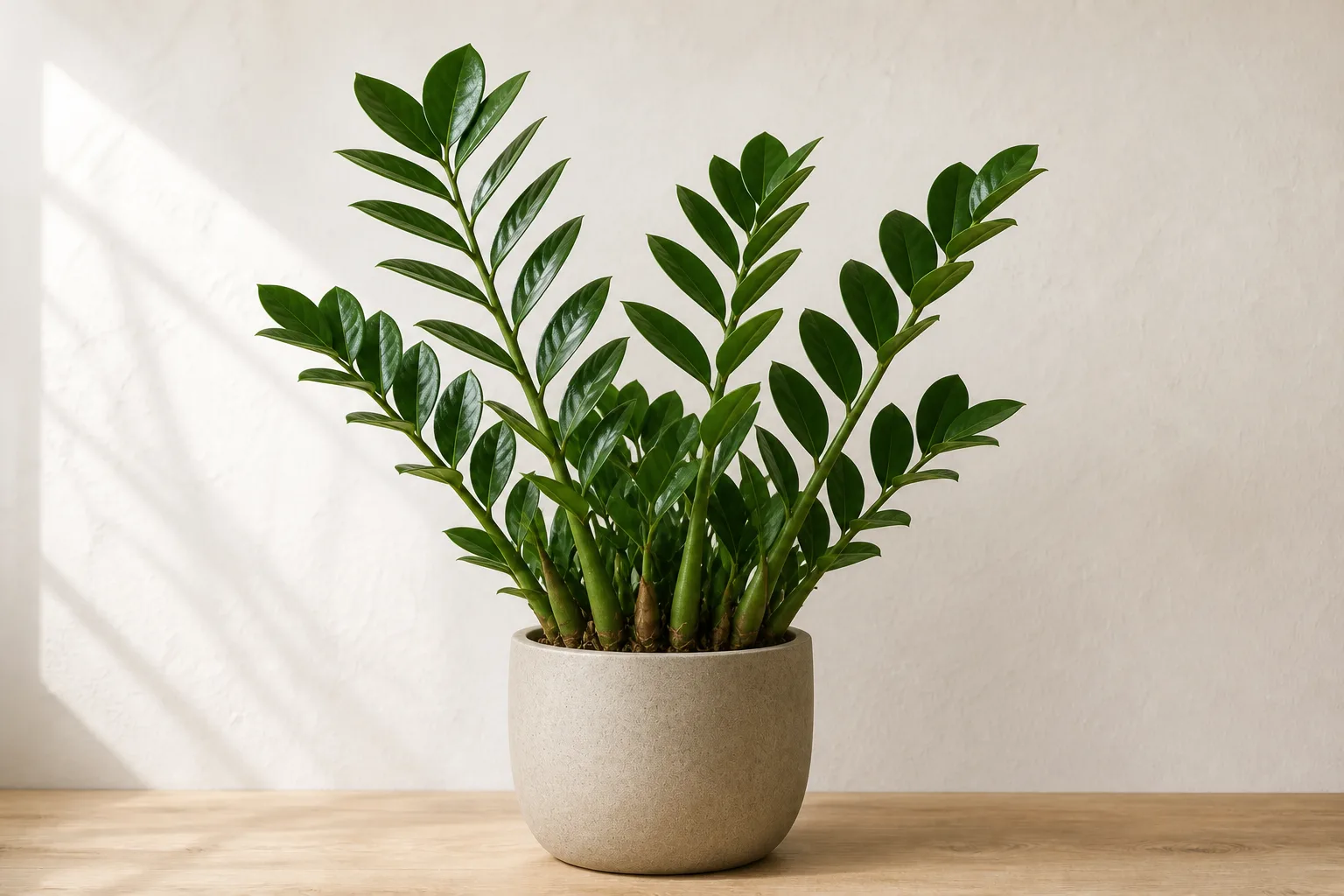
A ZZ plant stores energy in thick rhizomes and succulent stalks, so its cuttings are built for drought tolerance, not speed. A leaf cutting can sit for weeks before doing anything visible, and roots and new shoots can take months. The reward is that ZZ cuttings are nearly impossible to kill with neglect once the method is right.
Leaf cuttings step by step
Cut a healthy leaf stalk near the base with clean scissors. You can use a whole stalk or individual leaflets, but individual leaflets are the classic method. Let the cut ends dry and callus for a day or two.
Insert the bottom ends into moist cactus or general mix, about 2 cm deep, and set the pot in bright, indirect light. Keep the mix barely moist — ZZ cuttings rot more often from water than from drought.
Division step by step
Slide the plant out of its pot and find where the rhizomes naturally separate. Cut cleanly through a rhizome with a sharp, sanitized knife so each piece has rhizome, roots, and at least one stalk. Pot each division into a small draining pot with airy mix and water lightly, then treat as a normal ZZ plant.
Water and light for cuttings
ZZ cuttings prefer bright, indirect light and warm room temperature. Water only when the mix is nearly dry — overwatering a callused cutting is the fastest way to rot it. Some growers root leaflets in water, but soil rooting avoids the transition and suits ZZ's drought-tolerant nature.
Common mistakes
Skipping the callus step, planting upside down, and keeping the mix wet are the usual failures. A fresh cut buried in wet soil rots; a leaflet inserted wrong-end-down cannot root; and a ZZ cutting given 'daily water' is a drowned ZZ cutting.
When to expect new growth
Leaf cuttings can take one to three months to produce roots and pups, and a full plant takes much longer. Division gives you instant plants. If you need a plant soon, divide; if you are happy to wait and want many plants, take leaf cuttings and forget about them.
Frequently asked questions
Can I propagate ZZ from a single leaf?
Yes — individual leaflets root and form small rhizomes and new shoots, though it takes months. A whole stalk with more stored energy produces a larger plant faster.
Water or soil for ZZ cuttings?
Both work, but soil suits ZZ's drought-tolerant nature and avoids the water-to-soil transition. Keep the mix barely moist, not wet.
Why is my ZZ cutting not doing anything?
ZZ propagation is slow by design. If the cutting is firm and not rotting, it is working — give it warmth, bright indirect light, and weeks or months of patience.
Is ZZ plant propagation toxic to pets?
ZZ plants contain calcium oxalate crystals that are toxic if chewed, so keep cuttings and pots away from pets and children while they root.
Propagation results vary with plant health, season, light, and humidity. Use this guide as a starting point and adjust to what your plant shows you; when a cutting fails or a plant is unhealthy, address the underlying condition before trying again.