Key takeaways
- Division gives an instant established plant.
- Leaf cuttings root slowly and may lose variegation.
- Let leaf cuttings callus before potting.
- Both methods need warmth, light, and patience.
Two methods, two timelines
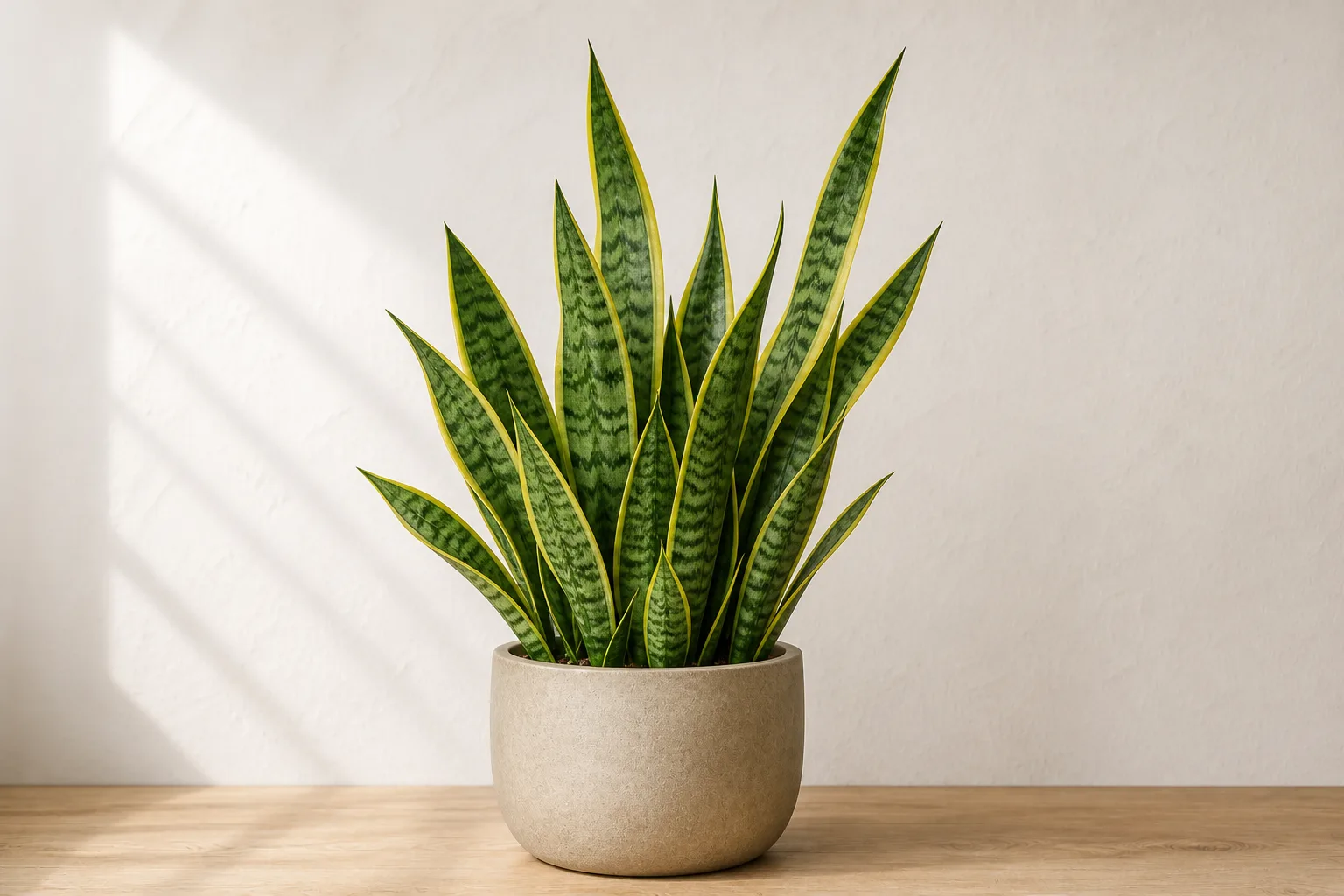
A snake plant can be divided by separating its rhizomes — the underground stems that connect the rosettes — into two or more plants, which is the fastest way to get an established plant. Leaf cuttings root more slowly but let you turn a single leaf into several new plants, though variegated forms often come back green from leaf cuttings.
How to divide a snake plant
Slide the plant out of its pot and find natural divisions where rosettes are connected by rhizomes. Cut cleanly through a rhizome with a sharp, sanitized knife so each piece has roots and at least one rosette. Pot each division into a small container with fast-draining mix and water lightly, then treat as a normal snake plant.
How to root leaf cuttings
Cut a healthy leaf into 8 to 10 cm sections, remembering which end was down. Let the cut ends dry and callus for a day or two — this is the step most people skip, and it is what prevents rot. Insert the bottom end of each section into moist cactus mix, about 2 cm deep.
Keep the pot in bright, indirect light and let the mix dry between light waterings. Roots and new shoots can take a month or more to appear, so patience is the real requirement.
Water rooting leaf cuttings
Leaf sections can also root in water: stand the callused pieces upright in a few centimeters of water and wait. Roots and pups eventually form at the base, and you pot them once roots reach a couple of centimeters. Water rooting works, but soil rooting avoids the transition.
Common mistakes
Planting leaf cuttings upside down, skipping the callus step, and watering a callused pot too eagerly are the usual failures. A cutting inserted wrong-end-down cannot root; a soggy callused cutting rots before it sprouts.
When to expect results
Division gives you an instant plant. Leaf cuttings need patience: roots in several weeks, pups often in one to three months, and a recognizable plant many months later. If you want a plant this season, divide; if you want many plants and do not mind waiting, take leaf cuttings.
Frequently asked questions
Why do my snake plant leaf cuttings rot?
Rot usually follows skipping the callus step or watering too eagerly. Let the cut end dry for a day or two and keep the mix only lightly moist until roots form.
Do leaf cuttings keep the variegation?
Often not — leaf cuttings of variegated forms frequently produce plain green plants. Division preserves the parent's variegation.
How long does snake plant propagation take?
Division is instant; leaf cuttings can take one to three months or longer to produce pups. Both are slow compared with pothos.
Which end of the leaf goes in the soil?
The bottom end — the end that was attached to the plant — goes in the mix. Inserting the top end down prevents rooting.
Propagation results vary with plant health, season, light, and humidity. Use this guide as a starting point and adjust to what your plant shows you; when a cutting fails or a plant is unhealthy, address the underlying condition before trying again.