Key takeaways
- Divide clumping plants, not single-stem plants.
- Water the plant before dividing to reduce root breakage.
- Each division needs roots and leaves to survive.
- Pot divisions small and keep them lightly moist while they recover.
Which plants can be divided
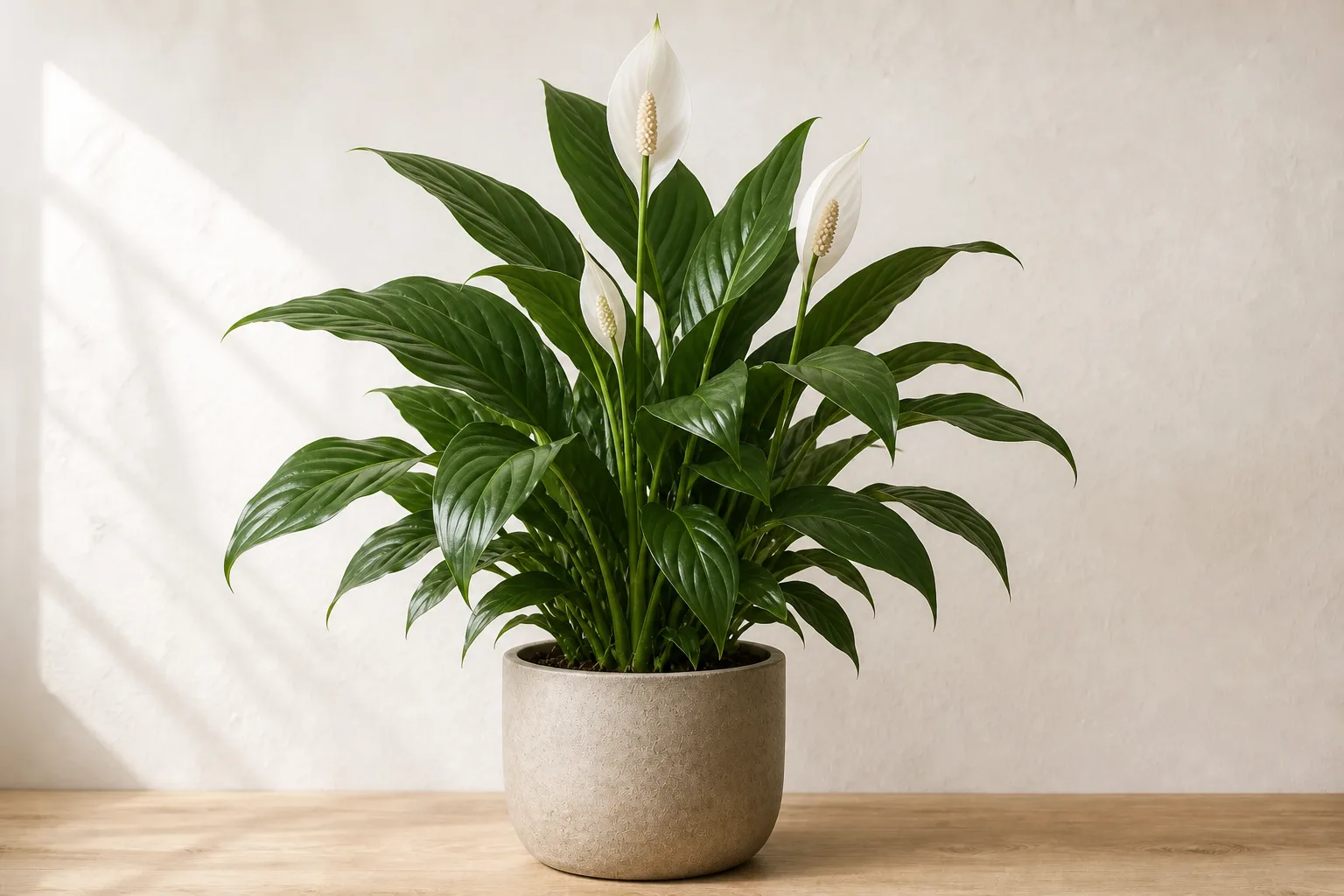
Division works on plants that grow as clumps of crowns connected underground — peace lilies, ferns, spider plants, many calatheas, and most grasses. It does not suit single-stem plants like a young monstera or a cane dracaena, which cannot be split into viable pieces.
Step by step
Water the plant a day before so the roots are supple. Slide it out of the pot and lay it on a clean surface. Look for natural divisions — separate crowns with their own root systems — and tease them apart with your fingers, or cut cleanly through the rhizome or root mass with a sharp, sanitized knife when they are tightly tangled.
Potting the divisions
Pot each division into a container sized to its roots, using fresh, airy mix. Plant at the same depth the crown sat before, water thoroughly, and place in the same light the parent enjoyed. Each division needs both roots and leaves to survive on its own.
Aftercare for divided plants
Keep divided plants lightly moist and out of direct sun for the first week or two while roots re-establish. Drooping leaves are common for a few days. Do not fertilize until you see new growth, and do not divide again until the plant has recovered and regrown.
Common mistakes
Dividing into pieces with no roots, potting divisions too large, and dividing a stressed plant are the usual failures. A crown without roots cannot take up water; an oversized pot stays wet around a small root system; a stressed parent propagates poorly.
When to divide
Divide when the plant is actively growing, the pot is crowded with roots, or you want to manage its size. Spring and early summer suit most plants. Avoid dividing a plant that is flowering, freshly repotted, or recovering from pests.
Frequently asked questions
How do I know if a plant can be divided?
Look for a clump of separate crowns sharing one pot — ferns, peace lilies, and spider plants are classic examples. A single stem or trunk cannot be divided.
Can I divide a plant in winter?
Yes, if it is healthy and actively growing indoors, but recovery is slower in low light. Spring division is easiest for most plants.
Why did my divided plant wilt?
Root disturbance temporarily reduces water uptake. Keep it lightly moist, out of direct sun, and give it a week or two to re-establish before judging.
Do divisions need to be the same size?
No — keep each piece with enough roots and leaves to survive, and pot smaller pieces into smaller pots. Equal size is not required; viability is.
Propagation results vary with plant health, season, light, and humidity. Use this guide as a starting point and adjust to what your plant shows you; when a cutting fails or a plant is unhealthy, address the underlying condition before trying again.