Key takeaways
- Cut just below a node — roots emerge from the node tissue.
- Use clean, sharp tools to avoid crushing the stem.
- Keep the cutting warm, bright, and consistently humid.
- Wait for roots before potting, then pot into a small draining container.
Why stem cuttings work
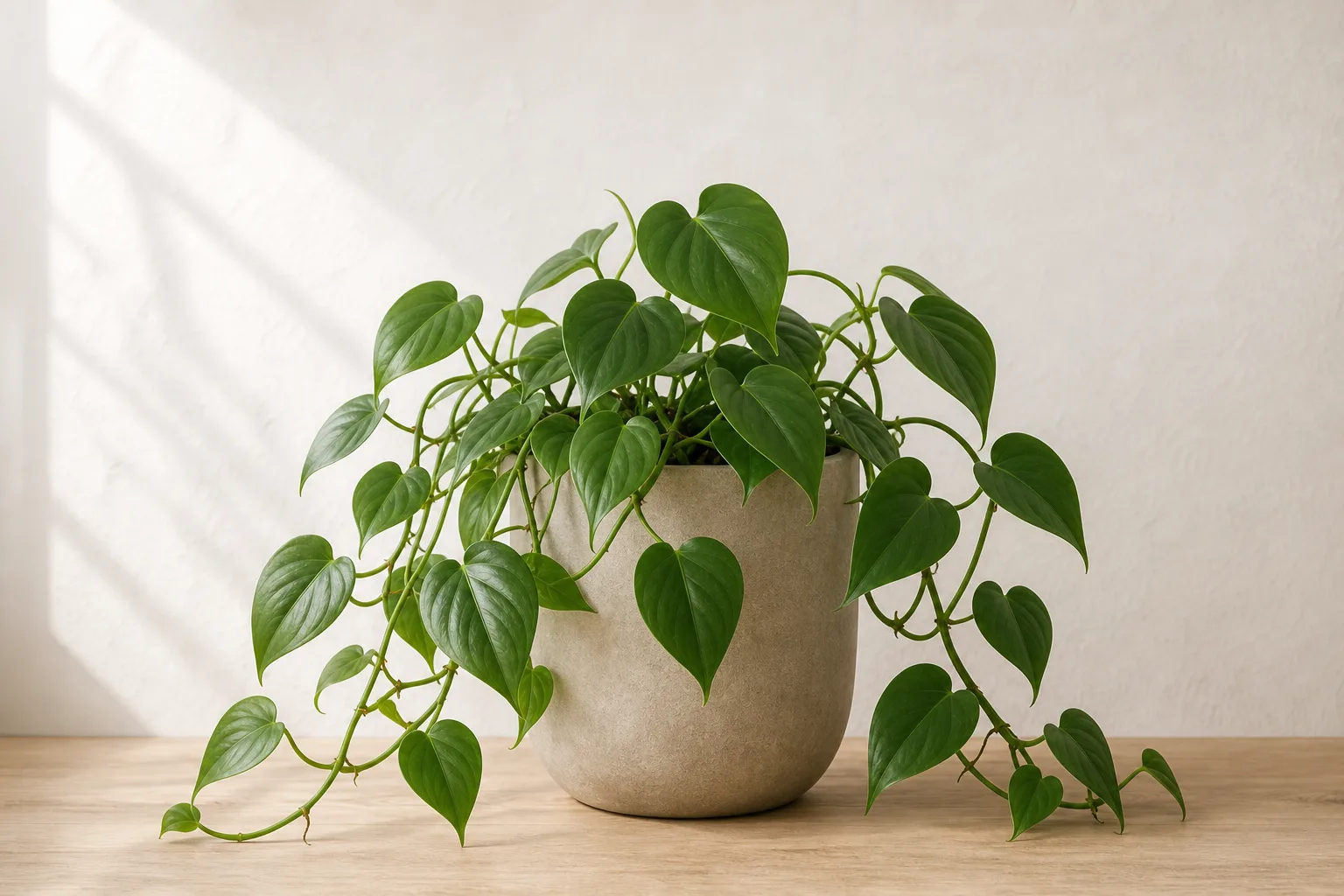
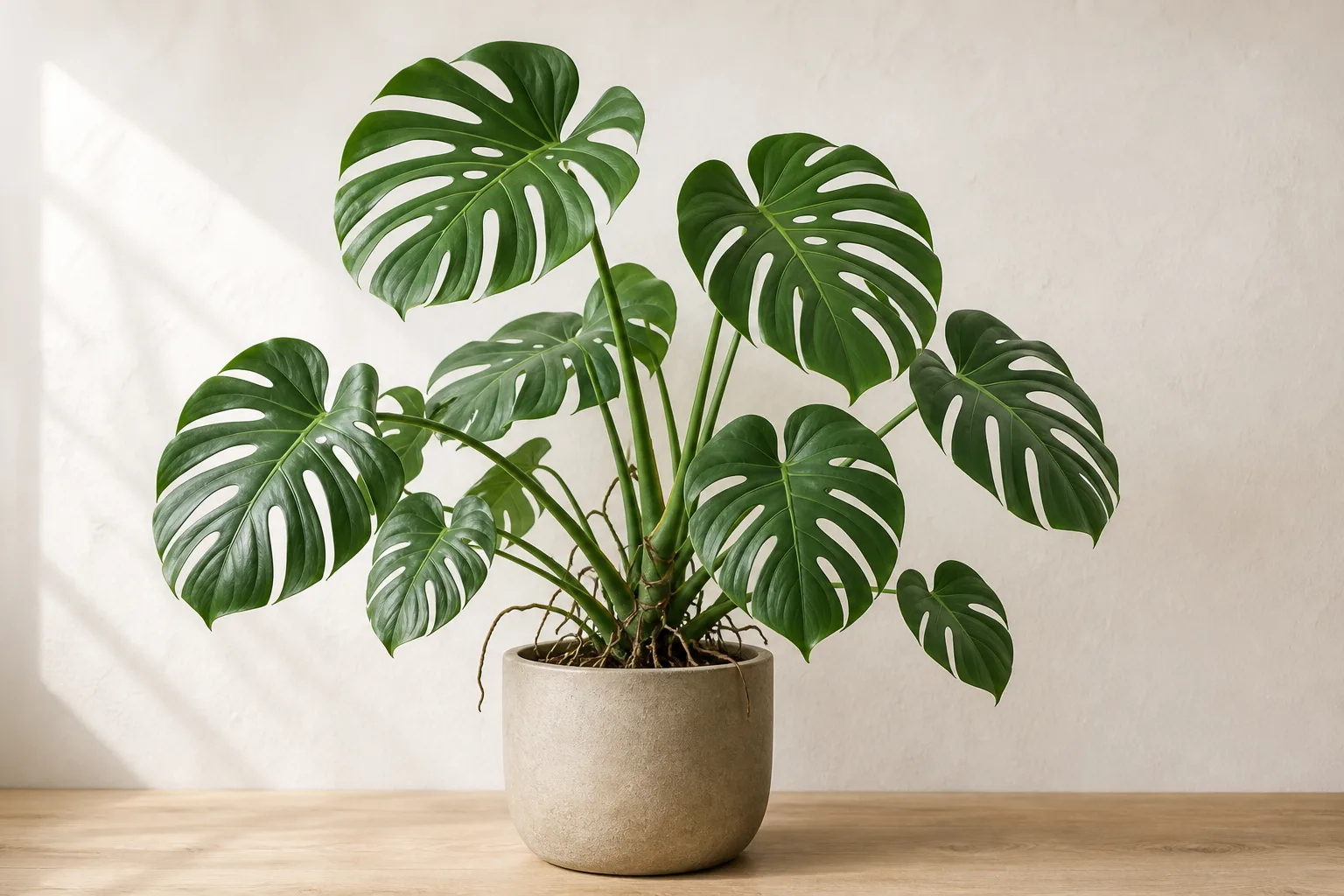
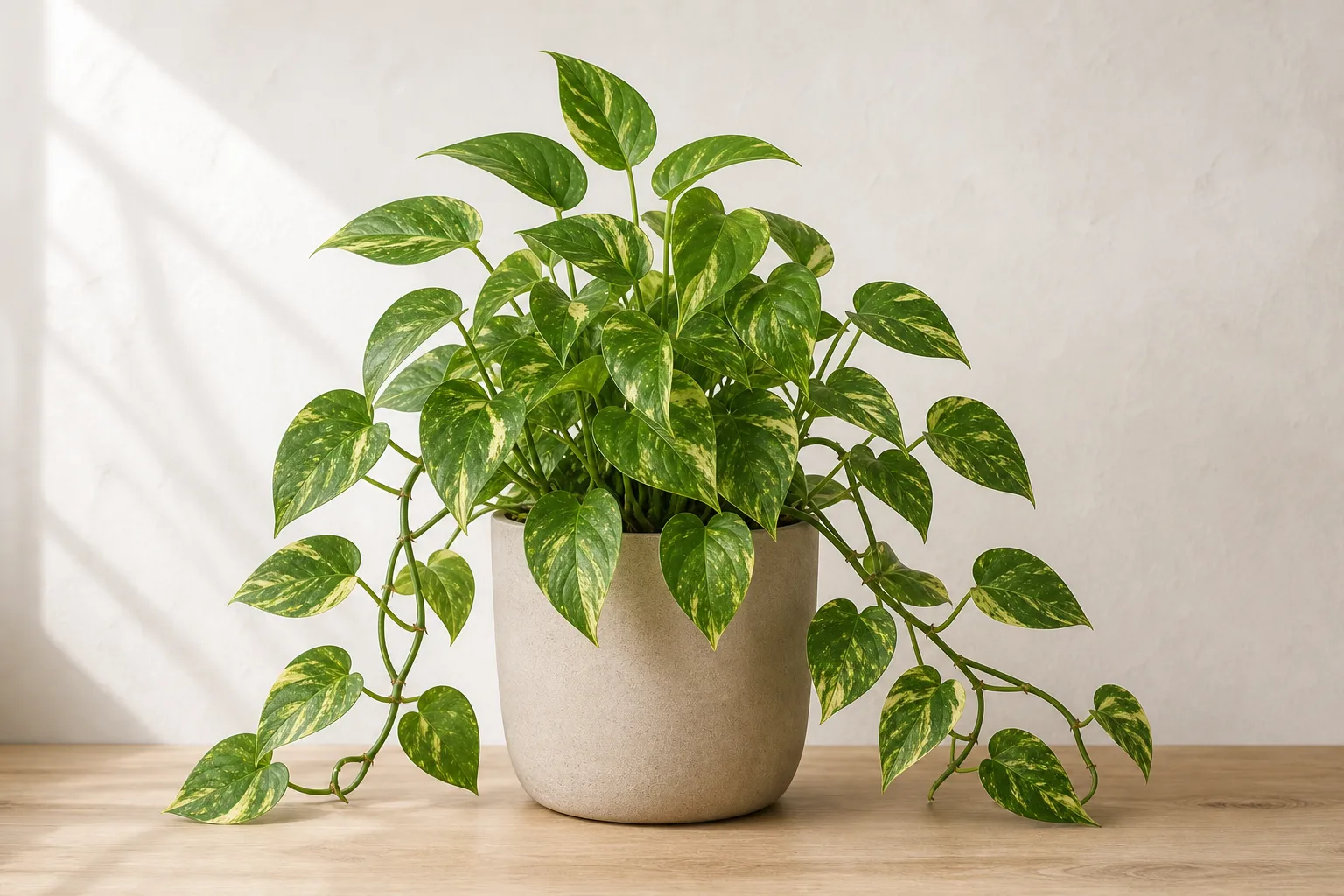
Many houseplants — pothos, philodendron, monstera, and most vining aroids — root readily from a stem cutting because each node carries the tissue needed to make new roots. A cutting is simply a piece of stem with at least one node and one healthy leaf, kept in conditions that favor rooting instead of rot.
Propagation is most successful with a healthy, pest-free parent plant during active growth, when the plant has energy to spare for new roots.
What you need
Clean, sharp scissors or a knife; a small container of clean water or a pot of moist, airy mix; a bright location out of direct sun; and optionally a clear bag or dome to hold humidity around the cutting.
Step by step
First, choose a healthy stem with several leaves and at least two nodes. Cut just below a node at a 45-degree angle, and remove the lowest leaf so the node below it is bare. Place the cutting in water with the bare node submerged, or push it into moist mix so the node is covered.
Put the cutting in bright, indirect light — not direct sun — and keep the water or mix from drying out. In water, change it if it turns cloudy. Roots typically appear within two to four weeks for easy plants.
Potting rooted cuttings
When water roots reach roughly 2 to 5 cm, move the cutting to a small pot with drainage and airy mix, planting at the same depth the node was rooted. Keep the soil lightly moist for the first weeks while the roots adapt from water to mix, then treat the plant normally.
Common mistakes
The biggest failures are cutting without a node, letting the cutting dry out or sit in direct sun, and potting a cutting into a huge pot of wet soil. A cutting with no node cannot root; a soggy cutting rots before it roots.
When to try a different method
If the stem is woody, the plant is a rosette or bulb, or cuttings keep failing after several honest attempts, match the method to the plant — division, leaf cuttings, or air layering may suit it better. One method does not fit every species.
Frequently asked questions
How long do cuttings take to root?
Easy plants such as pothos root in two to four weeks in water; slower plants and cooler conditions take longer. Judge by root growth, not a calendar.
Water or soil for rooting?
Water lets you watch root growth and suits easy plants; soil avoids the water-to-soil transition but hides progress. Both work when the cutting stays clean and humid.
Why is my cutting rotting?
Rot usually follows a cutting with no healthy node, soggy conditions, or a wound that stayed wet. Cut cleanly, change the water, and keep the cutting in bright indirect light.
Can I root a cutting in direct sun?
No. Direct sun heats the water or dries the cutting. Bright indirect light is the safe range for most cuttings.
Propagation results vary with plant health, season, light, and humidity. Use this guide as a starting point and adjust to what your plant shows you; when a cutting fails or a plant is unhealthy, address the underlying condition before trying again.