Key takeaways
- Every node on a vining stem can make roots.
- Take cuttings with several nodes and at least one healthy leaf.
- Moisture, warmth, and bright indirect light do the work.
- Pot rooted sections to thicken a pot or start a new plant.
Why trailing plants are easy
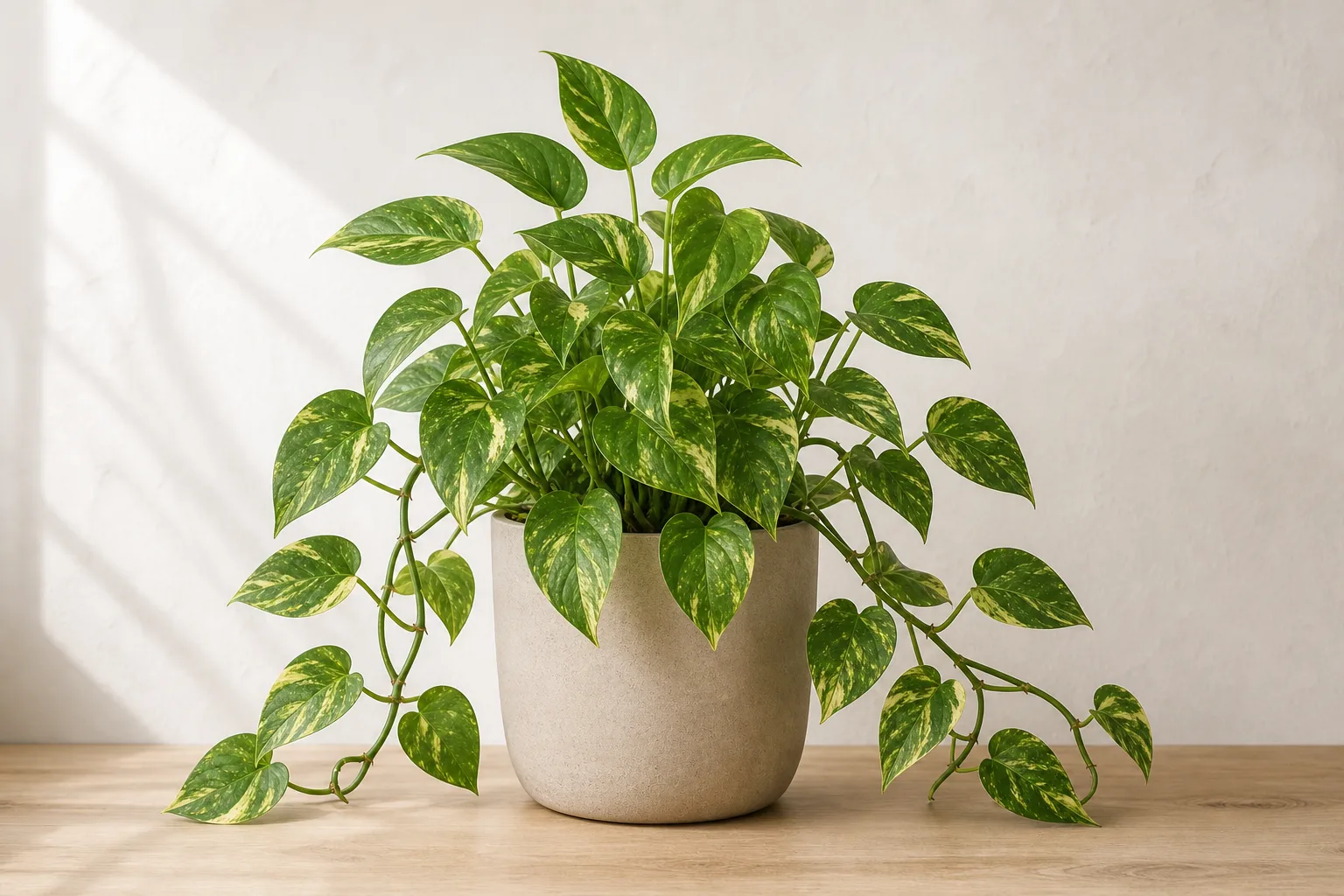
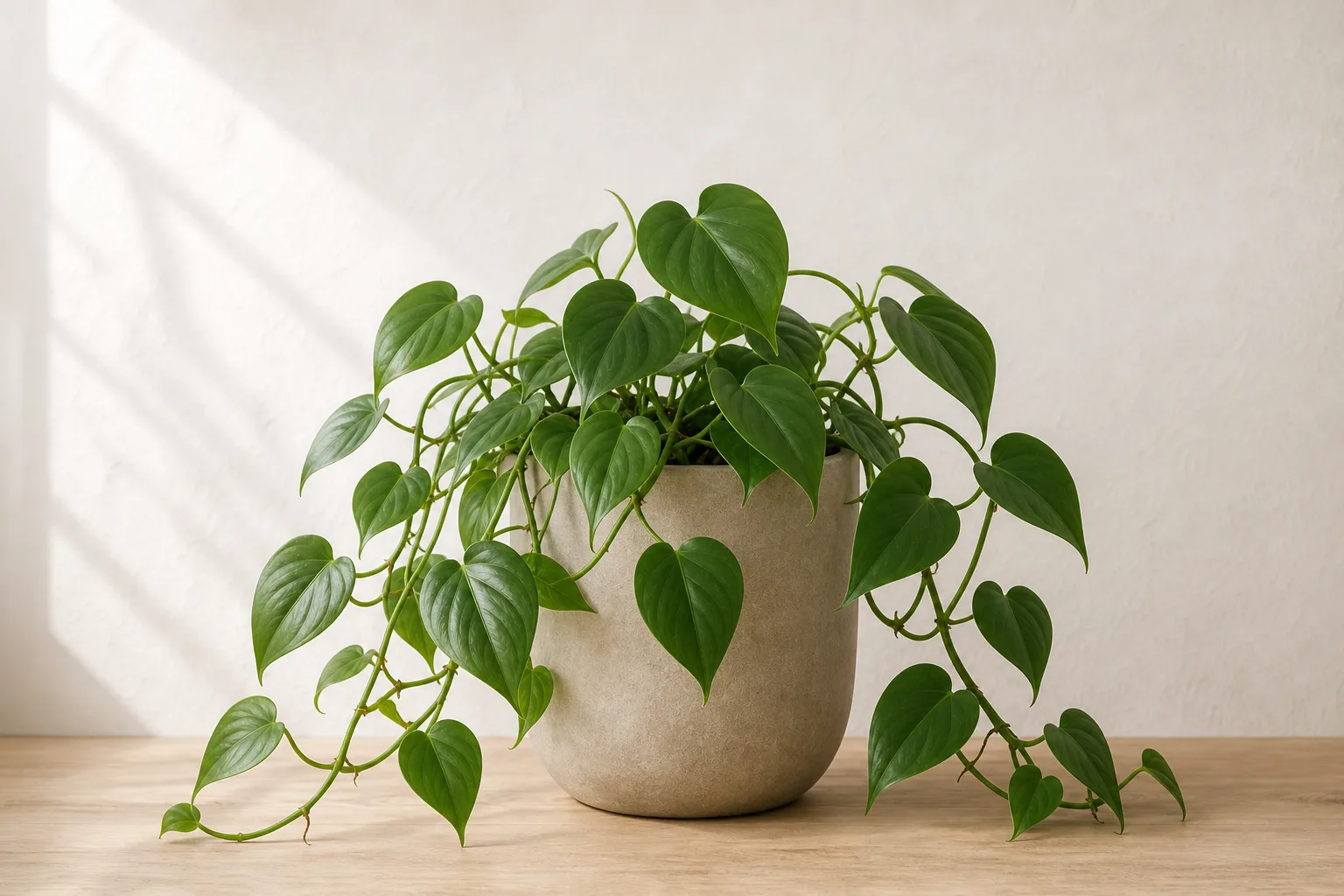
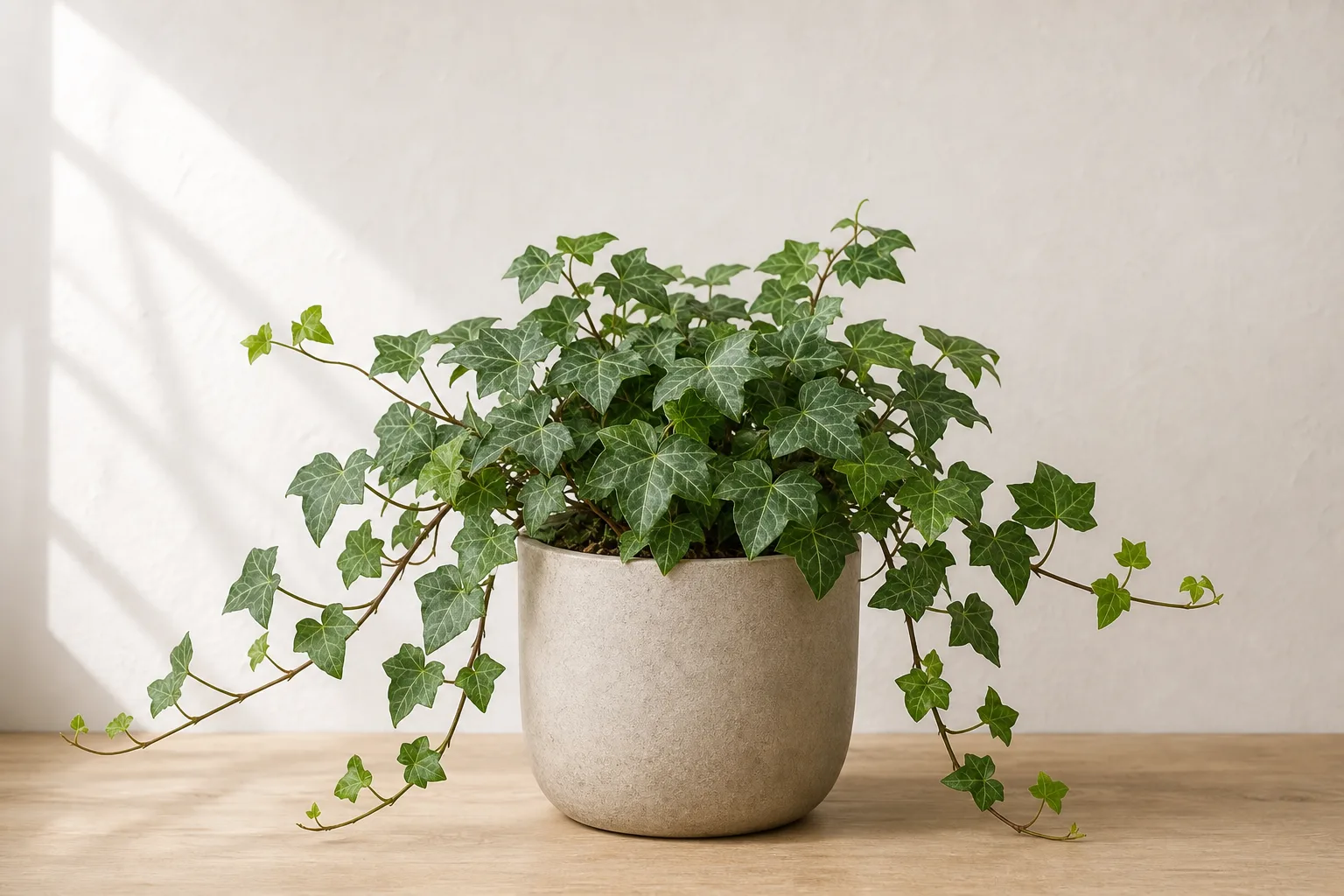
Vining houseplants — pothos, ivy, string of hearts, satin pothos, and many philodendrons — root at every node, especially where a node has touched moisture or soil. That natural habit makes them among the easiest plants to propagate, because nearly any healthy piece of stem can become a new plant.
The same method covers most trailing houseplants: take a cutting with nodes, give it moisture and light, and let the plant do what it already does in nature.
What you need
Clean sharp scissors, a container of clean water or a small pot of airy mix, and a bright spot out of direct sun. For soil rooting, a clear bag or dome can hold humidity while roots form.
Step by step
Cut a healthy stem with at least two or three nodes. Remove the lower leaves so the bottom node is bare, then place the cutting in water with that node submerged, or push it into moist mix so the node is covered.
Keep the cutting in bright indirect light. Water-rooted cuttings should have the water changed when cloudy and be potted when roots reach roughly 2 to 5 cm. Soil-rooted cuttings stay put until they resist a gentle tug, signaling roots have formed.
Filling out a sparse pot
Trailing plants naturally thin at the base as they grow. To fill a sparse pot, take cuttings from the healthiest growth and plant several back into the same pot around the edge; the rooted cuttings fill in the empty soil and restore a full look without buying a new plant.
Common mistakes
Cutting without nodes, removing every leaf, letting cuttings sit in direct sun, and leaving water to go cloudy are the usual problems. A cutting with one node and one leaf will root; a leafless stick or a roasted cutting will not.
When to try another method
Some trailing plants, especially those with woody or brittle stems, may root better from a few-node cutting planted directly in soil or by layering a stem into the pot while still attached. Match the method to the plant when water rooting keeps failing.
Frequently asked questions
Can I root ivy and pothos the same way?
Yes — both root readily from node cuttings in water or soil. Ivy may take slightly longer in cool conditions, but the method is the same.
How many nodes does a cutting need?
Two or three is comfortable for most vining plants: one node for roots, one for a leaf, and often one to spare. A single node with a leaf can work for easy plants.
Why does my cutting rot in water?
Usually because it has no healthy node, the water is stale, or the cutting sits too warm with no light. Change the water, cut cleanly, and use bright indirect light.
Can I plant several cuttings in one pot?
Yes — that is exactly how to make a full, bushy pot. Space them around the edge and keep the mix lightly moist while they root.
Propagation results vary with plant health, season, light, and humidity. Use this guide as a starting point and adjust to what your plant shows you; when a cutting fails or a plant is unhealthy, address the underlying condition before trying again.