Key takeaways
- Cut below a node; each node can root.
- Water rooting lets you watch progress.
- A few cuttings together make a full pot.
- Pot when roots are 2 to 5 cm, into a small draining pot.
Why pothos is the easiest start
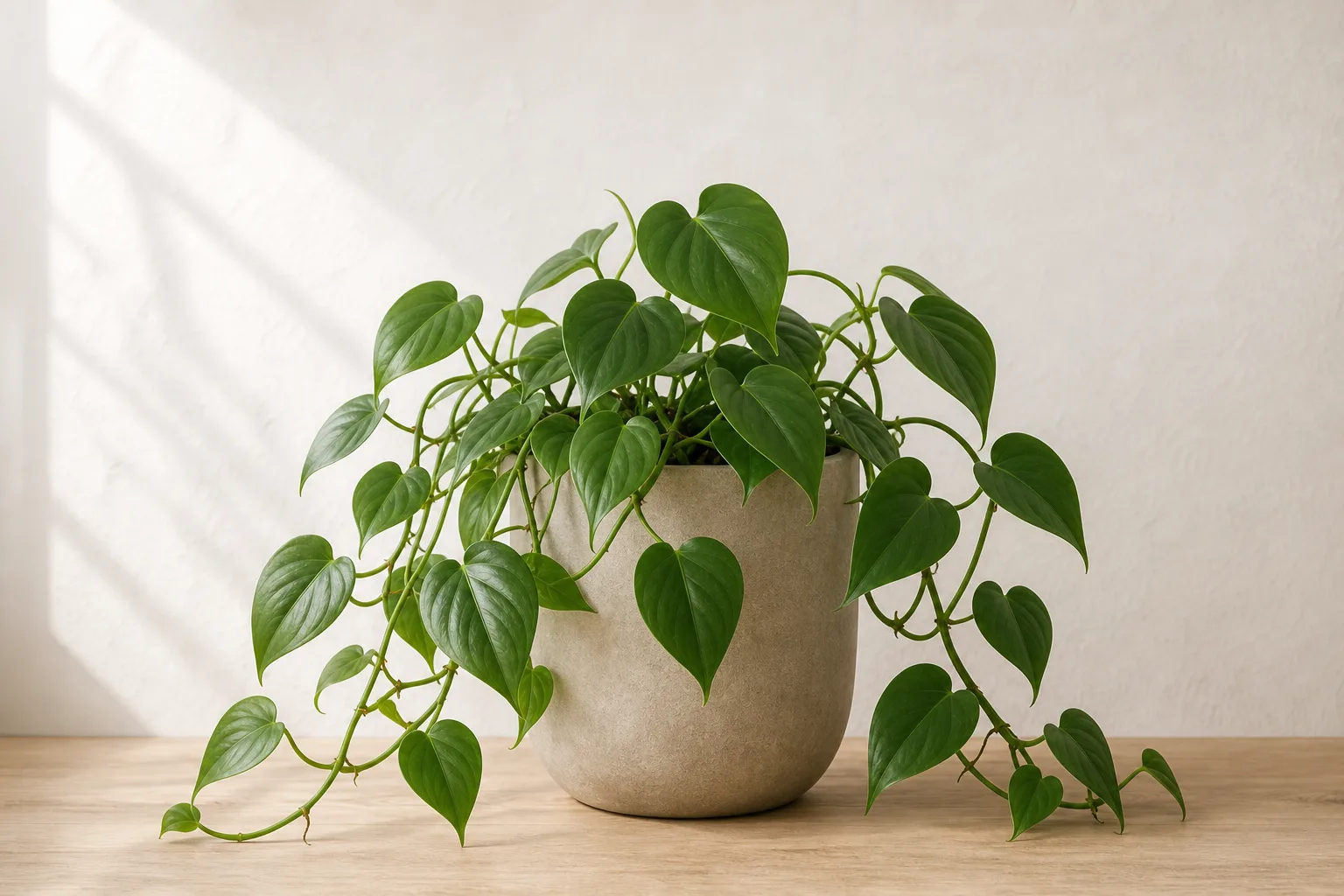
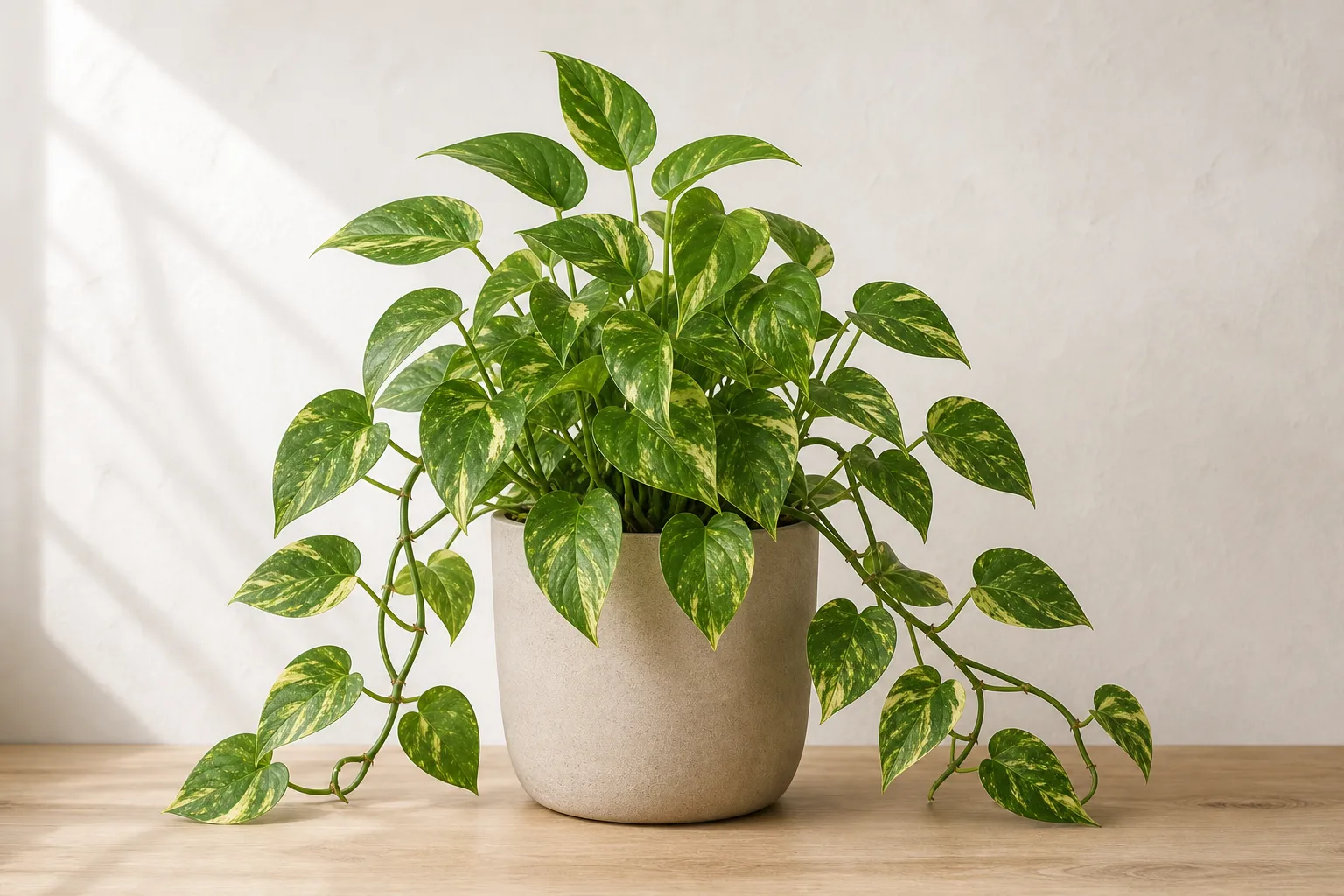
Pothos roots from nearly any stem piece that includes a node, which makes it the plant most people cut their teeth on. Because it roots quickly and tolerates a wide range of rooms, it is also the most forgiving plant to practice on before trying fussier species.
Step by step in water
Choose a healthy vine with several leaves. Cut a 10 to 15 cm piece just below a node, remove the lowest one or two leaves so the lower nodes are bare, and place the stem in a jar of clean water with the bare nodes submerged.
Set the jar in bright, indirect light and change the water if it clouds. Roots usually appear at the submerged nodes within one to three weeks, and new leaves often follow from the upper nodes.
Potting your new plants
Once roots reach a few centimeters, plant two or three rooted cuttings together in a small pot with drainage and a general houseplant mix. Keep the soil lightly moist for the first couple of weeks, then water as the root zone dries like any pothos.
How to get a fuller pot from one plant
Instead of throwing away pruned vines, cut each into several node pieces and root them all. Planting several cuttings in one pot produces a full, bushy plant much faster than waiting for one cutting to branch on its own.
Common mistakes
Cutting with no node, leaving too many leaves on a short cutting, and potting into a large wet pot are the usual failures. Keep cuttings short with one or two leaves, give them bright indirect light, and pot small.
When to use soil instead of water
Water is easiest for pothos, but a cutting pushed directly into moist mix roots fine too and skips the water-to-soil transition. Soil rooting suits you if you prefer not to handle the changeover; just keep the mix evenly moist, not wet.
Frequently asked questions
Can pothos cuttings live in water forever?
Yes, pothos can grow for years in water, but it needs occasional feeding with a water-friendly fertilizer and clean water changes. Roots grown in water are not the same as soil roots, so a switch later takes adjustment.
Why are my pothos roots turning brown?
Healthy water roots are whitish; brown slimy roots usually mean the water sat too long or the cutting is rotting. Change the water, trim the affected root, and keep the jar clean.
How many leaves should a cutting have?
Two or three is plenty — enough energy to root without so much leaf that the cutting dries out. Too long a vine is more likely to fail than a short one.
When is the best time to propagate pothos?
During active growth in spring and summer, when the plant has energy to spare. It works other seasons too, but roots come slower in cool low light.
Propagation results vary with plant health, season, light, and humidity. Use this guide as a starting point and adjust to what your plant shows you; when a cutting fails or a plant is unhealthy, address the underlying condition before trying again.