Key takeaways
- Use a clean, whole leaf twisted gently from the stem.
- Let the leaf end callus before it touches moisture.
- Roots come first; a new rosette appears weeks later.
- Water the babies sparingly — they rot faster than they thirst.
Why leaf propagation works
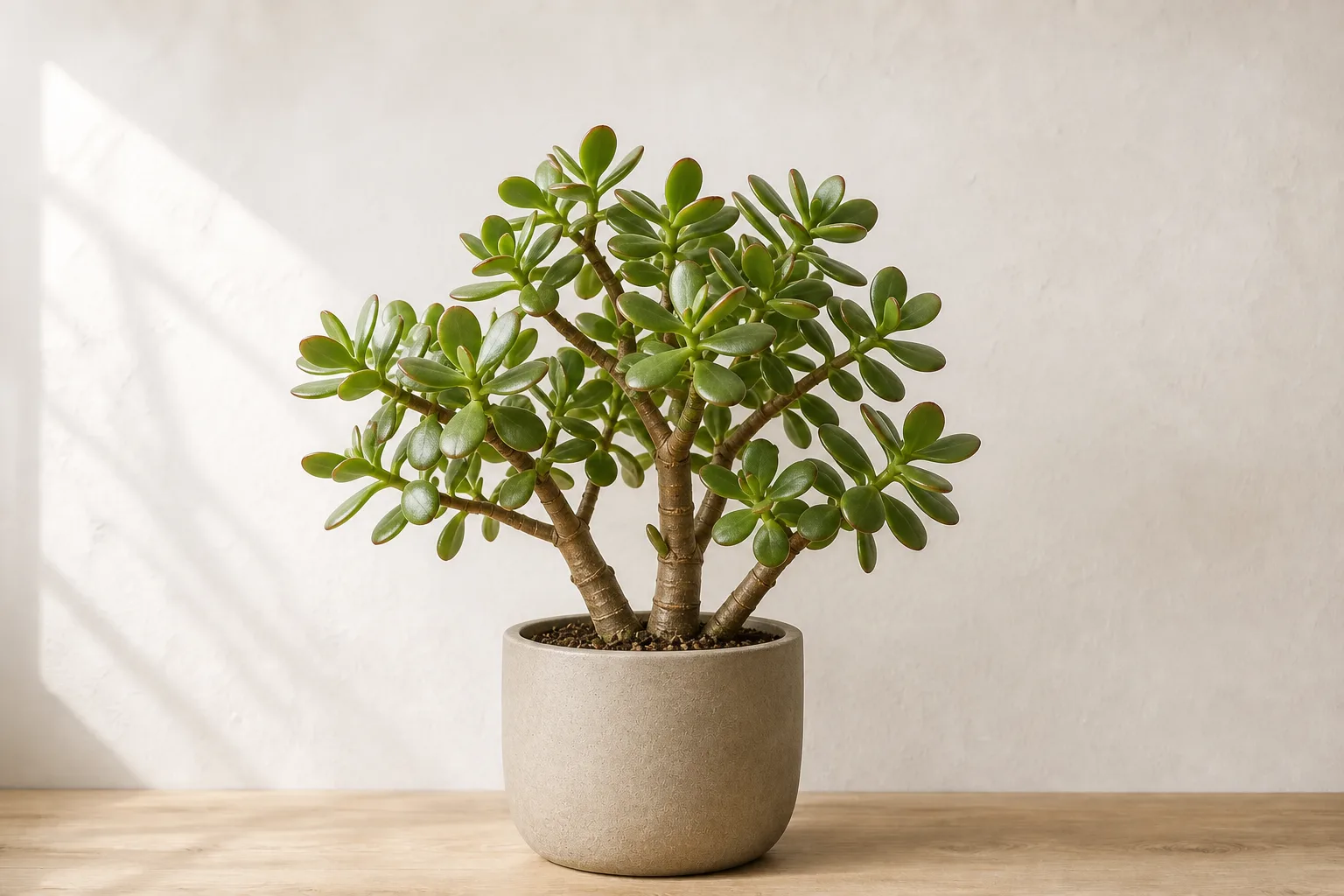
Many fleshy-leaved succulents — jade, echeveria, graptopetalum, and similar rosette types — can grow a whole new plant from a single leaf because the leaf stores the energy and tissue needed to form roots and a shoot. It is one of the easiest propagation methods, and the hardest part is doing nothing at the wrong time.
Leaf propagation suits succulents with plump, easily detached leaves. It is not the right method for cacti, many stem-succulents, or plants that do not produce new rosettes from leaves.
What you need
A healthy parent plant, a clean tray or shallow container, a dry, bright spot out of direct sun, and later a small pot of succulent mix. No rooting hormone is necessary for easy species.
Step by step
Twist a plump, healthy leaf from the stem with a clean, gentle motion so the whole leaf base comes away. Lay the leaves on a dry tray in bright indirect light and leave them completely dry for a few days until the wound end calluses.
Then place the callused end on slightly moist succulent mix — not buried, just resting on the surface. Roots appear within a few weeks; a tiny rosette follows. Once the baby has roots, mist or water the soil very sparingly, and pot it up when the rosette is about a centimetre across.
Common mistakes
The usual failures are leaves that are torn at the base, watered before callusing, or left in direct sun or soggy conditions. A torn leaf rots; a wet wound rots; a roasted leaf dries up. Patience is part of the method — many healthy leaves show nothing for weeks and then suddenly root.
When to use another method
Some succulents do not leaf-propagate well and are easier from stem cuttings or offsets. If a species' leaves never form plants after several honest tries, switch methods rather than repeating a leaf that will not work.
Caring for new plants
Baby succulents need bright light but not scorching sun, and they rot easily when watered too soon or too often. Water only when the mix is dry, and keep them warm. Move each plant to its own small draining pot once it has a distinct rosette and roots.
Frequently asked questions
Can any succulent be propagated from a leaf?
No. Rosette-forming, fleshy-leaved succulents such as jade and echeveria do well; many cacti and stem succulents need cuttings or offsets instead.
Why is my leaf shriveling instead of rooting?
A leaf that shrivels slowly is often using stored water to form roots — normal. One that shrivels fast has usually been left too dry, roasted in sun, or torn from the plant.
Do leaves need water to root?
Not at first. The callus period is completely dry, and after that the soil only needs occasional light moisture. Wet soil before roots exist invites rot.
How long until I have a new plant?
Roots can appear in weeks, a visible rosette in one to three months, and a pot-ready plant in several months. Slow progress is normal for succulents.
Propagation results vary with plant health, season, light, and humidity. Use this guide as a starting point and adjust to what your plant shows you; when a cutting fails or a plant is unhealthy, address the underlying condition before trying again.