Key takeaways
- Wait until an offset has its own roots before removing it.
- A clean twist or snip separates the baby from the runner.
- Root the offset in water or a small pot of moist mix.
- Keep the baby bright and evenly moist until it settles in.
Why offsets work
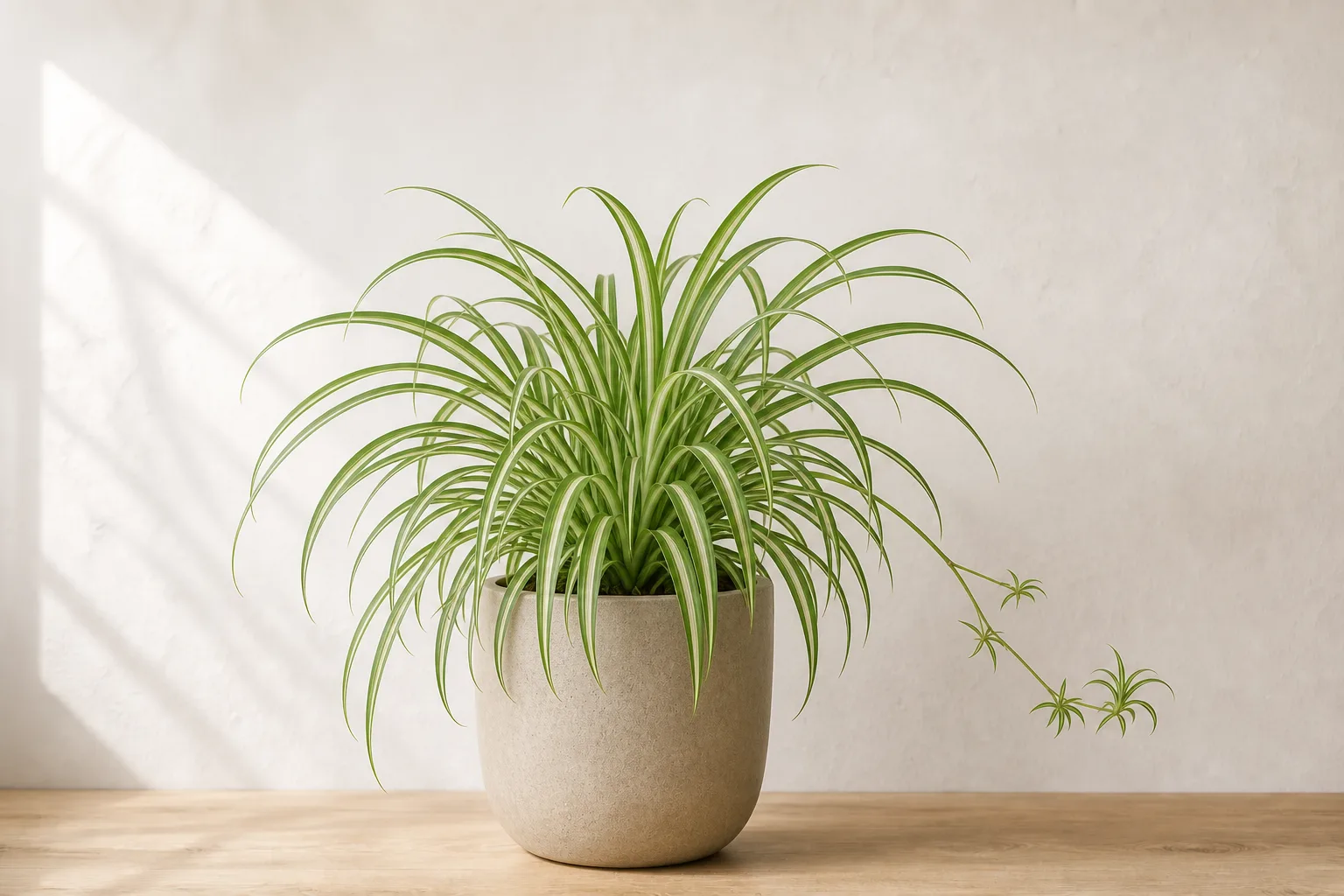
Spider plants (Chlorophytum comosum) produce plantlets, or offsets, on long stems called runners. Each offset is already a miniature plant, so propagation is fast and reliable compared with seed or cuttings — the parent has done most of the work.
Offsets are the easiest way to multiply spider plants, and the same approach applies to other plants that form babies on runners, such as some saxifrages and strawberry relatives.
When to remove an offset
Leave the baby on the runner until it has several leaves and its own small roots — usually visible at the base as short white nubs. A rooted offset survives the move far better than one removed too early. If the runner is crowded, you can root the baby while still attached by setting it in a pot of mix beside the parent, then cutting the runner once it has grown.
Step by step
Choose a baby with visible roots and cut or gently twist the runner a few centimetres from the plantlet. Place the offset in a small container of water with just the root base submerged, or plant it directly in a small pot of moist, airy mix.
Keep the baby in bright indirect light, away from direct sun, and keep the water fresh or the mix lightly moist. Roots develop within one to two weeks in water; a rooted offset settles into a pot in a similar period.
Common mistakes
Removing a baby before it has roots, leaving it to wilt in dry air, or planting it into a huge pot of wet soil are the usual failures. Spider plant babies are tough once rooted, but they still need a bright spot and consistent moisture while they settle.
Caring for new spider plants
New plants like bright indirect light, evenly moist (not soggy) mix, and protection from scorching sun. Water when the top of the mix dries, and repot only when roots fill the pot. Spider plants are tolerant once established and will themselves start producing runners within a season or two.
When to divide instead
If a plant has no runners, or you want a larger plant quickly, divide the root ball into sections at repotting time. Division works for mature clumps and is faster than growing babies from offsets.
Frequently asked questions
Can I root spider plant babies in water?
Yes — water is the easiest way to watch the roots grow. Submerge only the root base, keep the water fresh, and pot up when roots reach a few centimetres.
Why is my offset not rooting?
It may have been removed too early, kept too dry, or placed in too much sun. Give it a bright indirect spot, keep moisture consistent, and be patient — spider plants usually root within two weeks.
How many babies can one plant produce?
A healthy, well-lit spider plant can produce many plantlets over a season. You can leave babies on the parent or remove them as they root.
Should I remove runners?
Only if you want to stop production or tidy the plant. Runners carry the babies and do not harm the parent; removing them simply stops new offsets from forming.
Propagation results vary with plant health, season, light, and humidity. Use this guide as a starting point and adjust to what your plant shows you; when a cutting fails or a plant is unhealthy, address the underlying condition before trying again.