Key takeaways
- Cut below a node that already has an aerial root.
- One leaf with a node is enough for a cutting.
- Aerial roots speed up rooting dramatically.
- Pot into a chunky, airy mix once roots establish.
What makes a good monstera cutting
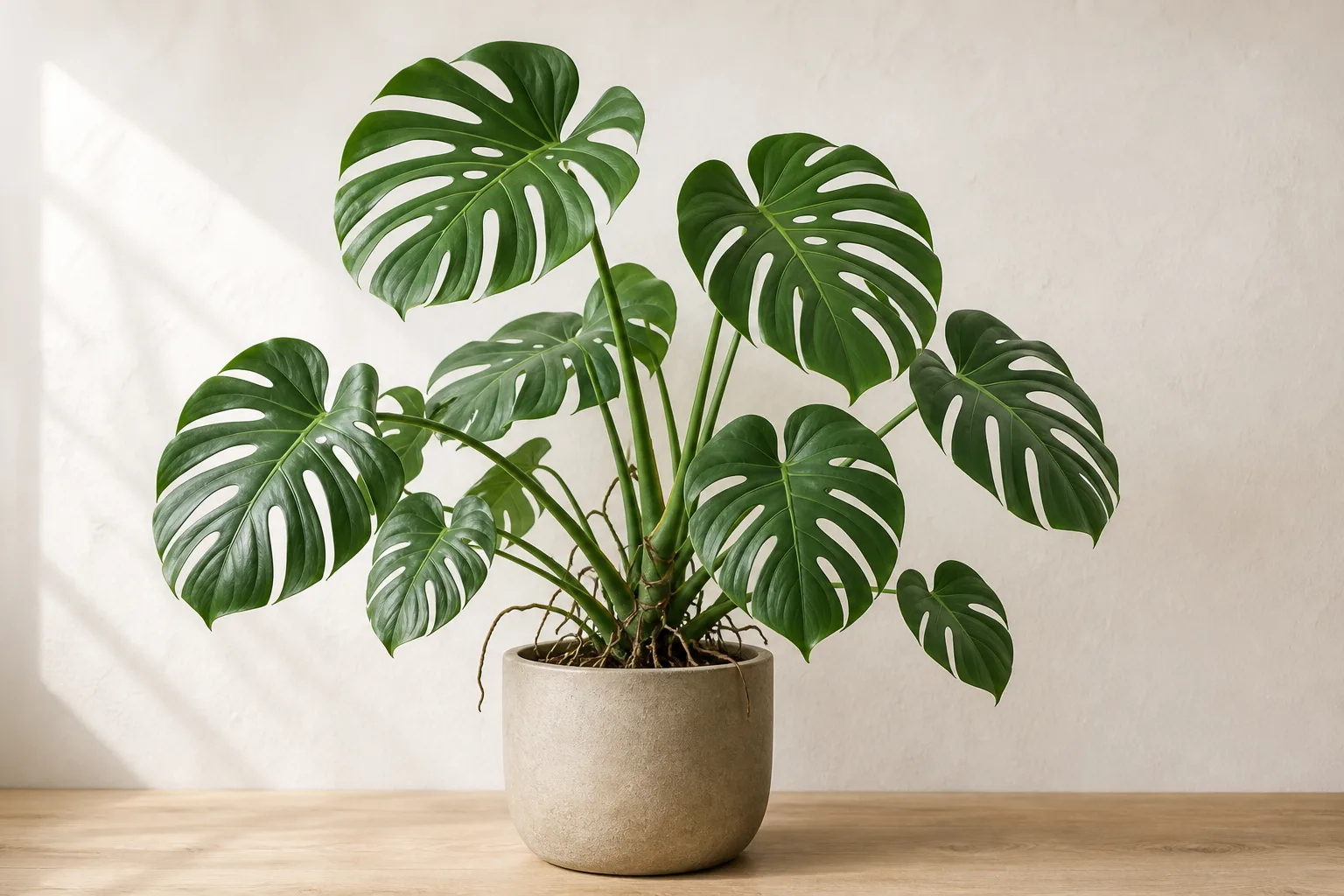
A monstera cutting is a section of stem with at least one node — the point where a leaf attaches — and, ideally, an aerial root already emerging there. That aerial root is a head start: it often becomes the first soil root, and a cutting with one roots faster and more reliably than a bare node.
Step by step
Choose a stem with a healthy leaf and a visible node with an aerial root. Cut 1 to 2 cm below that node with clean, sharp scissors. Place the cutting in water with the aerial root and node submerged, or push it into a chunky aroid mix with the node covered.
Keep it in bright, indirect light. In water, change the water when it clouds; expect the aerial root to grow and new roots to form within two to six weeks.
Potting your monstera
When roots reach a few centimeters, move the cutting to a small pot with drainage and a chunky mix of bark, perlite, and coir or peat. Water thoroughly, then let the top of the mix dry before watering again. Give it bright, indirect light and a moss pole or support once it starts climbing.
What about wet-stick or node-only cuttings?
A bare node without leaves, kept humid and warm, can also sprout — this is how many monstera farms multiply them. It is slower and more prone to drying, so a leaf-and-node cutting is the reliable home method.
Common mistakes
Cutting too far from the node (leaving a long dead stub), removing the aerial root, or potting into a large dense pot are the usual failures. Cut close below the node, keep the aerial root intact, and pot small with airy mix.
When to wait
If the parent plant is stressed, freshly repotted, or infested, fix that first — a cutting from a struggling plant inherits its problems. Propagate from a healthy, established vine during active growth.
Frequently asked questions
Do I need a leaf on a monstera cutting?
A leaf gives the cutting energy to root, but a bare node (wet stick) can sprout too under warm, humid conditions. Leaf-and-node cuttings are the reliable home choice.
Water or soil for monstera cuttings?
Water lets you watch the aerial root grow and is the easiest home method. Soil rooting works if the node is covered in a chunky mix kept evenly moist.
Why is my monstera cutting not rooting?
It may have no viable node, be too cold or dark, or the cut end may be rotting. Check the node, move it brighter and warmer, and change the water if it is cloudy.
When should I pot a water-rooted monstera?
When roots reach roughly 2 to 5 cm, plant into a small pot with airy mix and keep it lightly moist while the roots adapt.
Propagation results vary with plant health, season, light, and humidity. Use this guide as a starting point and adjust to what your plant shows you; when a cutting fails or a plant is unhealthy, address the underlying condition before trying again.