Key takeaways
- Plant after soil is warm and frost danger is past; zucchini is frost tender and loves heat.
- Harvest young (6-8 inches) every day or two to keep plants fruiting and avoid baseball bats.
- Give plants room and air flow to limit the powdery mildew that plagues squashes.
How to care for zucchini
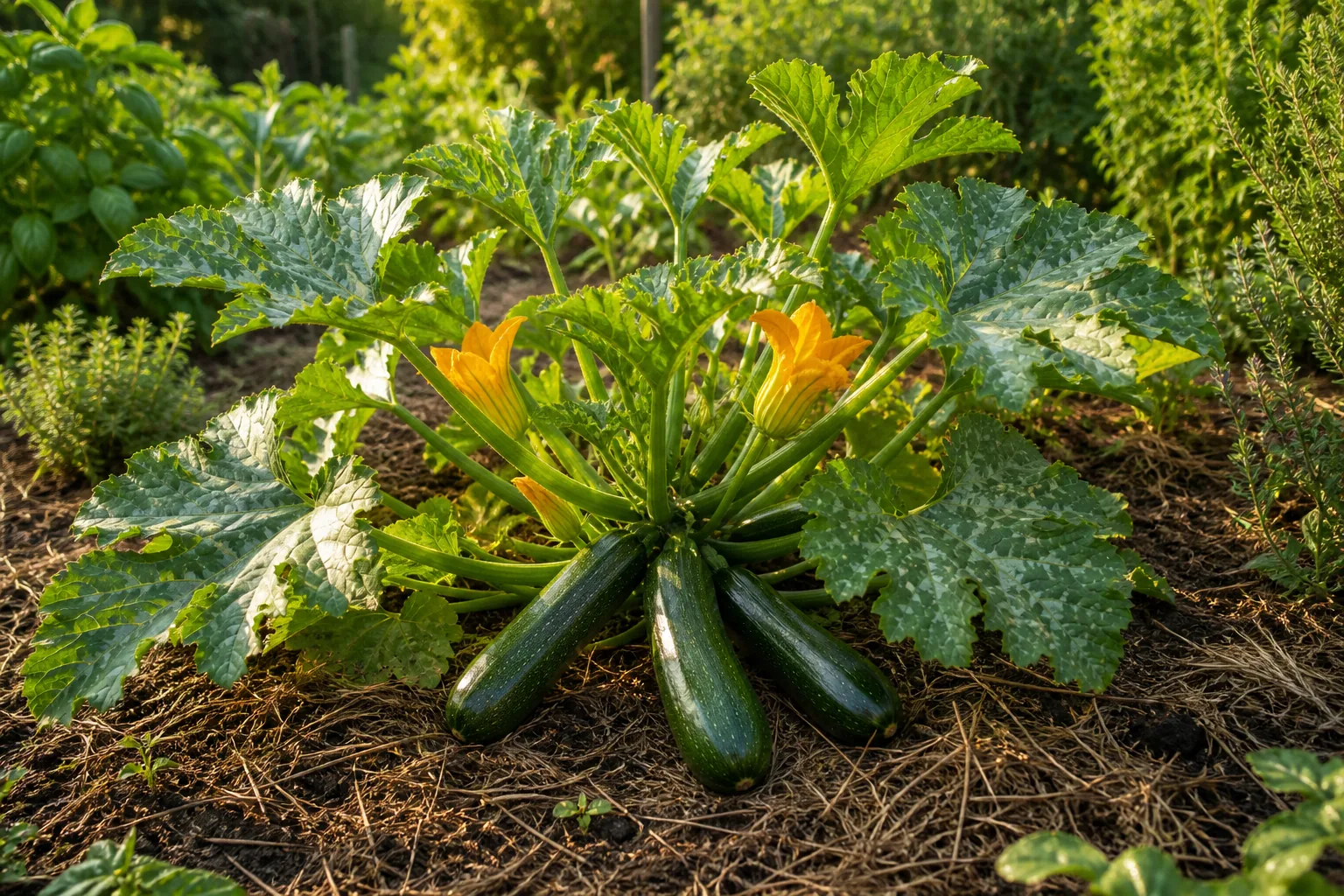
Zucchini (Cucurbita pepo, summer squash) is a warm-season, fast-growing crop. Sow seed or set transplants after soil warms above about 60°F and all frost danger passes, spacing hills or plants 2-3 feet apart (or 1 foot if trellised). Mulch to hold moisture and keep fruit off the soil, water deeply, and feed when flowering starts. Harvest fruit at 6-8 inches every day or two — overmature fruit signals the plant to slow down. Trellis bush types vertically to save space and improve airflow.
Light
Zucchini needs full sun — at least 6-8 hours of direct light — for heavy fruiting. It will grow in part shade but yields far less and is more disease prone in low light.
Water
Water deeply and evenly, about 1-2 inches per week plus more in heat. Squash have large leaves and transpire heavily, so drought causes wilting and poor fruit set; uneven water can also cause blossom-end rot. Use drip irrigation or soak the soil in the morning and avoid wetting foliage, which fuels powdery mildew.
Soil and planting
Plant in fertile, well-drained soil rich in organic matter with a pH of about 6.0-6.8. In containers use a large pot (at least 5 gallons) with a rich, free-draining mix and a small trellis; squash dislike root disturbance, so sow in place or use biodegradable pots. Mound or hill the soil slightly for drainage and warmth, and keep the crown at the surface.
Temperature, humidity, and fertilizer
Zucchini is frost tender and grows best around 70-90°F; cool, wet weather limits pollination and growth. High humidity raises powdery-mildew and squash-bug risk, so space widely and trellis for airflow. Feed with compost at planting and a balanced fertilizer every few weeks once fruiting; too much nitrogen produces vines and few fruit.
Pruning and propagation
For vining types, trellis and trim a few lower leaves for airflow; remove any diseased foliage. Propagate from seed: direct-sow after soil warms, or start indoors 2-3 weeks before last frost in biodegradable pots. Bush varieties need no trellis; thin to the strongest seedling per hill.
Common problems
Start with the pattern, current soil moisture, and recent changes. One symptom can have several causes, so change the most likely factor first and observe before making another major adjustment.
| Symptom | Check first | First action |
|---|---|---|
| Flowers form but fruit shrivels and drops | Check pollination — poor bee activity or weather is common. | Hand-pollinate with a brush or wait for warmer, bee-active weather; avoid pesticide during bloom. |
| White powdery coating on leaves | Check for powdery mildew in humid or crowded conditions. | Improve airflow and spacing, avoid overhead watering, and remove affected leaves. |
| Wilting despite watering, often one vine at a time | Check the base for squash vine borer holes or squash bugs. | Trellis and monitor the crown; remove borers and destroy affected stems. |
| Sunken, rotten spot on the blossom end of fruit | Check for uneven watering causing blossom-end rot (calcium uptake issue). | Water evenly and deeply; add calcium if soil is deficient. |
| Overload of giant fruit nobody wants | Check harvest frequency — fruit was left too long. | Harvest at 6-8 inches daily; the plant then keeps producing usable fruit. |
Pet and household safety
Zucchini (summer squash) is considered non-toxic to dogs and cats and is not listed as a poison by the ASPCA; the fruit is safe as an occasional treat. The raw fruit and cooked flesh are fine, though very large amounts of any plant can cause mild stomach upset, and bitter, overmature, or ornamental squash relatives may contain cucurbitacins that can cause illness — keep pets from eating unknown or bitter squash and contact a veterinarian if concerned.
Frequently asked questions
How much sun does zucchini need?
Full sun — at least 6-8 hours of direct light for the heaviest fruiting.
How often should I water zucchini?
Deeply and evenly, about 1-2 inches per week plus more in heat. Drought causes wilting and poor fruit set.
When do I harvest zucchini?
At 6-8 inches, every day or two in peak season. Young fruit tastes best and keeps plants producing.
Why do my zucchini flowers drop without fruit?
Often poor pollination in cool or bee-quiet weather; hand-pollinate or wait for bees.
How do I grow zucchini in a small space?
Use a compact bush variety in a large container with a small trellis, or trellis vining types vertically.
Is zucchini safe for pets?
Yes — zucchini is non-toxic to dogs and cats per the ASPCA; the fruit is a safe occasional treat.
Sources and editorial review
This editorial draft is based on the sources below and awaits named horticulture-expert approval before publication.
- Cucurbita pepoRoyal Botanic Gardens, Kew (Plants of the World Online) · Checked
- Toxic and Non-Toxic Plants ListASPCA · Checked
- Growing zucchini and summer squashUniversity of Minnesota Extension · Checked
- Growing summer squash (zucchini) in a home gardenUniversity of Maryland Extension · Checked
What works well
- Extremely productive from a small number of plants.
- Fast growing and easy for beginners in warm weather.
- Versatile in the kitchen, raw or cooked, and the flowers are edible.
What to consider
- Very prone to powdery mildew and squash bugs in humid weather.
- Can overproduce, leaving gardeners with more than they can use.
- Large, sprawling plants need space unless grown vertically.