Key takeaways
- Plant in full sun in average, well-drained soil; drought tolerant once established.
- Shear spent flower spikes after the first bloom to encourage a second flush.
- Woodland sage is non-toxic to dogs and cats and attracts bees and butterflies.
How to care for woodland sage
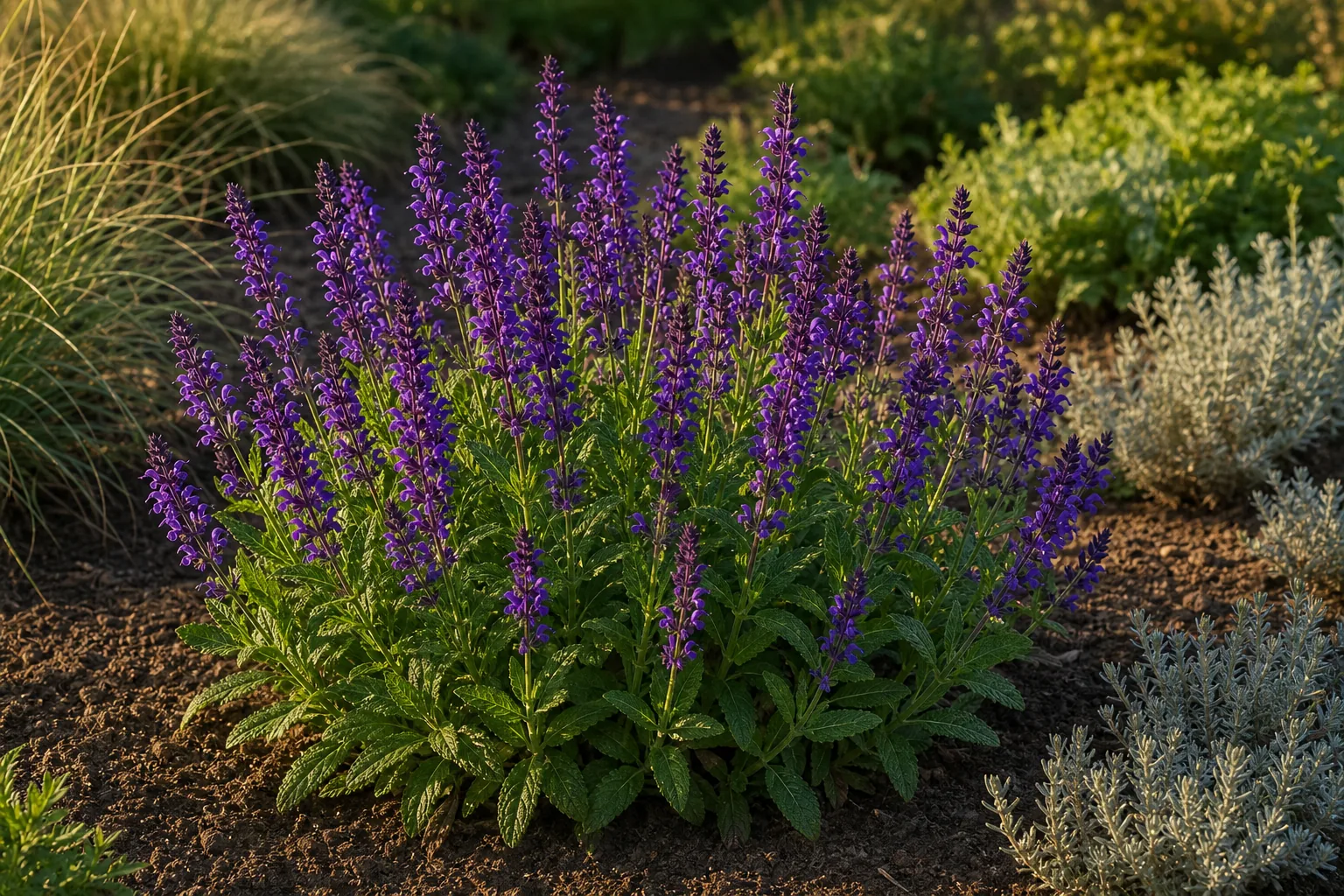
Woodland sage (Salvia nemorosa) is a compact perennial that thrives in sun and decent drainage. Plant in spring or autumn in full sun and average, well-drained soil, spacing 12-18 inches apart and keeping the crown at the soil line. Water to establish, then only during extended dry spells. Remove spent flower spikes down to the basal foliage after the first flush to encourage a compact second bloom, and divide clumps every 3-4 years in spring to renew vigour. In hot-summer regions a little afternoon shade and extra water keep it tidy.
Light
Woodland sage wants full sun - at least 6 hours of direct light daily - for the heaviest bloom and compact habit. In hot climates some afternoon shade helps it stay fresh, but too much shade makes plants leggy and open.
Water
Water moderately to establish, then sparingly; woodland sage is drought tolerant once established and prefers the soil to dry between waterings. About 1 inch per week while young is plenty. Avoid overhead watering and soggy soil, which invite root rot and mildew.
Soil and planting
Plant in average, well-drained soil with a slightly acidic to neutral pH; sandy or gravelly loam is ideal. In containers use a gritty, freely draining mix and water more often than in-ground plants; repot only when badly crowded. Woodland sage is best in the ground where it forms a neat clump.
Temperature, humidity, and fertilizer
Hardy in USDA zones 4-8, woodland sage tolerates heat and cold but dislikes humid, still air. Good airflow limits powdery mildew. Fertilizer is rarely needed; a light compost top-dressing in spring is enough, or skip feeding entirely.
Pruning and propagation
Shear spent flower spikes after the first bloom to tidy plants and trigger a second flush; cut back by about a third in early spring once new growth appears. Propagate by division in spring or autumn, or by softwood cuttings in summer; named cultivars come true from division or cuttings.
Common problems
Start with the pattern, current soil moisture, and recent changes. One symptom can have several causes, so change the most likely factor first and observe before making another major adjustment.
| Symptom | Check first | First action |
|---|---|---|
| Open, leggy growth | Check light hours and shearing. | Move to fuller sun and shear spent spikes to keep compact. |
| White powdery coating on leaves | Check humidity, airflow, and overhead watering for powdery mildew. | Improve spacing and airflow, avoid wetting foliage, and remove affected leaves. |
| Wilting despite moist soil | Check for root rot from overwatering or poor drainage. | Reduce watering and improve drainage; do not let pots sit in saucers. |
| Crowded, declining clump | Check plant age and spread. | Divide in spring every 3-4 years to renew vigour. |
| Few flowers | Check light and whether spikes were sheared. | Grow in full sun and shear after the first flush to encourage rebloom. |
Pet and household safety
Woodland sage (Salvia nemorosa) is considered non-toxic to dogs and cats and appears on the ASPCA non-toxic plant list for ornamental salvias. Eating large amounts of any plant may cause mild stomach upset, so discourage chewing and contact a veterinarian if a pet shows persistent signs.
Frequently asked questions
How much sun does woodland sage need?
Full sun - at least 6 hours daily; afternoon shade helps in hot climates.
How often should I water woodland sage?
Sparingly once established; it is drought tolerant and prefers dry soil between waterings.
How do I keep woodland sage blooming?
Shear spent flower spikes after the first flush to encourage a second bloom.
When should I divide woodland sage?
Every 3-4 years in spring to keep clumps vigorous and compact.
Is woodland sage deer resistant?
Yes - the aromatic foliage deters deer and rabbits once established.
Are salvias safe for pets?
Yes - the ASPCA lists ornamental salvias such as Salvia nemorosa as non-toxic to dogs and cats, though large amounts can upset the stomach.
Sources and editorial review
This editorial draft is based on the sources below and awaits named horticulture-expert approval before publication.
- Salvia nemorosaRoyal Botanic Gardens, Kew (Plants of the World Online) · Checked
- SageASPCA · Checked
- Salvia nemorosaMissouri Botanical Garden · Checked
- Salvia nemorosaNorth Carolina State University Extension · Checked
What works well
- Long bloom season from late spring through summer with deadheading.
- Drought tolerant and deer resistant once established.
- Non-toxic to pets (ASPCA non-toxic list) and a pollinator magnet.
What to consider
- Can flop or look tired without shearing after bloom.
- Susceptible to powdery mildew and root rot in humid, wet conditions.
- May need division every few years to stay vigorous.