Key takeaways
- Plant in full sun with deep, well-drained soil and a sturdy trellis or arbor; avoid frost pockets.
- Prune hard every winter while dormant - grapes fruit on the previous season's wood, and poor pruning is the most common home-garden failure.
- Keep grapes and raisins away from dogs - they can cause acute kidney failure.
How to care for wine grape
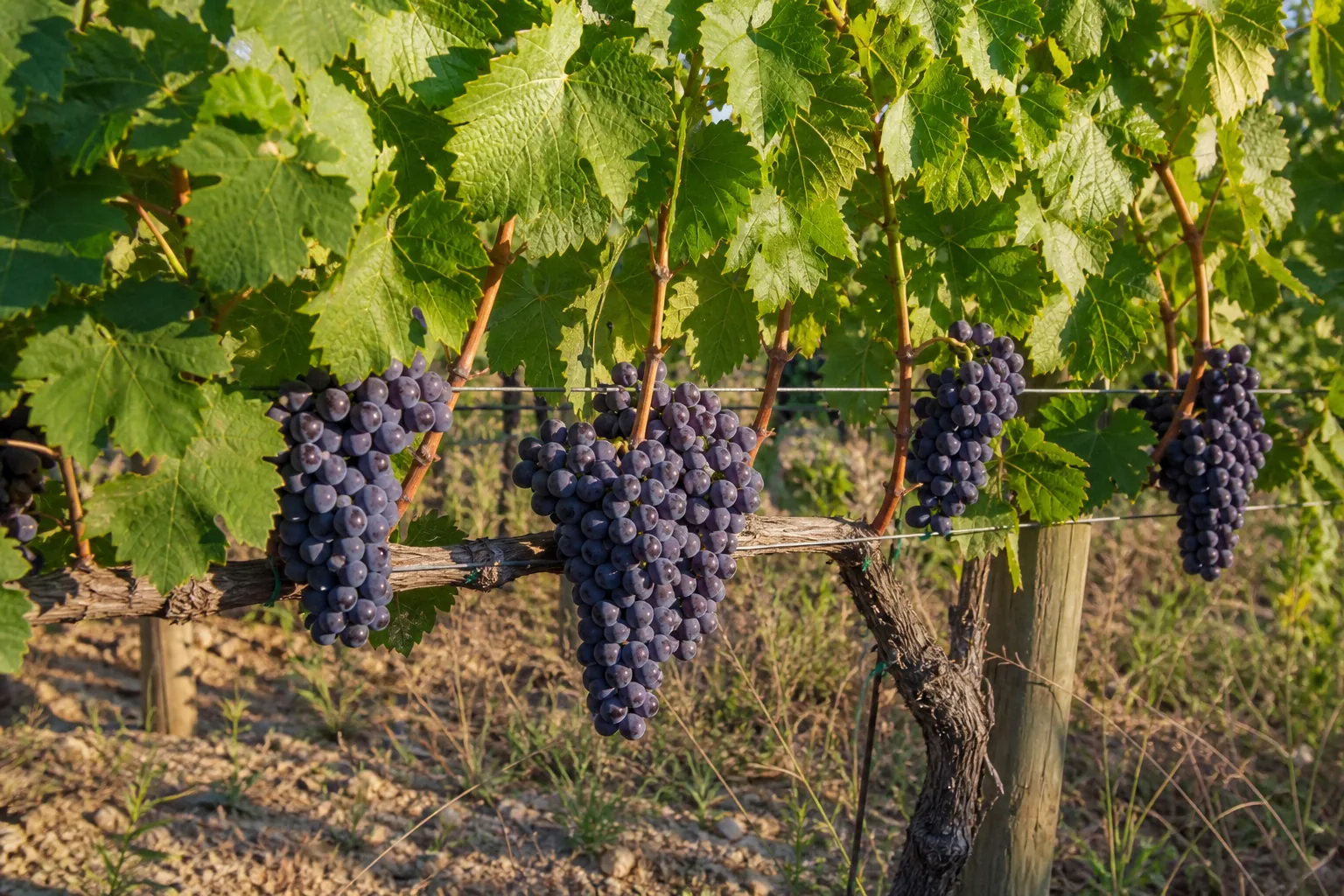
Wine grape (Vitis vinifera) is a woody, deciduous vine that climbs by branched tendrils and, left unpruned, can reach 40-60 ft. For quality fruit, grow it on a strong support and train it to a manageable size. Plant in full sun in deep, loamy, humus-rich, well-drained soil, sheltered from winter winds and frost pockets. Grapes need good air circulation, regular training, and annual dormant pruning to maximize fruit production. Established vines are watered during dry spells and fed lightly in spring - overfeeding encourages soft growth and disease.
Light
Grapes demand full sun - at least 6 hours of direct light daily, ideally more - for the fruit to ripen and sugars to develop. Shaded vines produce weak, disease-prone growth and poor fruit. Choose a sunny, south-facing slope if possible, well away from frost pockets.
Water
Water young vines regularly through establishment. Mature grapevines need water during dry periods but tolerate somewhat dry soils; soggy ground promotes disease. Avoid overhead irrigation once fruit forms - wet foliage and clusters invite black rot, mildew, and botrytis. Deep watering at the root zone is best.
Soil and planting
Grapes grow best in deep, loamy, humus-rich, medium-moisture, well-drained soil; they tolerate a wide range of soils including gravelly loams, but must have good drainage and do not grow in soggy ground. A slightly acid pH is fine. Grapes are occasionally grown in large containers on a patio with a trellis; use a deep pot with drainage and repot when rootbound in early spring.
Temperature, humidity, and fertilizer
Hardy in USDA zones 6-9 by cultivar, wine grapes need a sheltered, sunny site; late spring frosts damage young growth, and humid summers favor fungal diseases, so site for airflow. Fertilize sparingly - grapes need fewer nutrients than most fruit crops, and overfeeding is more harmful than underfeeding. Apply a light balanced feed in spring.
Pruning and propagation
Prune dormant vines in late winter (January to March): grapes fruit on the previous season's canes, so prune back to a few strong canes with 20-30 buds each, using spur or cane pruning. The most common home-garden mistake is not pruning hard enough - remove most of last season's wood. Propagate by hardwood cuttings or by grafting onto resistant rootstock; named cultivars must be propagated vegetatively.
Common problems
Start with the pattern, current soil moisture, and recent changes. One symptom can have several causes, so change the most likely factor first and observe before making another major adjustment.
| Symptom | Check first | First action |
|---|---|---|
| No fruit or small clusters | Check pruning - grapes fruit on last season's wood and need hard dormant pruning. | Prune in late winter to a few strong canes with 20-30 buds and give full sun. |
| Black spots and shriveled fruit | Check for black rot and other fungal diseases in humid weather. | Improve airflow, remove infected clusters, and follow a spray schedule in humid climates. |
| Powdery or downy mildew on leaves | Check humidity and airflow. | Site for airflow, avoid wetting foliage, and treat with a labeled fungicide if severe. |
| Grape leaves chewed | Check for Japanese beetles and other chewing insects in summer. | Hand-pick Japanese beetle adults and control grubs in the lawn. |
| Dog ate fallen grapes | Check whether pets accessed the vine or fallen fruit. | Call your veterinarian immediately - grapes and raisins can cause acute kidney failure in dogs. |
Pet and household safety
Grapes and raisins are toxic to dogs - the ASPCA reports that ingestion is associated with acute renal (kidney) failure, and cats may also be affected. The cause of the toxicity is unclear, but even a small amount can be dangerous. Keep pets away from the vine, fallen fruit, and any raisins, and contact a veterinarian immediately after ingestion.
Frequently asked questions
How much sun do grapes need?
Full sun - at least 6 hours, ideally more, for the fruit to ripen.
How often should I water grapevines?
Regularly to establish, then during dry spells; avoid wetting the foliage and fruit.
What soil suits wine grapes?
Deep, well-drained, moderately fertile soil; they fail in soggy ground.
When do I prune grapes?
In late winter while dormant, pruning back to a few strong canes with 20-30 buds.
Why didn't my grapes produce fruit?
Usually insufficient pruning, too much shade, or frost damage; grapes fruit on last season's wood.
Are grapes safe for dogs?
No - grapes and raisins can cause acute kidney failure in dogs; call your veterinarian immediately if a dog eats them.
Sources and editorial review
This editorial draft is based on the sources below and awaits named horticulture-expert approval before publication.
- Vitis viniferaRoyal Botanic Gardens, Kew (Plants of the World Online) · Checked
- Leah's Close Call: A Handful of Grapes Nearly Cost One Dog Her LifeASPCA · Checked
- Vitis viniferaNorth Carolina State University Extension · Checked
- 1203 - GrapesColorado State University Extension (PlantTalk) · Checked
What works well
- Produces fruit for fresh eating, raisins, juice, and wine in the home garden.
- Vigorous, attractive foliage can cover arbors and provide summer shade.
- Self-pollinating; a single vine can fruit on its own.
What to consider
- High maintenance: needs annual dormant pruning, training, and regular spraying in humid climates.
- Susceptible to many diseases (black rot, mildew, botrytis) and pests (phylloxera, Japanese beetle).
- Grapes and raisins are toxic to dogs - ingestion can cause acute kidney failure.