Key takeaways
- Give trumpet vine a sturdy arbor, wall, or fence - mature plants weigh a lot and attach by aerial rootlets.
- It blooms on new growth, so early spring pruning does not reduce flowering and helps keep the vine in bounds.
- Expect aggressive spreading: it suckers from underground runners and freely self-seeds, so site it where mowing can restrain it.
How to care for trumpet vine
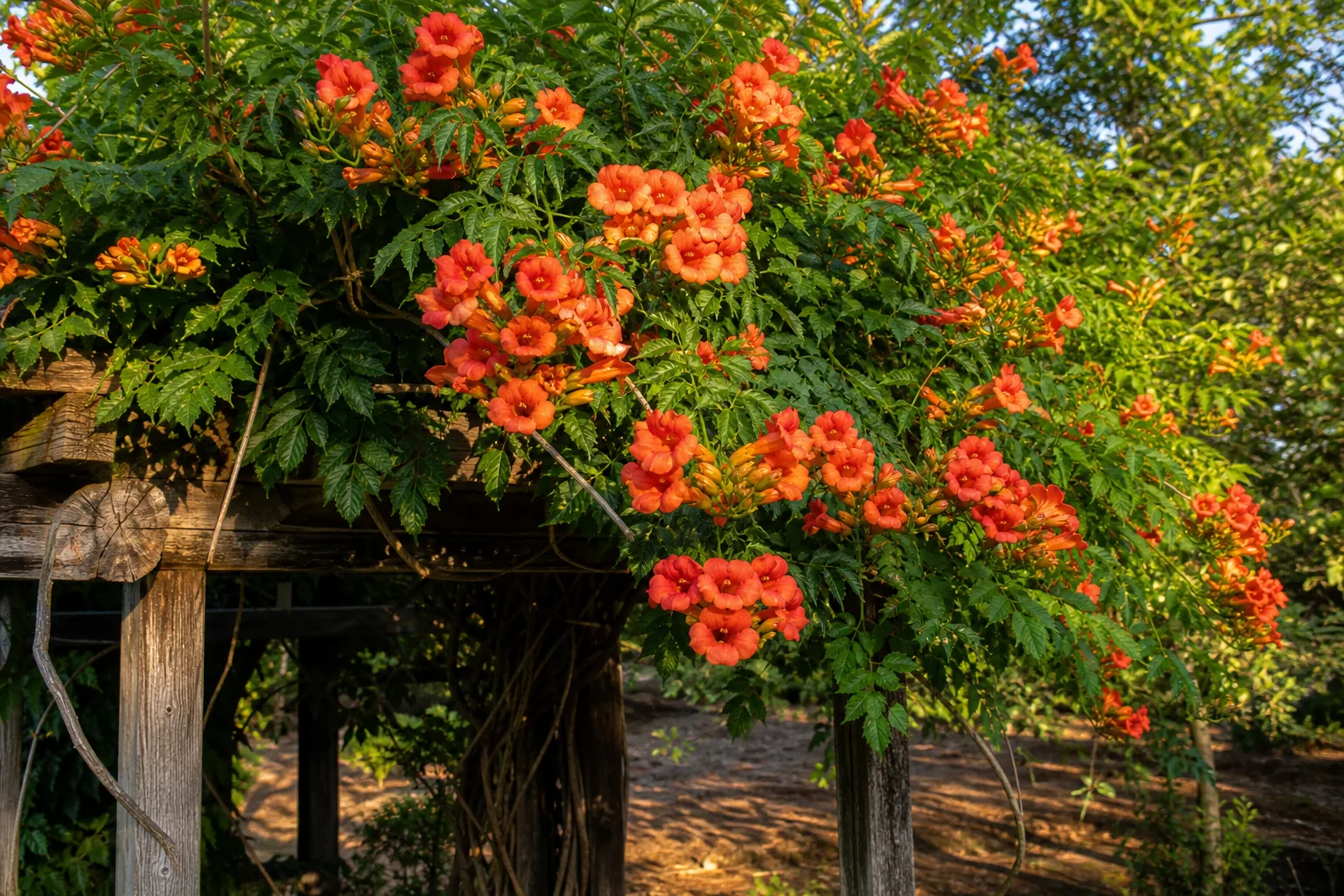
Trumpet vine (Campsis radicans) is a dense, vigorous, deciduous vine that attaches to structures by aerial rootlets. Plant it in full sun to part shade in lean-to-average, well-drained soil with regular moisture, and give it a very sturdy support - mature vines produce considerable weight. Foliage grows well in shade, but the plant needs good sun for the best flowering. Because it blooms on new growth, prune in early spring without fear of losing flowers. The real challenge is restraint: it suckers from underground runners and self-seeds freely, so plant it near concrete or an area you can mow, and cut down the suckers to discourage them.
Light
Trumpet vine flowers best in full sun - at least 6 hours of direct light. It grows well in part shade but blooms much less there. Foliage tolerates shade, so even a partly shaded wall can support the vine, but put the flowering parts in sun for the showy summer display.
Water
Water regularly during establishment; then trumpet vine is quite drought tolerant and grows in a wide range of soils with average moisture. Avoid soggy ground; lean-to-average soils with good drainage suit it best. In long dry spells, watering keeps the flowers coming.
Soil and planting
Trumpet vine is easily grown in a wide variety of soils - clay, sand, and high-organic-matter loam with a pH from acid to alkaline - as long as drainage is reasonable, and it prefers lean-to-average soils with regular moisture. In containers it is manageable but needs a large, heavy pot and a sturdy trellis; repot in early spring when rootbound, refreshing the mix.
Temperature, humidity, and fertilizer
Hardy in USDA zones 4-9 (to 10 in mild areas), trumpet vine tolerates heat, drought, and poor soil. It has no serious insect or disease problems, but in humid summers keep air moving around the foliage. Fertilizer is rarely needed - rich soil and heavy feeding just push vegetative growth; a light spring feeding is plenty.
Pruning and propagation
Prune trumpet vine in early spring or late winter: it blooms on new growth, so a hard spring pruning does not reduce flowering and keeps the vine in bounds. Remove dead wood and cut back vigorous whips. To restrain spreading, mow or cut suckers that arise from the roots. Propagate by root cuttings, seeds, or suckers - all straightforward for this vigorous species.
Common problems
Start with the pattern, current soil moisture, and recent changes. One symptom can have several causes, so change the most likely factor first and observe before making another major adjustment.
| Symptom | Check first | First action |
|---|---|---|
| Vine takes over the garden | Check for sucker shoots from underground runners. | Mow or cut the suckers regularly, plant near mowed areas or hardscape, and prune hard in early spring. |
| Few or no flowers | Check sun exposure, soil fertility, and whether the vine is still young. | Give full sun, stop fertilizing if the soil is rich, and be patient - young vines may need a few seasons. |
| Skin redness and itching after contact | Check whether sap or leaves contacted skin. | Wear gloves when pruning, and wash exposed skin with soap and water. |
| Vine pulls away from its support | Check the structure for strength and whether canes have overgrown. | Prune heavy growth back and anchor the vine to a sturdier structure. |
| Self-sown seedlings popping up | Check for released seed pods in late summer. | Cut seed pods before they ripen and pull up seedlings promptly. |
Pet and household safety
Trumpet vine is not individually listed in the ASPCA database, but NC State Extension rates it as a low-severity poison: eating leaves or flowers can cause mild toxicity, and contact with the sap can irritate skin. Treat the plant as toxic to cats and dogs - discourage chewing, keep pets away from cut stems and sap, and contact a veterinarian after ingestion.
Frequently asked questions
How much sun does trumpet vine need?
Full sun for the heaviest bloom; part shade supports foliage but fewer flowers.
How often should I water trumpet vine?
Regularly to establish, then only during long dry spells; it is drought tolerant.
Why isn't my trumpet vine blooming?
Usually too much shade, rich soil, or a young vine; give full sun and avoid excess nitrogen.
When do I prune trumpet vine?
In early spring - it blooms on new growth, so pruning does not remove the flowers.
How do I stop trumpet vine from spreading?
Mow or cut the root suckers, plant near mowed turf or hardscape, and prune hard each spring.
Is trumpet vine safe for pets?
Not really - NC State rates it a low-severity poison and its sap can irritate; prevent pets from chewing it.
Sources and editorial review
This editorial draft is based on the sources below and awaits named horticulture-expert approval before publication.
- Campsis radicansRoyal Botanic Gardens, Kew (Plants of the World Online) · Checked
- Toxic and Non-Toxic Plants ListASPCA · Checked
- Campsis radicansNorth Carolina State University Extension · Checked
- Campsis radicansMissouri Botanical Garden · Checked
What works well
- Brilliant red-orange trumpet flowers all summer that are magnets for hummingbirds.
- Tough and easy in poor soils, heat, and drought once established.
- Native vine that provides quick, dense cover for fences, arbors, and hot, dry sites.
What to consider
- Very aggressive - it suckers from underground runners and can choke out nearby plants.
- Sap can irritate skin and foliage contact causes itching (the 'cow-itch' nickname).
- NC State rates the plant as a low-severity poison; keep pets from eating it.