Key takeaways
- Chard is a heat-tolerant green — a great summer substitute for spinach that bolts.
- Keep soil consistently moist; drought stresses plants and can trigger bolting and tough leaves.
- Harvest outer leaves continually and the plant can produce for up to two years if undamaged.
How to care for Swiss chard
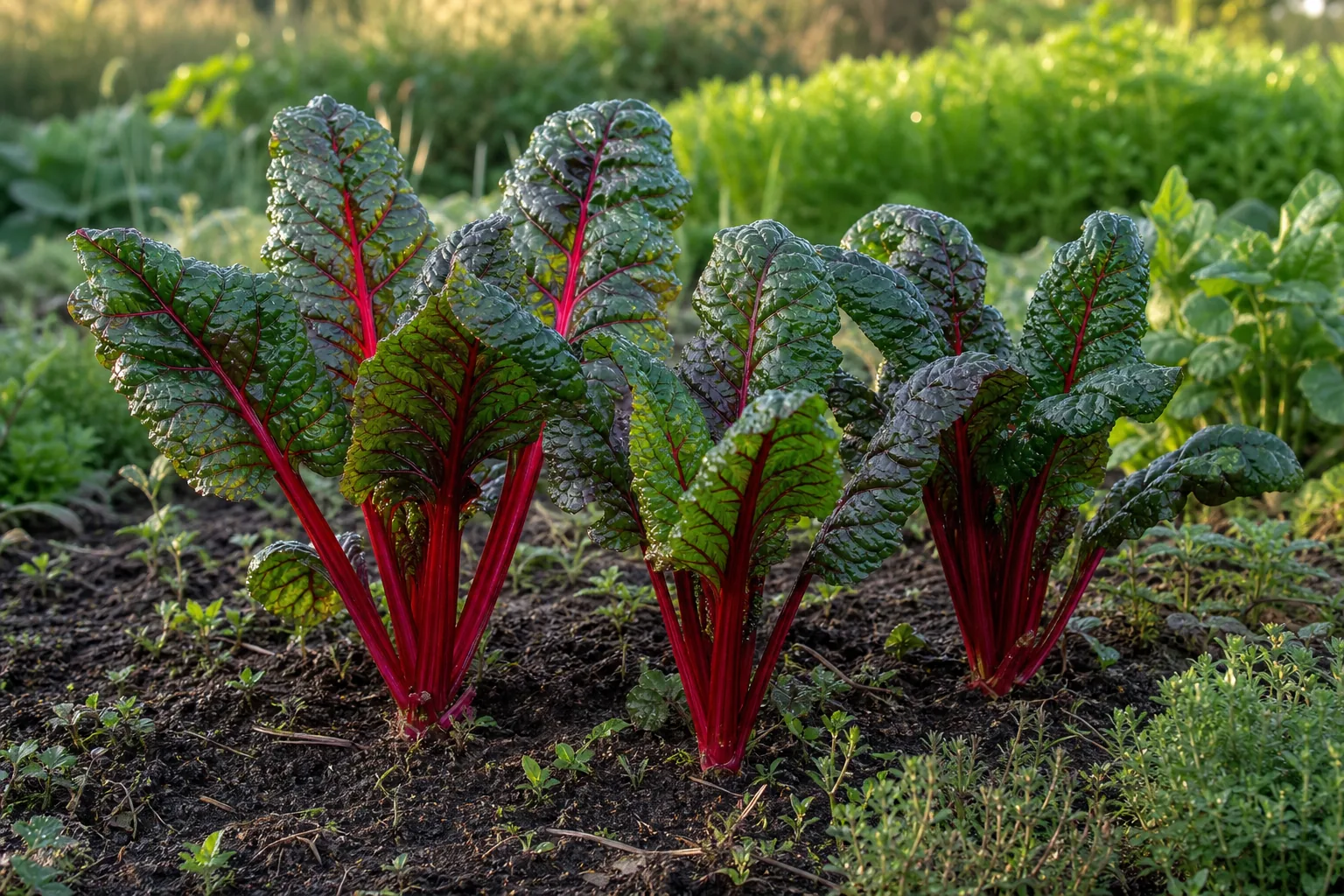
Swiss chard (Beta vulgaris, Cicla group) is a cool-season, heat-tolerant leafy green that wants fertile, well-drained soil and steady moisture. Sow seed 1/2 inch deep in spring and again in late summer, thinning to 4-6 inches apart (or transplant 6 inches apart in rows 12 inches apart), and mulch to hold moisture and suppress weeds. Harvest the outer leaves once they are usable, leaving the inner ones and the growing point so the plant keeps producing; it can crop for up to two years if not damaged. Water regularly because drought-stressed plants are more likely to bolt and stop leaf production.
Light
Swiss chard grows best in full sun (6-8 hours) but tolerates partial shade, which helps in the hottest weather. Too much shade reduces yield and leaf size; morning sun with afternoon shade is fine in summer.
Water
Water to keep the soil consistently moist, about 1-2 inches per week and more in heat and containers. Chard needs steady moisture — drought makes leaves tough, slow, and off-flavored and can trigger bolting. Water at the base and keep leaves dry to limit downy mildew; mulch helps buffer moisture swings.
Soil and planting
Plant in fertile, well-drained soil rich in organic matter with a pH of about 6.0-6.8. In containers use a pot with a rich, free-draining mix and good drainage holes, sowing or transplanting at the same depth. Add compost at planting; chard is a light feeder and usually needs no extra fertilizer, though a midseason nitrogen side-dress helps poor soils. Thin rather than transplant crowded seedlings.
Temperature, humidity, and fertilizer
Chard is cool-season but more heat-tolerant than spinach, growing best below about 75°F and tolerating summer heat; high temperatures reduce growth and can cause bitter flavors. High humidity raises downy-mildew risk, so space and mulch for airflow. Feed lightly with compost at planting and a balanced side-dress if leaves pale; too much nitrogen can make leaves lush but less flavorful.
Pruning and propagation
No pruning beyond harvesting outer leaves and removing flower stalks if it bolts. Propagate from seed: direct-sow in spring (or start transplants 3-4 weeks early) and again in late summer; thin to 4-6 inches apart. Chard seeds are clusters, so multiple seedlings may emerge from one seed.
Common problems
Start with the pattern, current soil moisture, and recent changes. One symptom can have several causes, so change the most likely factor first and observe before making another major adjustment.
| Symptom | Check first | First action |
|---|---|---|
| Tunnels and pale trails inside the leaves | Check leaf surfaces for leaf-miner larvae. | Remove and destroy affected leaves; use row cover to exclude adult flies. |
| Curled, sticky leaves with tiny insects | Check leaf undersides for aphids. | Rinse with water or apply insecticidal soap; encourage beneficial insects. |
| Small holes in seedlings | Check for flea beetles on young plants. | Use row cover on seedlings and keep plants vigorous. |
| Flower stalk and tough leaves (bolting) | Check for drought or heat stress triggering bolting. | Water evenly, harvest promptly, and sow for cooler seasons. |
| Powdery or downy patches on leaves | Check for fungal leaf diseases in humid, wet conditions. | Improve airflow, avoid overhead watering, and remove infected leaves. |
Pet and household safety
Swiss chard is considered non-toxic to dogs and cats and is not listed as a poison by the ASPCA; the leaves and stems are safe as an occasional treat. Like its beet relative, chard is high in oxalates, so very large quantities could contribute to kidney or calcium-absorption issues in pets, and are best limited — contact a veterinarian if a pet eats a large amount.
Frequently asked questions
How much sun does Swiss chard need?
Full sun (6-8 hours) but tolerates partial shade; more heat-tolerant than spinach.
How often should I water Swiss chard?
Keep soil consistently moist, 1-2 inches per week; drought causes bolting and tough leaves.
When and how do I harvest Swiss chard?
Once leaves are usable, cut outer leaves and leave the center; harvest often for months of production.
Is Swiss chard the same as beet?
It is the same species (Beta vulgaris) but the leafy Cicla group, with no edible storage root; both leaves and stems are eaten.
Why did my chard bolt?
Usually drought or heat stress; keep soil evenly moist and harvest regularly.
Is Swiss chard safe for pets?
Yes — Swiss chard is non-toxic to dogs and cats per the ASPCA, though its oxalates mean large amounts are best avoided.
Sources and editorial review
This editorial draft is based on the sources below and awaits named horticulture-expert approval before publication.
- Beta vulgarisRoyal Botanic Gardens, Kew (Plants of the World Online) · Checked
- Toxic and Non-Toxic Plants ListASPCA · Checked
- How to Grow Swiss ChardMichigan State University Extension · Checked
- How to Grow Swiss Chard in Your GardenUtah State University Extension · Checked
What works well
- Very easy and heat-tolerant; produces for months, even through summer.
- Colorful stems make it ornamental as well as edible.
- Grows well in beds and containers and tolerates light frost.
What to consider
- Needs steady moisture; drought causes bolting and tough leaves.
- Susceptible to leaf miners, aphids, flea beetles, and downy mildew.
- Contains oxalates, so very large amounts are less ideal for pets and people prone to issues.