Key takeaways
- Plant out only after soil and nights are warm (above ~55°F); peppers stall in cold.
- Keep soil evenly moist and feed for fruit; uneven water causes blossom-end rot.
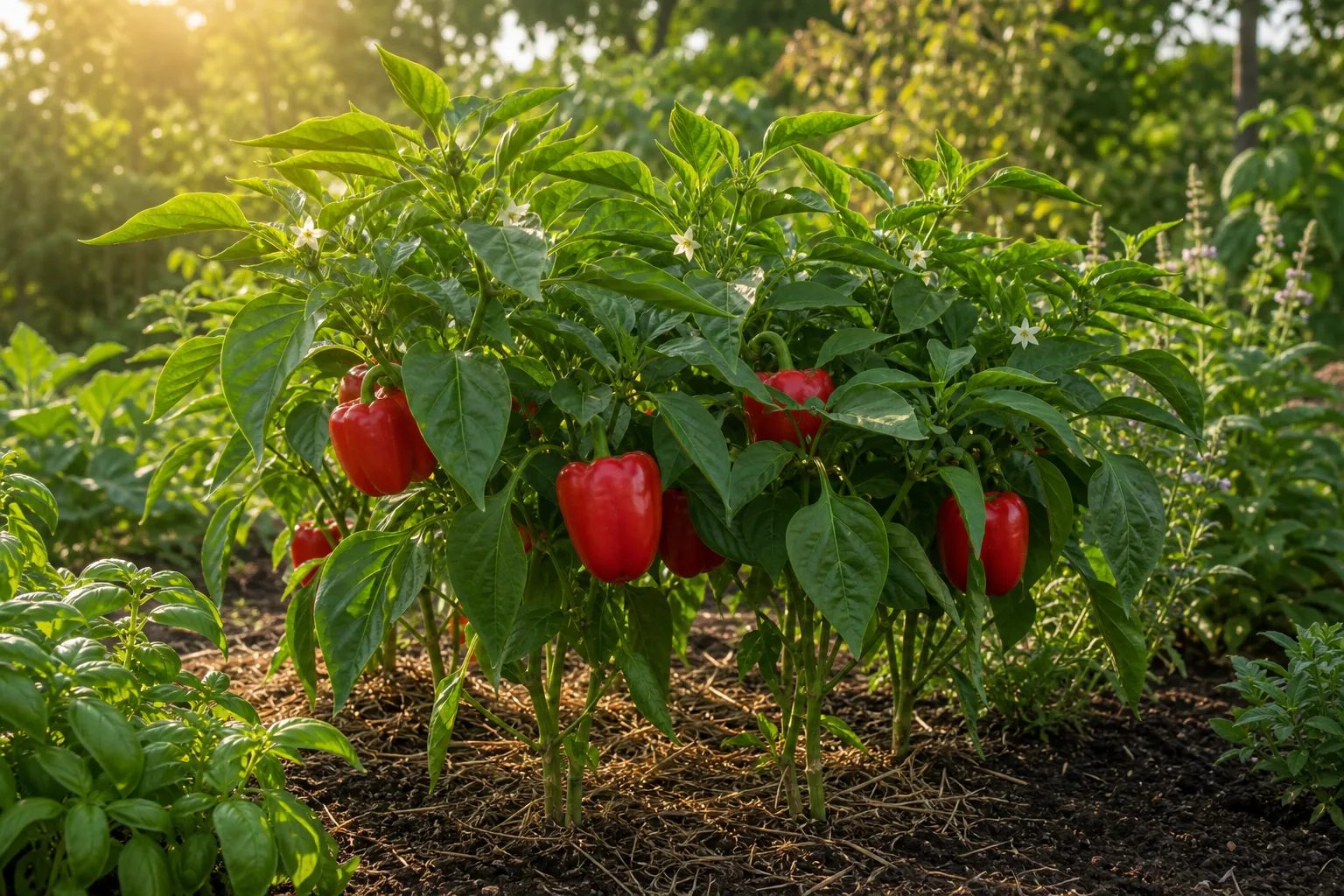
- Harvest at full color for sweetness — green fruit is immature but edible.
How to care for sweet pepper
Sweet pepper (Capsicum annuum, non-pungent group) is a warm-season crop that rewards heat and steady care. Start indoors 8-10 weeks before last frost or buy stocky transplants, and set them out only after soil is warm and nights stay above about 55°F, spacing 18-24 inches. Mulch to keep roots warm and moist, water deeply, and feed when flowering begins. Stake or cage plants so heavy fruit doesn't bend them over. Harvest when fruits reach the desired color — green is immature; red, yellow, or orange is ripest and sweetest.
Light
Sweet peppers need full sun — at least 6-8 hours of direct light — for the best yield and sweetest fruit. They tolerate a little afternoon shade in the hottest regions but flower and fruit poorly in low light.
Water
Water deeply and evenly, about 1-1.5 inches per week, more in heat and containers. Peppers are sensitive to both drought and waterlogging; uneven moisture causes blossom-end rot and flower drop. Use drip irrigation or soak the soil in the morning and avoid wetting foliage to limit disease.
Soil and planting
Plant in fertile, well-drained soil rich in organic matter with a pH of about 6.0-6.8. In containers use a large pot (at least 5 gallons) with a rich, free-draining mix and a cage or stake; peppers dislike root disturbance, so use biodegradable pots or transplants with the root ball intact. Warm the soil with black plastic or a cloche before setting out.
Temperature, humidity, and fertilizer
Peppers are frost tender and grow best around 70-85°F; nights below 55°F stall them and above 90°F can reduce fruit set. High humidity with poor airflow raises fungal-disease risk. Feed with a balanced fertilizer at planting and a higher-potassium feed once fruiting; too much nitrogen gives leaves and few peppers.
Pruning and propagation
Little pruning is needed; you may pinch the first flowers to build a stronger plant, and stake or cage for support. Propagate from seed: start indoors 8-10 weeks before last frost in warmth (80°F seed-starting heat helps germination), then harden off and transplant after frost.
Common problems
Start with the pattern, current soil moisture, and recent changes. One symptom can have several causes, so change the most likely factor first and observe before making another major adjustment.
| Symptom | Check first | First action |
|---|---|---|
| Sunken, rotten spot on the blossom end of fruit | Check for uneven watering causing blossom-end rot (calcium uptake issue). | Water evenly and deeply; add calcium if soil is deficient; mulch to buffer moisture. |
| Flowers drop without setting fruit in heat | Check temperature — above ~90°F or cool nights disrupt pollination. | Provide afternoon shade in extreme heat and wait for milder weather; keep plants watered. |
| Curled, sticky leaves with tiny insects | Check leaf undersides for aphids. | Rinse with water or apply insecticidal soap; encourage beneficial insects. |
| Pale, leathery scorched patches on fruit | Check for sunscald where leaves were removed or fruit was exposed. | Keep enough foliage for shade and avoid heavy pruning in hot sun. |
| Slow growth and purple-tinged leaves when young | Check soil temperature and phosphorus availability in cool weather. | Wait for warm soil and use a complete fertilizer; protect transplants from cold. |
Pet and household safety
Sweet pepper foliage, stems, and leaves are toxic to dogs and cats (nightshade family; solanine-like compounds), while the ripe fruit is considered non-toxic and safe to eat. Keep pets from chewing the plant; the ASPCA classifies the related tomato plant as toxic to dogs and cats, and the same caution applies to pepper foliage. Contact a veterinarian if a pet eats leaves or stems.
Frequently asked questions
How much sun does sweet pepper need?
Full sun — at least 6-8 hours of direct light for the best yield and sweetness.
How often should I water sweet peppers?
Deeply and evenly, about 1-1.5 inches per week. Uneven water causes blossom-end rot.
When do I harvest sweet peppers?
When fruits reach full color — green is immature but edible; red/yellow/orange is sweetest.
Why are my pepper flowers dropping?
Often heat above ~90°F or cool nights. Shade in extreme heat and keep plants watered.
How do I grow peppers in containers?
Use a 5-gallon or larger pot with rich, free-draining mix, full sun, a cage, and steady water and feed.
Are sweet peppers safe for pets?
The ripe fruit is safe, but the foliage, stems, and leaves are toxic to dogs and cats (nightshade), so keep pets from chewing the plant.
Sources and editorial review
This editorial draft is based on the sources below and awaits named horticulture-expert approval before publication.
- Capsicum annuumRoyal Botanic Gardens, Kew (Plants of the World Online) · Checked
- Tomato PlantASPCA (Animal Poison Control) · Checked
- PeppersUniversity of Illinois Extension · Checked
- How to Grow PeppersMichigan State University Extension · Checked
What works well
- Sweet, versatile fruit with no heat, good fresh, roasted, or stuffed.
- Productive in warm weather and grows well in large containers.
- Long harvest window from summer into fall.
What to consider
- Frost tender and slow to start; needs warm, stable conditions.
- Foliage, stems, and unripe plant parts are toxic to pets (nightshade solanine).
- Susceptible to blossom-end rot, aphids, and sunscald.