Key takeaways
- Plant in full sun in rich, fertile, well-drained soil; cool spring weather is ideal.
- Provide support (netting, trellis, or pea sticks) and pinch young plants to encourage bushy growth.
- Pick flowers regularly and deadhead - and remove seed pods, which are poisonous (lathyrogens).
How to care for sweet pea
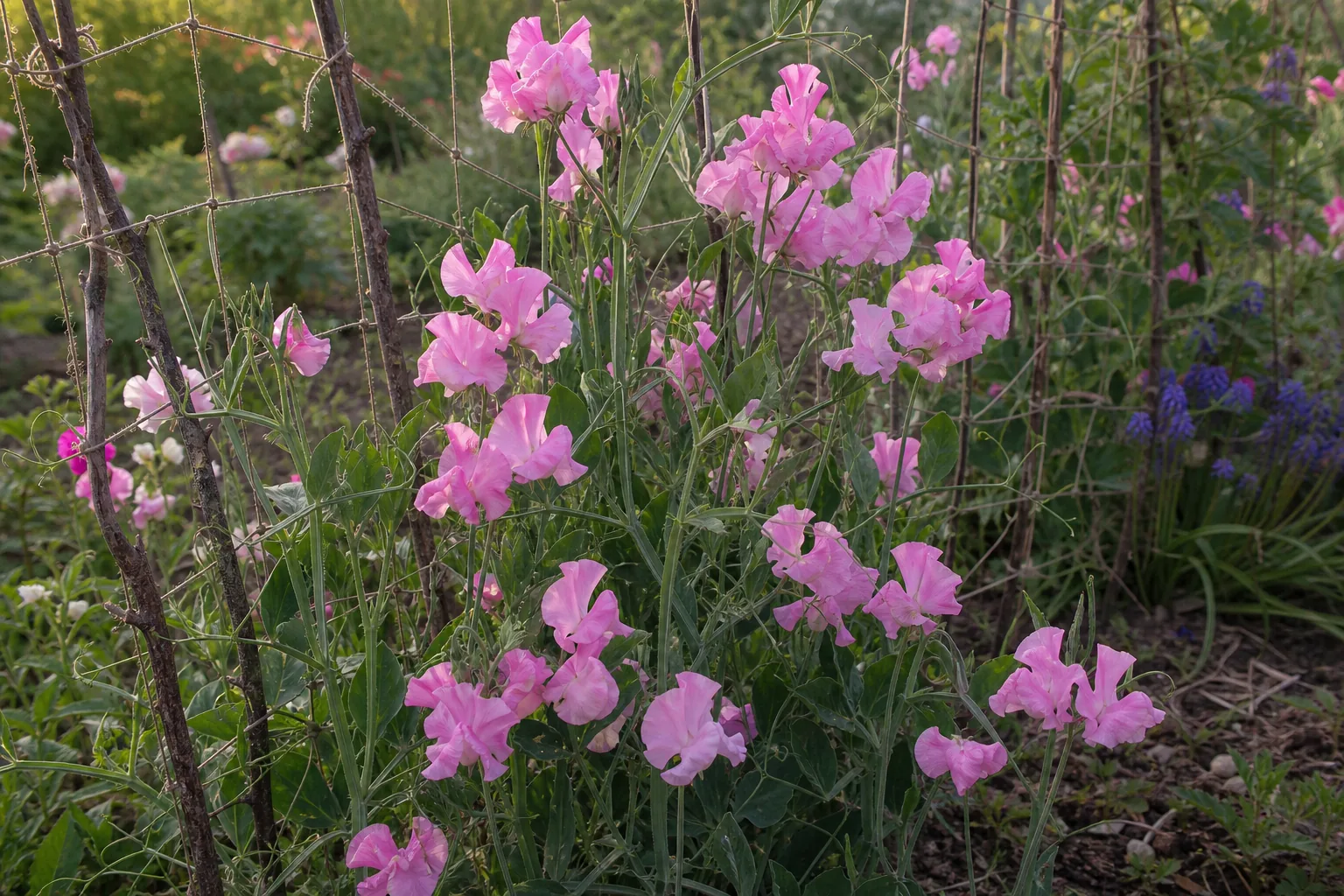
Sweet pea (Lathyrus odoratus) is a cool-season annual that rewards early sowing and constant picking. Sow seeds in early spring - or autumn in mild climates - in rich, fertile, well-drained soil in full sun, setting the support (netting, trellis, or pea sticks) in place at planting. Pinch out the growing tips of young plants to promote branching. Keep the soil evenly moist, feed every couple of weeks with a balanced fertilizer once growth is under way, and pick or deadhead continuously - sweet peas flower as long as they are harvested and stop once seed pods form.
Light
Sweet pea grows and flowers best in full sun (6 or more hours of direct light), though in hot-summer regions light dappled afternoon shade helps extend the season. It is a cool-weather plant and stalls in intense heat.
Water
Water regularly to keep the soil evenly moist - sweet peas dislike drying out and respond to drought by dropping buds and stopping bloom. Water at the base and mulch to hold moisture, but keep the root zone well drained.
Soil and planting
Grow in humus-rich, fertile, well-drained soil; incorporate well-rotted compost or manure before planting. Sweet peas are also excellent in deep containers with a loam-based mix, where they can climb an obelisk or cane teepee - keep pots evenly moist and feed regularly.
Temperature, humidity, and fertilizer
Sweet peas are cool-season annuals: they germinate and grow in cold spring weather, flower before high summer, and decline in heat and humidity. Hardy to light frost, they grow in a wide hardiness range as an annual. Apply a balanced liquid fertilizer every two weeks while in growth; avoid heavy nitrogen, which produces foliage at the expense of flowers.
Pruning and propagation
No formal pruning is needed - just pinch young plants to encourage branching, tie or guide stems to the support, and deadhead or pick constantly to prolong flowering. Propagate by seed: sow in a cold frame in early autumn or early spring, or in situ in mid-spring; soak or nick hard-coated seed to speed germination.
Common problems
Start with the pattern, current soil moisture, and recent changes. One symptom can have several causes, so change the most likely factor first and observe before making another major adjustment.
| Symptom | Check first | First action |
|---|---|---|
| Flowering stops in midsummer | Check heat and humidity - sweet peas are cool-season plants. | Sow early, provide some afternoon shade, mulch, and keep harvesting; replant in autumn where summers are extreme. |
| Flowers form, then pods develop and bloom stops | Check for seed pods forming after the flowers fade. | Pick or deadhead constantly so no pods develop; pod set ends flowering. |
| Clusters of aphids on stems and buds | Check shoot tips and buds. | Blast with water or use insecticidal soap; avoid broad pesticides that harm pollinators. |
| White, powdery coating on leaves | Check for powdery mildew in humid, crowded conditions. | Improve airflow, avoid overhead watering, and remove affected foliage. |
| Leaves notched or chewed | Check for slugs and snails, especially on young plants. | Hand-pick in the evening or use barriers; keep mulch away from the stems. |
Pet and household safety
The ASPCA lists sweet pea as non-toxic to dogs and cats (it lists the related perennial pea, Lathyrus latifolius, as toxic to horses). However, the seeds and pods of annual sweet pea (Lathyrus odoratus) are poisonous to people and should not be eaten: NC State Extension rates the plant as low-severity poison with the seeds as the toxic part (lathyrogens linked to lathyrism), and the RHS warns that pods and seeds are not edible. Because the seed pods are the real hazard, keep pets from chewing pods and seeds, and contact a veterinarian after any substantial ingestion - even though typical foliage nibbling by dogs or cats is unlikely to be a serious problem.
Frequently asked questions
When should I sow sweet peas?
Early spring (or autumn in mild climates) - sow in a cold frame, in modules, or in situ in mid-spring. Soak or nick hard seed first.
How much sun do sweet peas need?
Full sun is best, with a little dappled afternoon shade helpful in hot regions; they are cool-season plants.
Why did my sweet peas stop flowering?
Usually because seed pods formed or heat arrived. Pick flowers constantly, deadhead, and keep plants cool and moist.
Are sweet pea seeds edible?
No - the seeds and pods are poisonous (lathyrogens). Keep them away from children, pets, and the edible-pea garden.
How do I make sweet peas flower longer?
Plant early, pinch young plants, feed every two weeks, water consistently, and harvest flowers regularly before pods form.
Is sweet pea safe for pets?
The ASPCA lists sweet pea as non-toxic to dogs and cats (and toxic to horses); but the seeds and pods are poisonous, so keep pets from chewing them.
Sources and editorial review
This editorial draft is based on the sources below and awaits named horticulture-expert approval before publication.
- Lathyrus odoratusRoyal Botanic Gardens, Kew (Plants of the World Online) · Checked
- Sweet PeaASPCA · Checked
- Lathyrus odoratusNorth Carolina State University Extension · Checked
- Lathyrus odoratus 'Tranquillity' (sweet pea)Royal Horticultural Society · Checked
What works well
- Intensely fragrant, ruffled flowers in a wide color range.
- Long stems ideal for cutting; a classic cottage-garden and cutting-garden plant.
- Cool-season annual that flowers early, before summer heat arrives.
What to consider
- Stops flowering in hot, humid summer weather.
- Seed pods and seeds are poisonous to people (lathyrism risk); keep out of the edible-pea bed.
- Susceptible to aphids, slugs, snails, and powdery mildew in humid conditions.