Key takeaways
- Plant as soon as soil can be worked in spring and again in late summer for a fall crop; spinach bolts in heat and long days.
- Keep soil consistently moist and rich in organic matter for tender, fast-growing leaves.
- Harvest outer leaves first and let plants regrow; a light frost improves flavor.
How to care for spinach
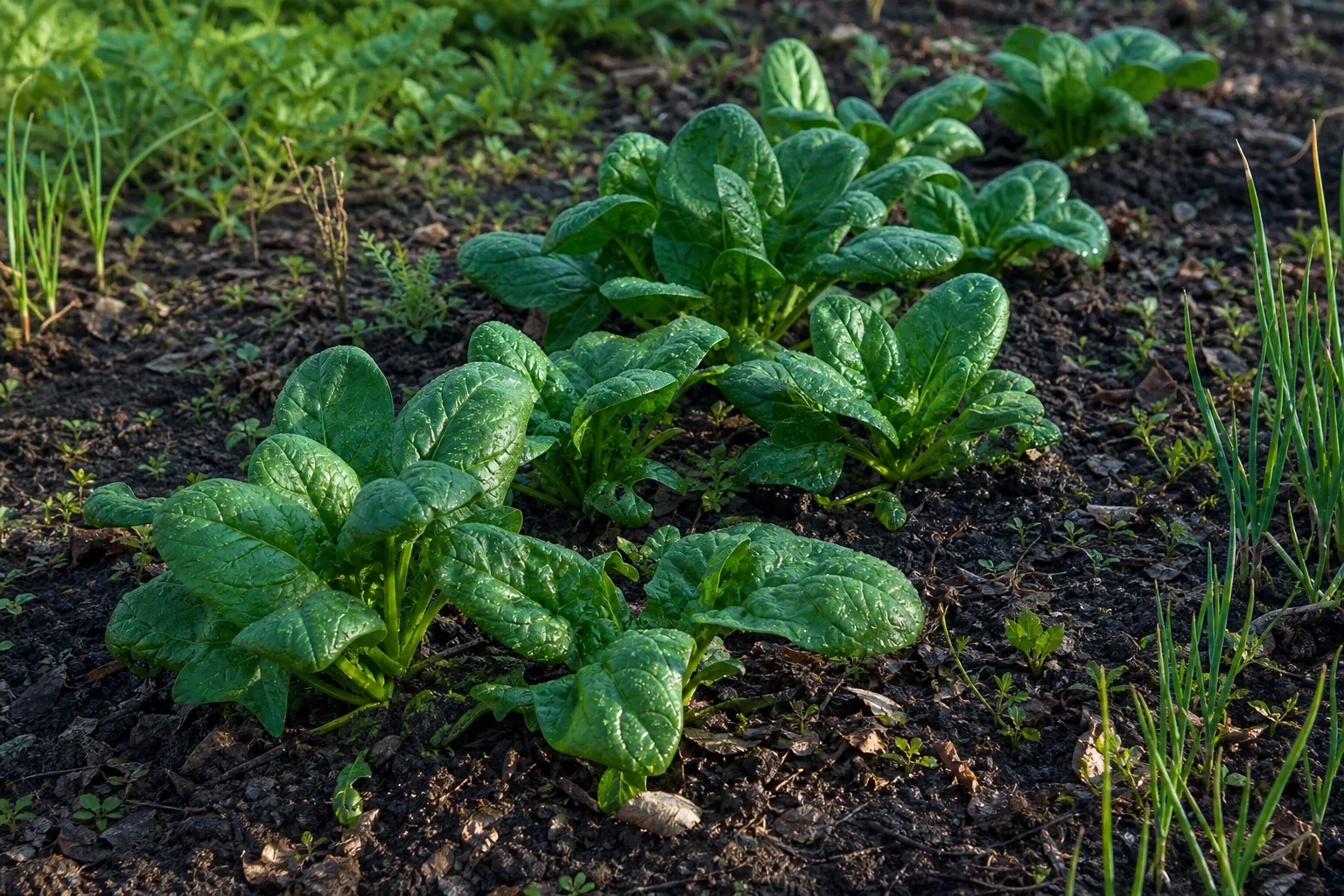
Spinach (Spinacia oleracea) is a cool-season leafy green that wants rich, moist soil and short, cool days. Sow seed 1/2 inch deep in rows or blocks as early as the soil can be worked, thinning to about 4-6 inches. Mulch to keep roots cool and conserve moisture, and harvest the outer leaves with scissors while leaving the crown. For a fall crop, sow in late summer; a light frost sweetens the flavor. Replace plants that bolt with a fresh sowing in cooler weather.
Light
Spinach grows best in full sun in cool spring and fall but tolerates partial shade, which is useful in warmer weather. In hot summer it should be grown in afternoon shade or skipped entirely, because long, warm, sunny days trigger bolting.
Water
Water to keep the soil evenly moist — about 1-1.5 inches per week. Spinach has a moderate root system and bitter, tough leaves quickly follow drought stress. Water in the morning and use mulch to retain moisture; avoid wetting foliage late in the day to limit downy mildew.
Soil and planting
Plant in fertile, well-drained soil high in organic matter with a near-neutral pH of about 6.5-7.5. Raised beds and deep containers both work; use a rich potting mix and thin or repot crowded seedlings so air circulates. Because spinach is shallow rooted, keep the surface from crusting and side-dress with compost rather than deep cultivation.
Temperature, humidity, and fertilizer
Spinach germinates best around 50-70°F and grows well from about 35-75°F; it is hardy to light frosts and even the low 20s°F for some varieties. High humidity raises downy-mildew risk, so space for airflow. Feed with compost at planting and a balanced liquid feed if growth is slow; avoid excess nitrogen, which can encourage lush but disease-prone leaves.
Pruning and propagation
No pruning beyond harvesting outer leaves and removing yellow or bolting ones. Propagate from seed: direct-sow in early spring as soon as soil is workable, and again in late summer for fall. Seed germinates poorly above 75-80°F, so pre-chill or wait for cool weather; thin seedlings rather than transplanting, since spinach dislikes root disturbance.
Common problems
Start with the pattern, current soil moisture, and recent changes. One symptom can have several causes, so change the most likely factor first and observe before making another major adjustment.
| Symptom | Check first | First action |
|---|---|---|
| Plants send up a flower stalk and leaves get tough | Check day length and temperature — this is bolting in warming weather. | Harvest what you can, then pull the plant and sow a fresh cool-season crop. |
| Winding white or pale trails inside the leaves | Check leaf surfaces for leaf-miner larvae. | Remove and destroy affected leaves; use row cover to exclude the adult flies. |
| Yellowing leaves with a fuzzy gray-purple underside | Check for downy mildew in cool, wet conditions. | Improve airflow, avoid overhead watering, and remove infected leaves. |
| Slow, stunted plants with purple tint | Check soil temperature and fertility; cold, poor soil limits growth. | Add compost and wait for warmer soil; ensure even moisture. |
| Seedlings fail to emerge or rot | Check for crusted soil and overwatering in cool weather. | Sow into loose, moist soil and keep the surface damp but not soggy. |
Pet and household safety
Spinach is considered non-toxic to dogs and cats and is not listed as a poison by the ASPCA; the cooked or raw leaves are safe in normal culinary amounts. Because spinach is high in oxalates, very large quantities could contribute to kidney or calcium-absorption issues in pets, so treat it as an occasional nibble and contact a veterinarian if a pet eats a large amount.
Frequently asked questions
How much sun does spinach need?
Full sun in cool spring and fall; partial shade helps in warmer weather. Long, hot, sunny days make it bolt.
How often should I water spinach?
Keep soil evenly moist, about 1-1.5 inches per week. Drought quickly makes leaves bitter and tough.
When should I plant spinach?
As soon as soil can be worked in spring, and again in late summer for fall; it tolerates light frost.
Why is my spinach bolting?
Warming temperatures and long days trigger flowering. Sow in cool weather, use shade, and harvest promptly.
How do I harvest spinach?
Cut outer leaves at the base, leaving the crown so the plant regrows for several weeks.
Is spinach safe for pets?
Yes — spinach is non-toxic to dogs and cats per the ASPCA, though its oxalates mean large amounts are best avoided.
Sources and editorial review
This editorial draft is based on the sources below and awaits named horticulture-expert approval before publication.
- Spinacia oleraceaRoyal Botanic Gardens, Kew (Plants of the World Online) · Checked
- Toxic and Non-Toxic Plants ListASPCA · Checked
- Spinach (Spinacia oleracea)University of Wisconsin-Madison Division of Extension · Checked
- SpinachNC State Extension Gardener Plant Toolbox · Checked
What works well
- Extremely cold-hardy and one of the first greens harvestable in spring.
- Very nutrient dense (iron, vitamins, folate) for the space it uses.
- Grows well in partial shade and in containers.
What to consider
- Bolts and stops producing quickly once days lengthen and warm up.
- Needs even moisture; drought causes tough, bitter leaves.
- Susceptible to leaf miners and downy mildew in wet, crowded beds.