Key takeaways
- Plant in cool weather in full sun to part shade with moist, well-drained soil.
- Pinch young plants to branch and deadhead for continuous bloom into summer.
- Snapdragons are non-toxic to dogs and cats and tolerate light frost.
How to care for snapdragon
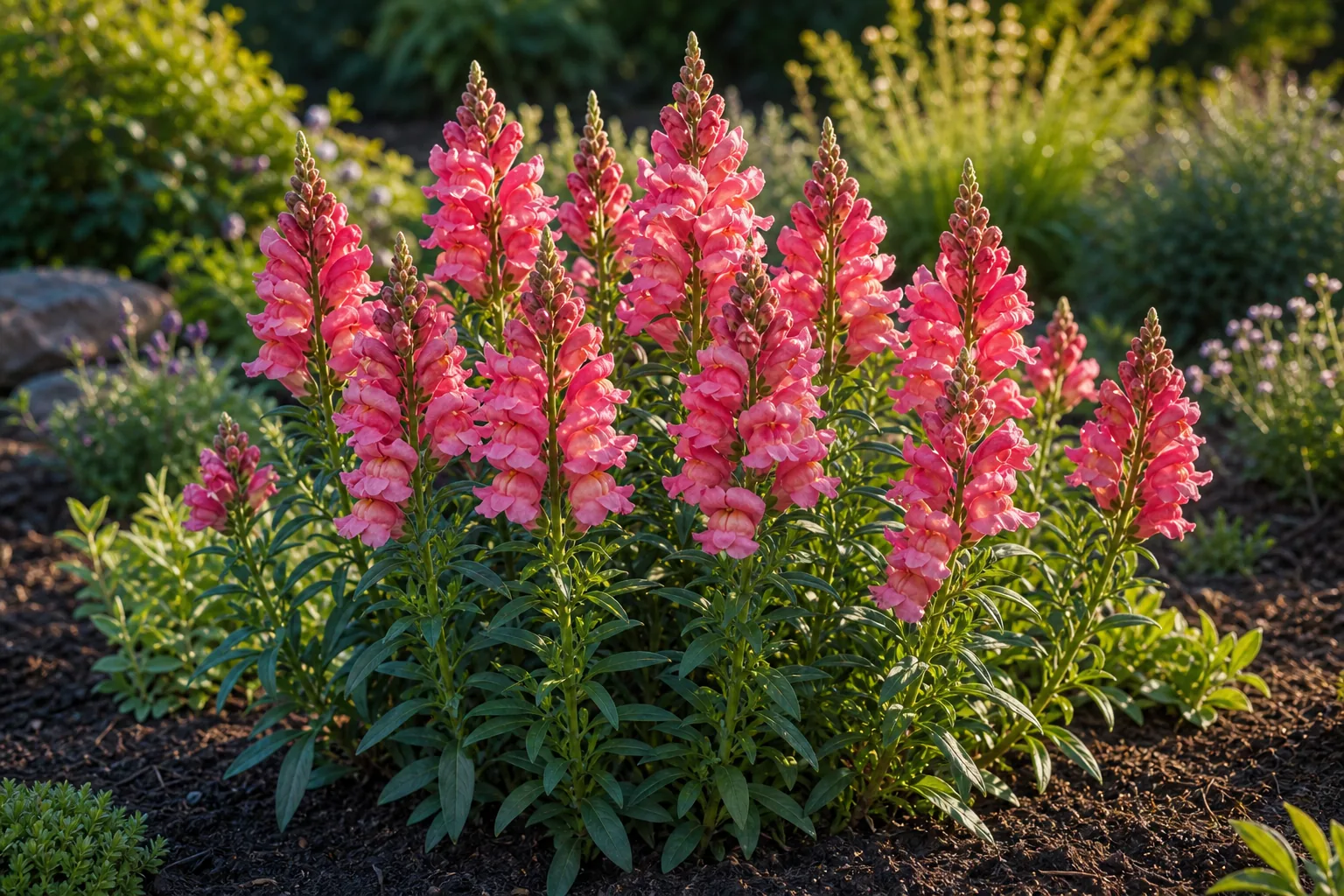
Snapdragon (Antirrhinum majus) is a cool-season plant that grows best in mild weather. Set out stocky transplants in early spring or autumn in full sun to part shade and cool, moist, well-drained soil, spacing 6-12 inches apart. Pinch the tips when plants are young to encourage branching and more spikes. Water to establish and keep the soil evenly moist through bloom; deadhead spent spikes to keep flowers coming until heat slows them. In warm climates grow them in autumn and spring and replace when summer heat causes decline.
Light
Snapdragons prefer full sun in cool weather but benefit from part shade as temperatures rise. In hot summer climates too much sun and heat shorten bloom and scorch plants; a site with morning sun and light afternoon shade performs best.
Water
Water moderately to keep the soil evenly moist but not soggy; snapdragons are not drought tolerant and wilt quickly when dry. Aim water at the base and avoid wetting foliage to limit rust and mildew in humid weather.
Soil and planting
Plant in average, fertile, well-drained soil with a slightly acidic to neutral pH. In containers use a moisture-retentive, freely draining potting mix and water more often than in-ground plants. Snapdragons are typically bedding or pot plants and are replanted each cool season rather than repotted.
Temperature, humidity, and fertilizer
Snapdragons are cool-season performers that tolerate light frost and thrive in 55-70°F (13-21°C) days. High humidity raises disease risk, so space for airflow. Feed lightly with a balanced fertilizer at planting and every few weeks while actively blooming; too much heat or nitrogen reduces flowering.
Pruning and propagation
No pruning beyond deadheading and pinching young tips for branching. Propagate from seed sown in summer for autumn or next-spring planting (they need cool to germinate), or by softwood cuttings; most garden types are hybrids that may not come true from seed.
Common problems
Start with the pattern, current soil moisture, and recent changes. One symptom can have several causes, so change the most likely factor first and observe before making another major adjustment.
| Symptom | Check first | First action |
|---|---|---|
| Plants fade and stop blooming in summer heat | Check temperature; snapdragons are cool-season and stall in heat. | Move to afternoon shade, keep watered, or replace with heat-tolerant crops. |
| Rusty or powdery spots on leaves | Check for rust or powdery mildew in humid weather. | Improve spacing and airflow, avoid wetting foliage, and remove affected leaves. |
| Aphids on shoot tips | Check for aphids clustering on new growth. | Rinse with water or use insecticidal soap; avoid broad sprays that harm pollinators. |
| Leggy, stretched growth | Check light hours and temperature. | Move to brighter, cooler conditions and pinch tips to encourage branching. |
| Wilting despite moist soil | Check for root rot from overwatering or poor drainage. | Reduce watering and improve drainage; do not let pots sit in saucers. |
Pet and household safety
Snapdragon is considered non-toxic to dogs and cats and appears on the ASPCA non-toxic plant list. Eating large amounts of any plant may still cause mild vomiting or diarrhea, so discourage chewing and contact a veterinarian if a pet shows persistent signs.
Frequently asked questions
How much sun do snapdragons need?
Full sun in cool weather, with part shade once it warms; too much heat reduces bloom.
How often should I water snapdragons?
Keep the soil evenly moist; they wilt fast when dry and are not drought tolerant.
Why do my snapdragons fade in summer?
They are cool-season plants and stall or decline in hot weather; replant in autumn or grow in shade.
Should I pinch or deadhead snapdragons?
Yes - pinch young tips for branching and deadhead spent spikes to keep blooming.
Are snapdragons frost tolerant?
Yes - they tolerate light frost and are best as cool-season spring and autumn bedding.
Are snapdragons safe for pets?
Yes - the ASPCA lists snapdragon as non-toxic to dogs and cats, though large amounts can upset the stomach.
Sources and editorial review
This editorial draft is based on the sources below and awaits named horticulture-expert approval before publication.
- Antirrhinum majusRoyal Botanic Gardens, Kew (Plants of the World Online) · Checked
- SnapdragonASPCA · Checked
- Antirrhinum majusMissouri Botanical Garden · Checked
- SnapdragonNorth Carolina State University Extension · Checked
What works well
- Long-lasting spring-to-summer spike flowers in many colours.
- Excellent cut flower and good for beds and containers.
- Cool-tolerant and non-toxic to pets (ASPCA non-toxic plant list).
What to consider
- Heat-sensitive; bloom declines as summer heat arrives.
- Susceptible to rust, powdery mildew, and aphid infestation.
- Short-lived; usually grown as a cool-season annual.