Key takeaways
- Plant in full sun for the best foliage color and the smoky flower plumes.
- Use average, well-drained soil; it tolerates drought and poor ground.
- Prune in late winter - hard for colorful foliage, lightly for the smoke plumes.
How to care for smokebush
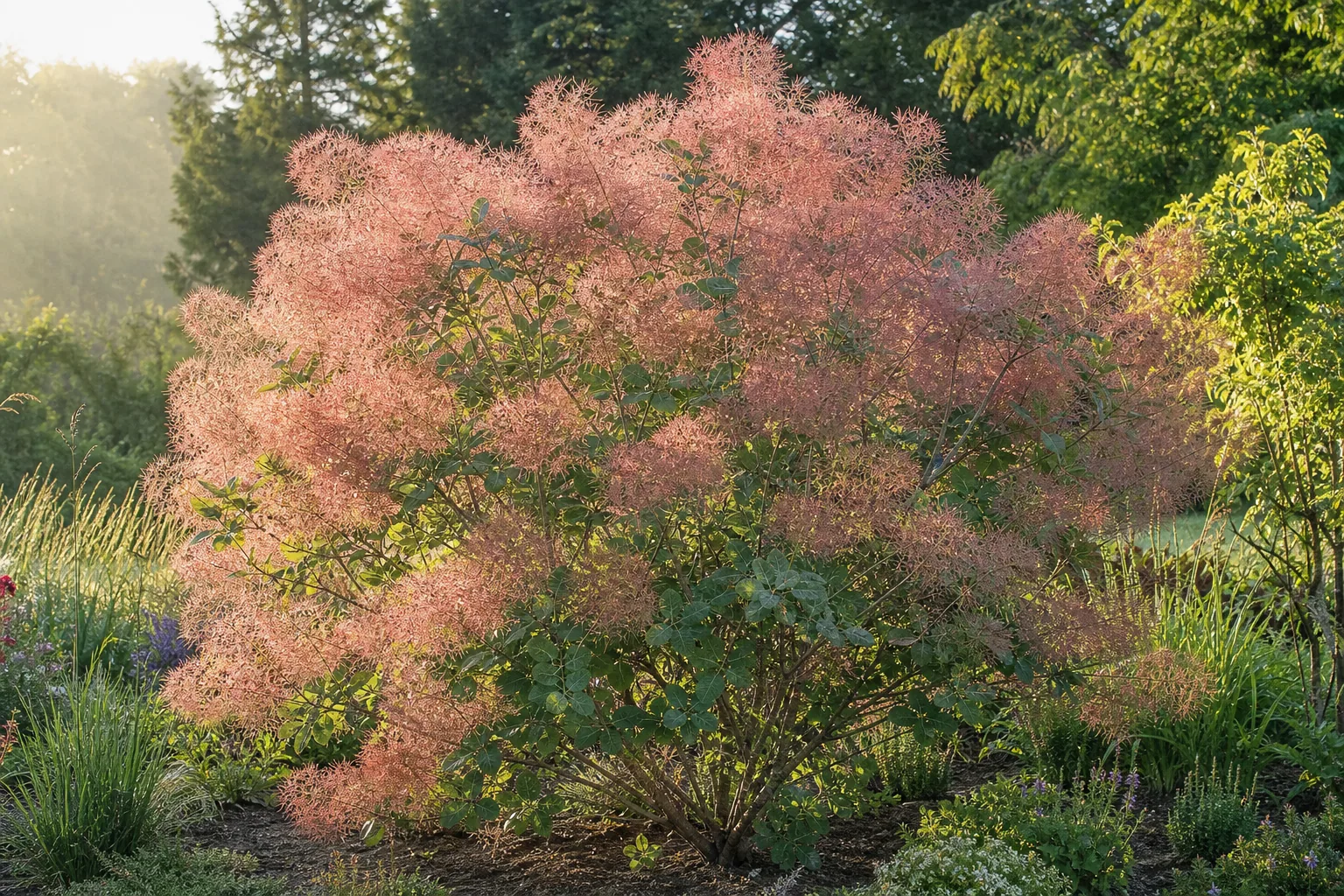
Smokebush (Cotinus coggygria) is a low-care shrub that rewards full sun. Plant in full sun in average, well-drained soil, spacing 10-15 ft if grown as a specimen and mulching 2-3 in. Water regularly the first year, then it is heat and drought tolerant. Decide on a form: let it grow as a small tree, or prune hard in late winter to a low framework for the largest, most colorful foliage (this sacrifices the smoke plumes). Either way, keep good air flow to limit disease.
Light
Smokebush wants full sun - at least 6 hours of direct light daily - for the best purple or gold leaf color and the showiest plumes. In part shade the color fades to green and flowering decreases.
Water
Water regularly through the first season to build roots, then smokebush is drought tolerant. Aim for about 1 in per week in dry periods. It tolerates lean, dry ground and dislikes constantly wet, poorly drained soil.
Soil and planting
Plant in average to lean, well-drained soil with a slightly acidic to neutral pH. It tolerates clay and rocky ground if drainage is good. In containers use a standard, freely draining mix and a large pot; smokebush is a short-term container plant, so repot when rootbound and keep the crown at the soil line.
Temperature, humidity, and fertilizer
Hardy in USDA zones 4-8, smokebush is heat tolerant and not fussy about humidity. Fertilize lightly in spring with a balanced feed; too much nitrogen pushes soft growth at the expense of color. Good air circulation limits leaf spot and verticillium.
Pruning and propagation
Prune in late winter. For a tree form, remove lower branches and thin the crown; for a compact, colorful mound, cut stems back hard to a low framework every 1-2 years (this removes the plumes). Smokebush bleeds if cut in spring, so prune while fully dormant. Propagate from softwood cuttings in summer.
Common problems
Start with the pattern, current soil moisture, and recent changes. One symptom can have several causes, so change the most likely factor first and observe before making another major adjustment.
| Symptom | Check first | First action |
|---|---|---|
| Green leaves instead of purple or gold | Check light - color needs full sun. | Move to full sun; shade fades the foliage color. |
| No smoke plumes | Check whether you hard-pruned for foliage. | For plumes, prune lightly in late winter instead of cutting back hard. |
| Wilting branches with discolored wood | Check for verticillium wilt. | Remove affected branches, improve air flow and drainage, and avoid stress. |
| Spotted leaves | Check for leaf spot in humid weather. | Improve air flow, avoid overhead watering, and remove affected foliage. |
| Leggy, open growth | Check light and lack of pruning. | Give full sun and prune in late winter to shape or renew. |
Pet and household safety
Smokebush is considered non-toxic to dogs and cats and is not on the ASPCA toxic plant list. Eating large amounts of any plant can still cause mild vomiting or diarrhea, so discourage chewing and contact a veterinarian if a pet shows persistent signs.
Frequently asked questions
How much sun does smokebush need?
Full sun - at least 6 hours daily. Shade fades the purple or gold leaf color.
When should I prune smokebush?
In late winter while dormant. Prune hard for colorful foliage or lightly to keep the smoke plumes.
Why are my smokebush leaves green?
Usually too much shade. Full sun brings out the best foliage color.
Is smokebush drought tolerant?
Yes - once established it is heat and drought tolerant.
How do I get the smoky plumes?
Prune lightly in late winter; hard pruning for foliage removes the flower plumes.
Is smokebush safe for pets?
Yes - smokebush is not listed as toxic to dogs or cats by the ASPCA, though large amounts may upset the stomach.
Sources and editorial review
This editorial draft is based on the sources below and awaits named horticulture-expert approval before publication.
- Cotinus coggygriaRoyal Botanic Gardens, Kew (Plants of the World Online) · Checked
- SmokebushASPCA · Checked
- Cotinus coggygriaMissouri Botanical Garden · Checked
- Cotinus coggygriaNorth Carolina State University Extension · Checked
What works well
- Striking purple or gold foliage and wispy summer 'smoke' plumes.
- Heat and drought tolerant once established.
- Non-toxic to dogs and cats.
What to consider
- Foliage color is best in full sun; it fades in shade.
- Hard pruning to keep it compact removes the flower plumes.
- Occasionally bothered by verticillium wilt or leaf spot.