Key takeaways
- Plant seeds 2-3 inches deep in full sun in rich, moist, well-drained soil after the last frost.
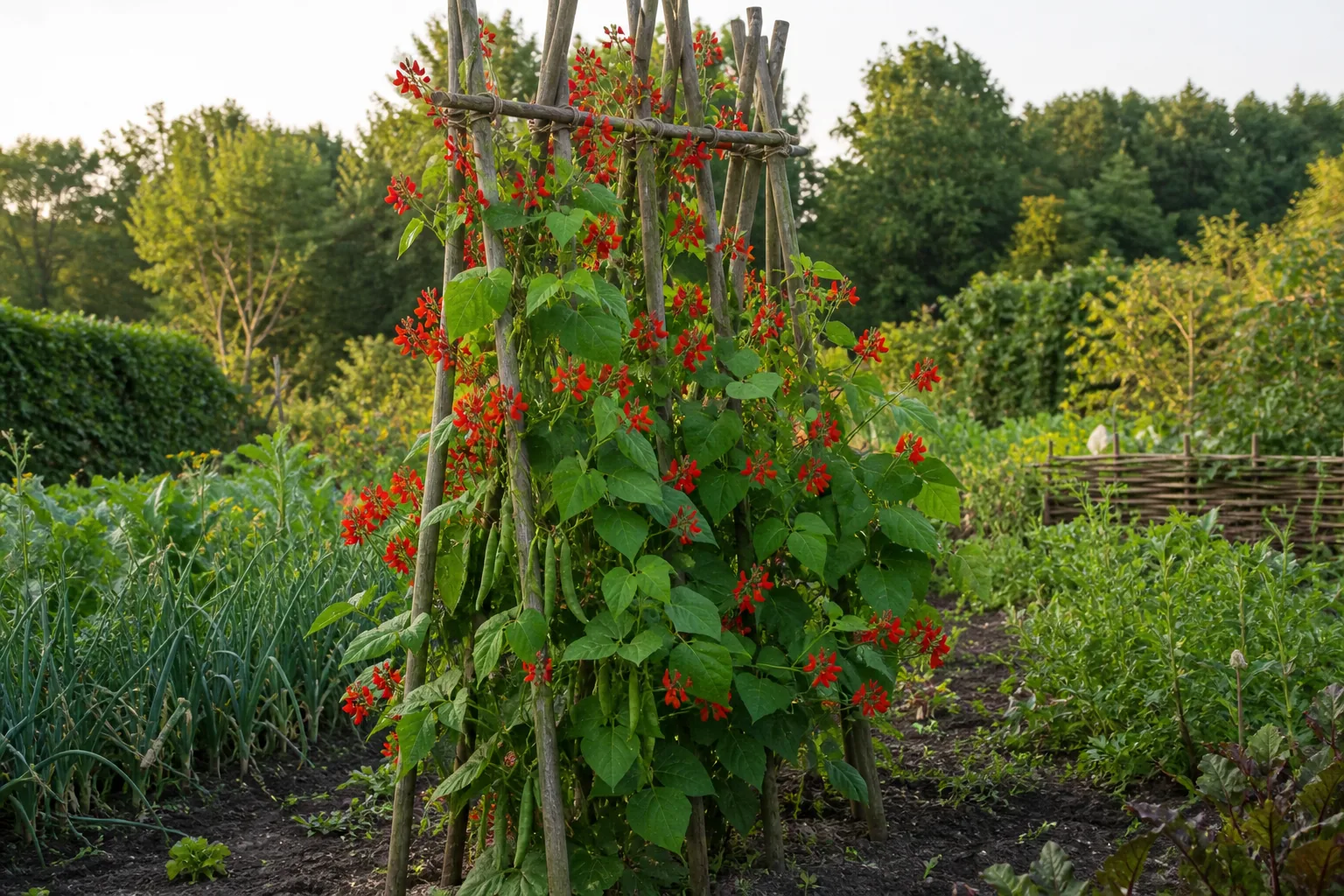
- Provide a strong support - the vines can reach 8-15 feet and are heavy with flowers and pods.
- Cook beans well before eating: raw or undercooked beans contain phytohaemagglutinin and can cause severe nausea and vomiting.
How to care for scarlet runner bean
Scarlet runner bean (Phaseolus coccineus) is a quick, twining vine that serves double duty as an ornamental and a vegetable. Sow seeds 2-3 inches deep in full sun after the last frost, spacing 4-8 inches apart, and set up the support - poles, teepee, trellis, or netting - at planting time. Unlike most beans, the seedlings hold their cotyledons below ground, and germination takes 7-14 days. Keep the soil evenly moist, especially through flowering and pod set, and avoid heavy fertilizer, which makes foliage at the expense of flowers and pods.
Light
Scarlet runner beans bloom best in full sun (6 or more hours of direct light). They tolerate some shade, but flowering and pod set drop sharply in heavy shade. In very hot regions a little afternoon shade is fine and can even improve pod set.
Water
Water consistently to keep the soil evenly moist but not waterlogged - abundant water during flowering and pod expansion is the key to a good crop. Mulch to conserve moisture; plants wilt and drop flowers if allowed to dry out in summer heat.
Soil and planting
Grow in rich, fertile, organically rich, well-drained loam with a slightly acid to neutral pH. Improve the soil with compost before planting. In containers use a large pot (at least 12-14 inches) with a trellis and a freely draining mix, and keep it well watered; the plant is perennial in frost-free zones and can be grown as a short-lived perennial in pots.
Temperature, humidity, and fertilizer
Scarlet runner beans are tender perennials, perennial in zones 7-11 but killed by frost and grown as annuals elsewhere. They prefer moderate summer temperatures; pod set is best in cool summers or in fall, and pollen becomes nonviable above about 90 F. Feed lightly - a compost side-dressing midseason is enough - because heavy nitrogen promotes leaf at the expense of flowers.
Pruning and propagation
Little pruning is needed; pinch the tops once vines reach the top of the support to encourage branching and pod production. Pick pods regularly to keep the plant flowering. Propagate by seed saved from dry, mature pods; seeds can also be started indoors a few weeks early. In cold climates the tuberous roots can be dug and stored like dahlias for replanting.
Common problems
Start with the pattern, current soil moisture, and recent changes. One symptom can have several causes, so change the most likely factor first and observe before making another major adjustment.
| Symptom | Check first | First action |
|---|---|---|
| Flowers drop without setting pods in heat | Check temperatures above 90 F - pollen becomes nonviable. | Wait for cooler weather, harvest in fall, or grow in partial afternoon shade. |
| Heavy leaf growth, few flowers or pods | Check nitrogen fertilization and light. | Stop feeding, move to full sun, and pinch tips to encourage flowering. |
| Holes chewed in leaves | Check for Mexican bean beetles, Japanese beetles, or slugs. | Hand-pick beetles, protect young plants from slugs, and use floating row cover if needed. |
| Wilting despite moist soil | Check for root rot in heavy, wet ground. | Improve drainage and reduce watering; avoid soggy soil. |
| Mottled, stunted leaves | Check for mosaic virus spread by aphids. | Remove and destroy affected plants and control aphids; rotate bean beds yearly. |
Pet and household safety
Scarlet runner bean (Phaseolus coccineus) is toxic to cats and dogs if raw or undercooked beans or seeds are eaten: NC State Extension rates the plant as low-severity poison because the seeds contain trace amounts of the lectin phytohaemagglutinin, and large amounts of raw beans can cause severe nausea, vomiting, and diarrhea. The ASPCA has no runner bean species page, so the extension profile is the reference. Cook beans thoroughly before any human consumption, and keep pets from chewing raw pods, beans, or seeds; contact a veterinarian after a concerning ingestion.
Frequently asked questions
When do I plant scarlet runner beans?
Sow seed directly after the last frost in soil that has warmed to at least 50 F; germination takes 7-14 days.
Are scarlet runner beans edible?
Yes - young pods, fresh beans, and even flowers are edible; flowers can be eaten raw, but cook beans thoroughly because raw or undercooked beans contain a toxic lectin.
Why is my runner bean not setting pods?
Usually heat: pollen becomes nonviable above about 90 F. Pod set improves in cool summers and in fall.
How tall do runner beans grow?
The twining vines can reach 8-15 feet in a season and need a strong trellis, teepee, or pole support.
Can I grow runner beans in a pot?
Yes - use a large container (12-14 inches or bigger) with a trellis, fertile free-draining mix, and consistent watering.
Is scarlet runner bean safe for pets?
Raw beans and seeds contain a toxic lectin (phytohaemagglutinin) that can cause severe nausea and vomiting, so keep pets from eating them; cooked beans are fine for people.
Sources and editorial review
This editorial draft is based on the sources below and awaits named horticulture-expert approval before publication.
- Phaseolus coccineusRoyal Botanic Gardens, Kew (Plants of the World Online) · Checked
- Toxic and Non-Toxic Plants listASPCA · Checked
- Phaseolus coccineus (Runner Bean)North Carolina State University Extension · Checked
- Scarlet Runner Bean, Phaseolus coccineusUniversity of Wisconsin-Madison Extension · Checked
What works well
- Showy scarlet (or white) flowers from midsummer to frost that attract hummingbirds and bees.
- Dual-purpose: ornamental climber plus edible pods, beans, and flowers.
- One of the most productive beans; a perennial vine in frost-free zones.
What to consider
- Raw or undercooked beans are toxic (lectin) - they must be thoroughly cooked.
- Sets fewer pods in hot weather; best pod set comes in cool summers or in fall.
- Very vigorous and needs a sturdy trellis or teepee.